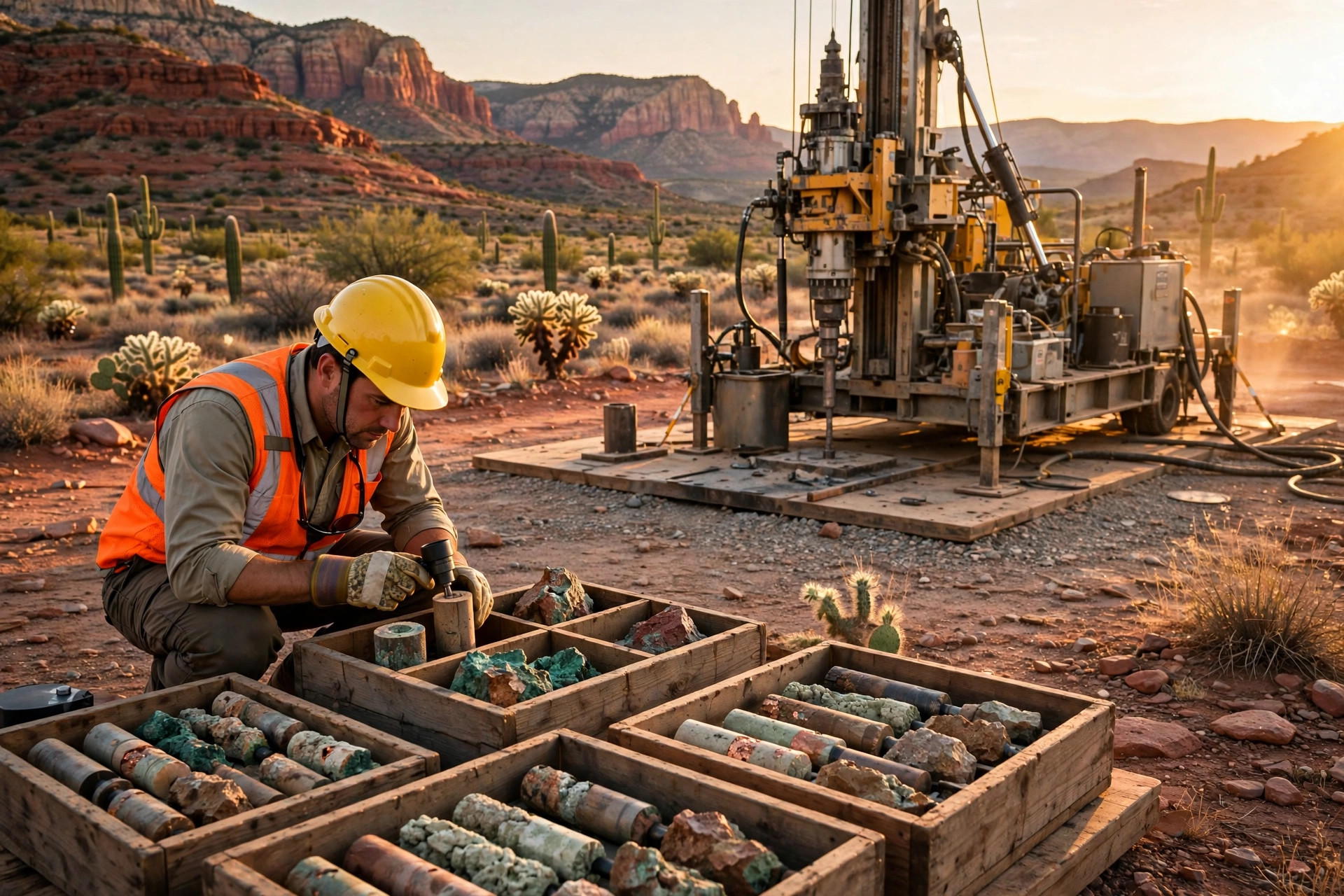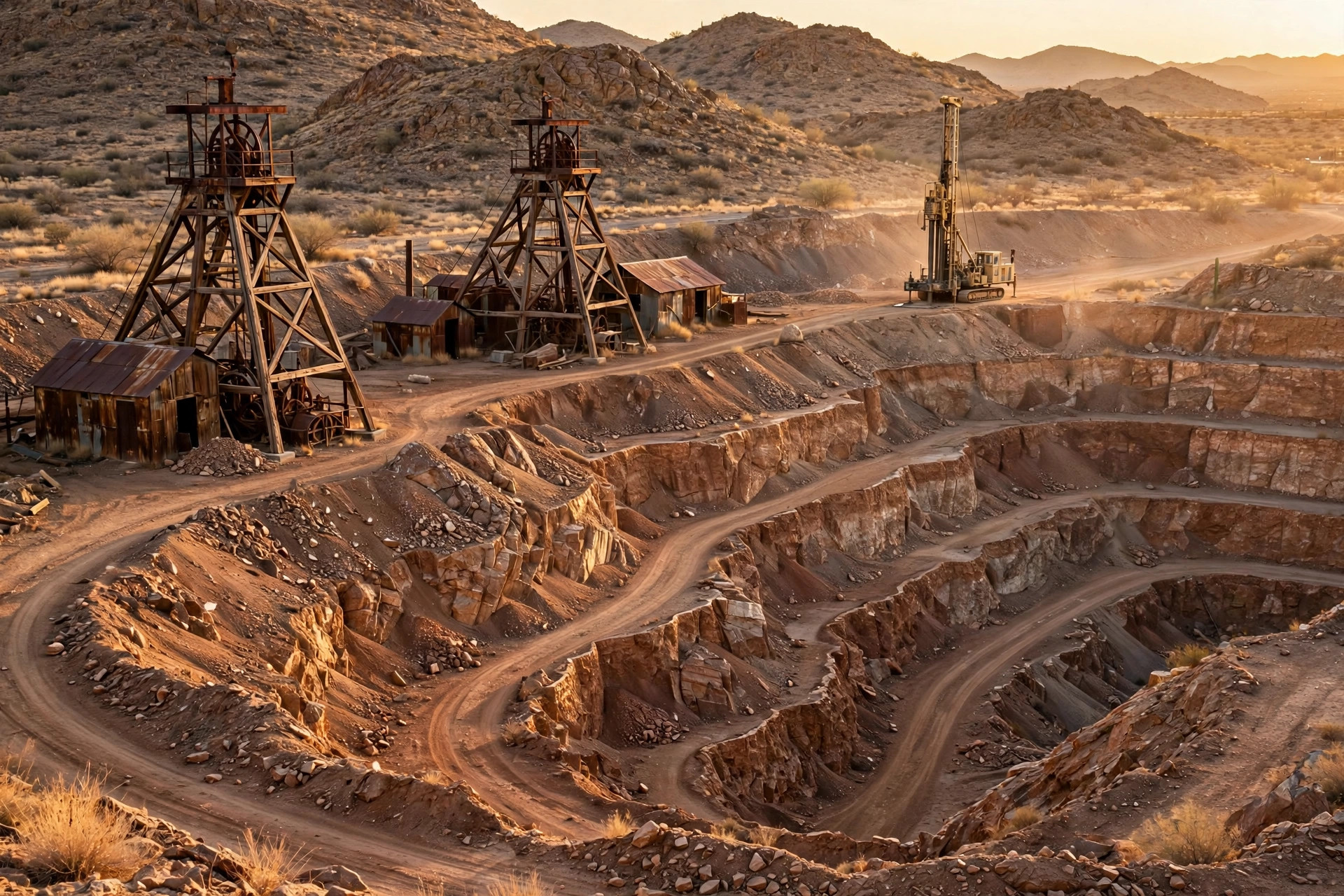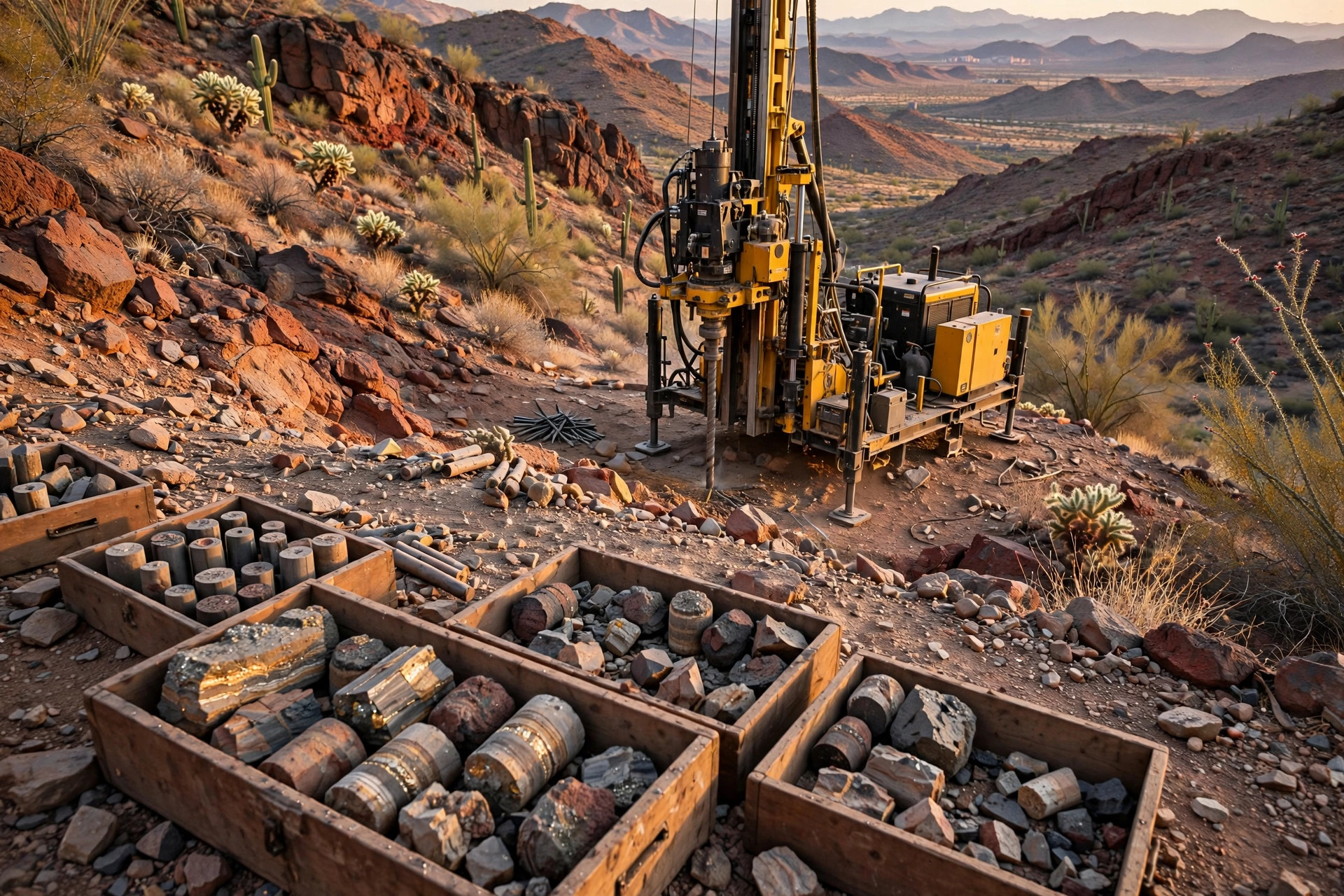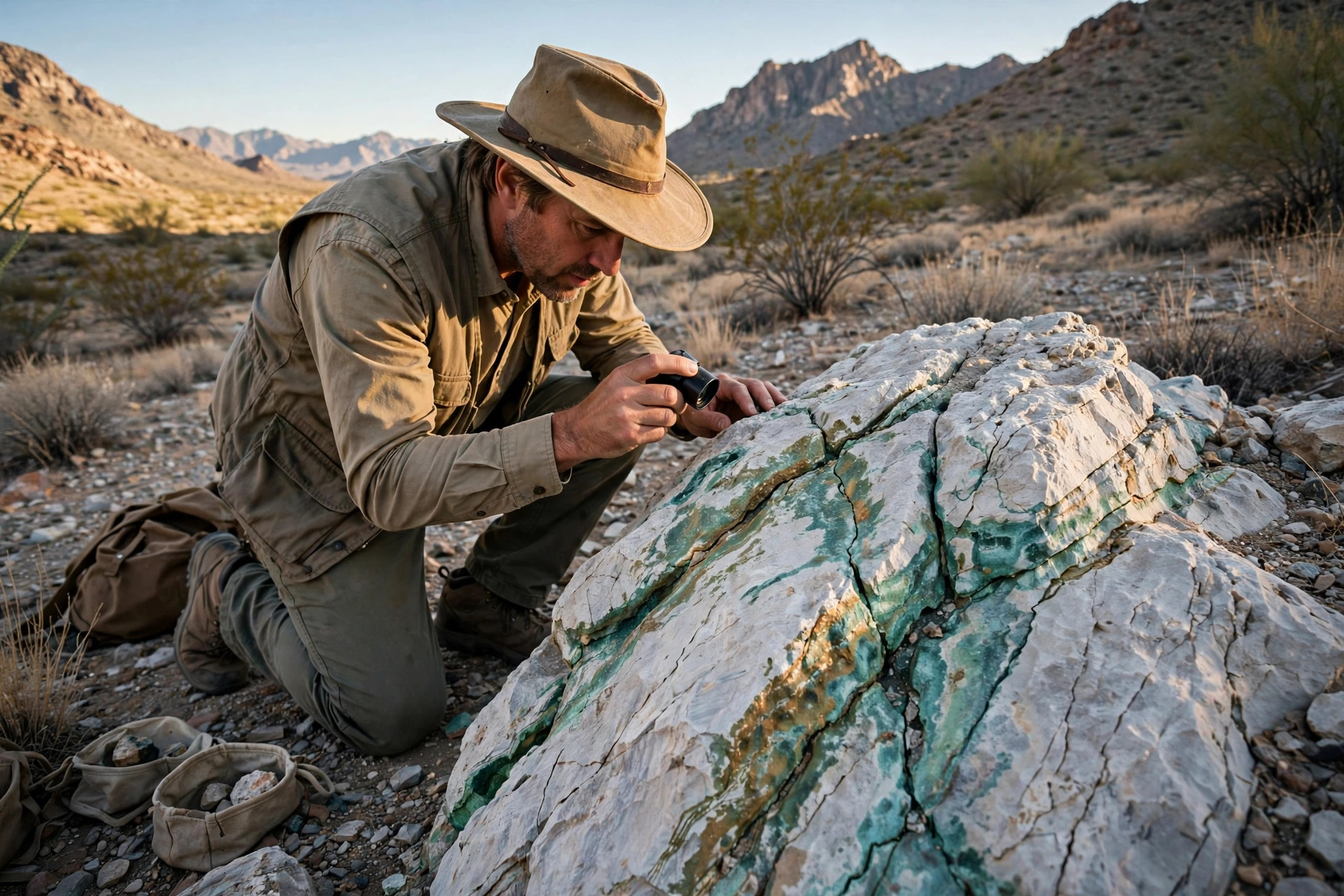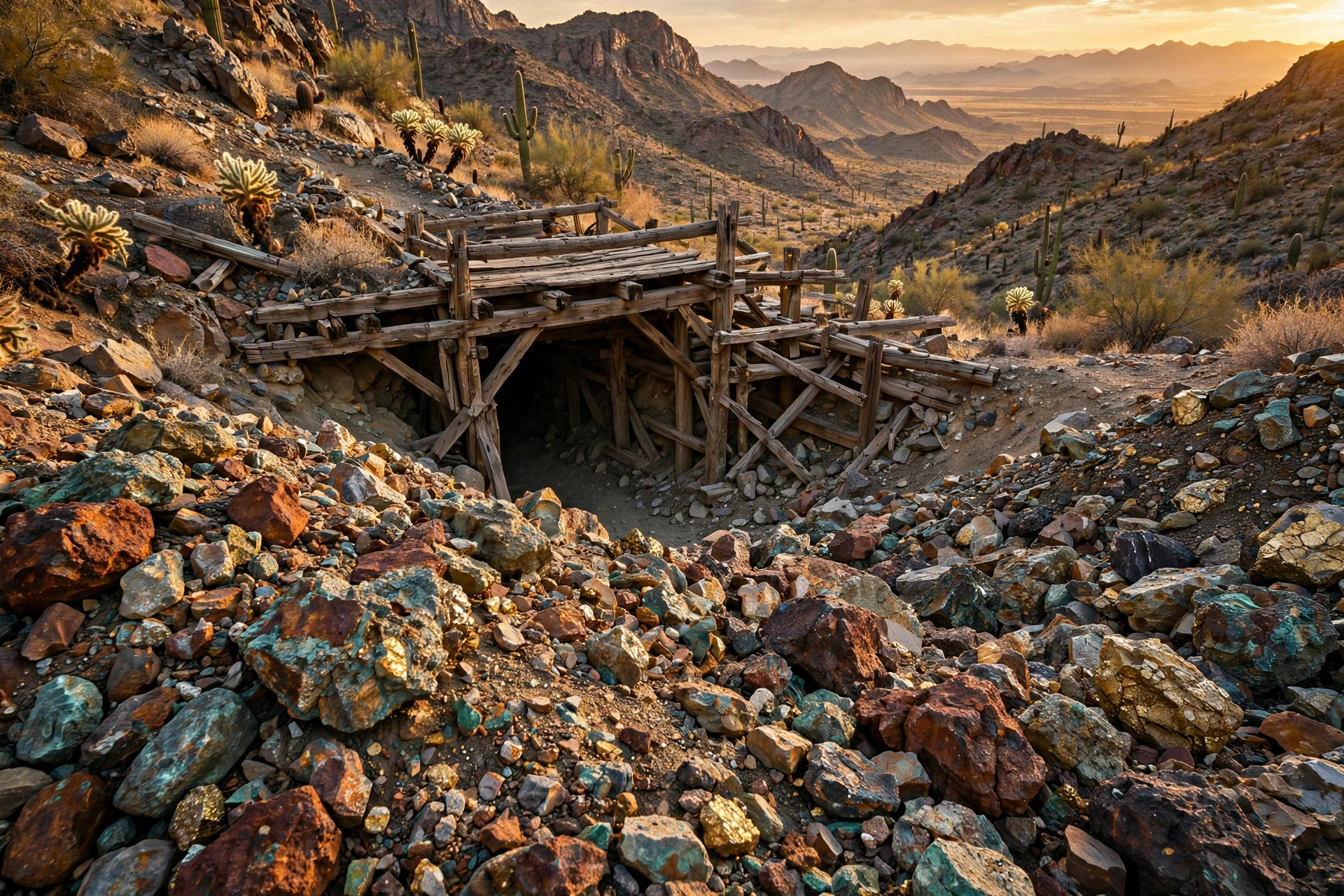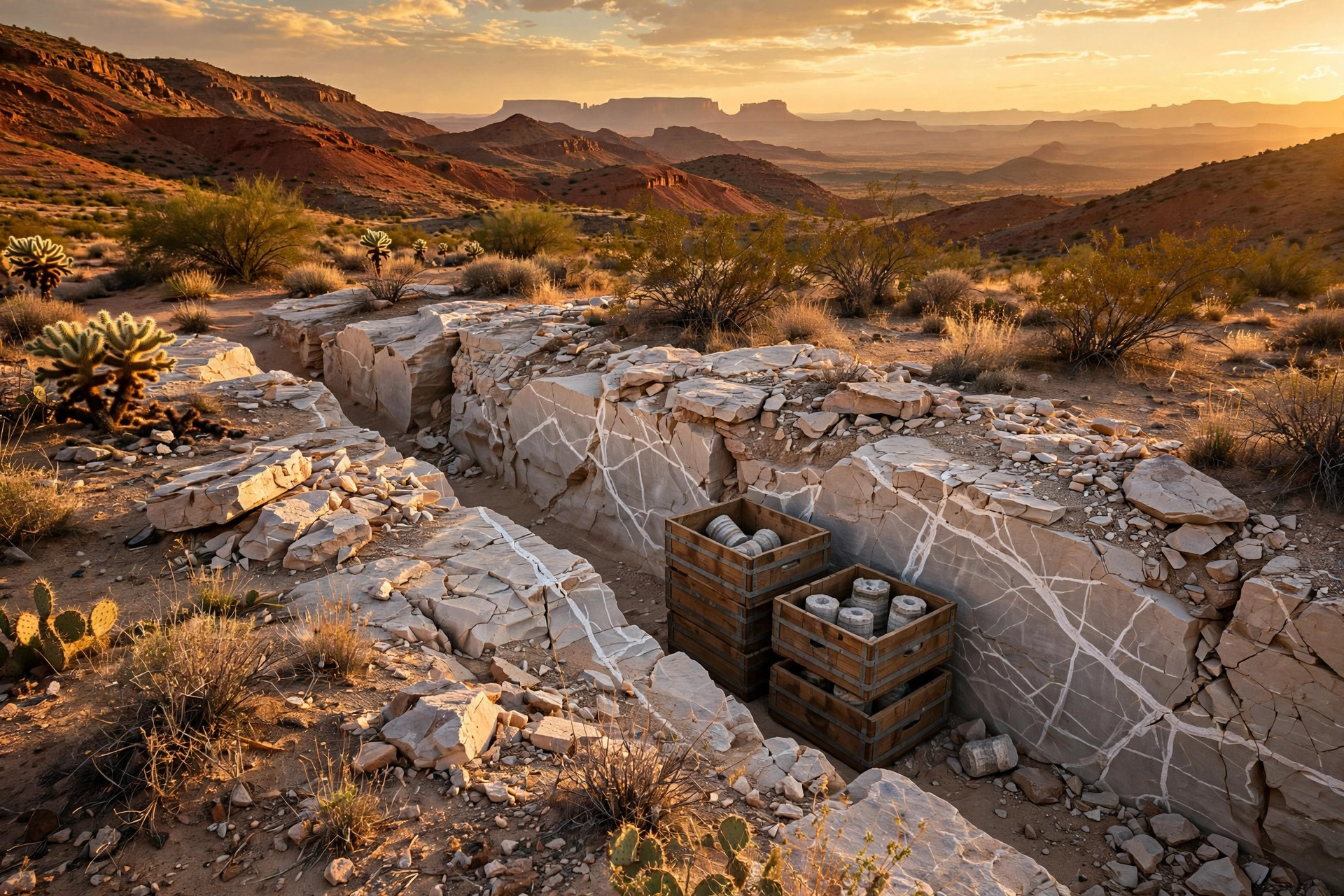

Arizona doesn’t hide it: there’s a miner on the state seal, the capitol dome is roofed in copper, and the Copper State turns out about 70 percent of the copper mined in America. This is our living master report on Arizona mining — the camps that made the state, the pits running now, and the companies that matter. We update it as Season 1 of Hunting Hidden Treasures swings through the Copper State.
How Arizona was built on ore
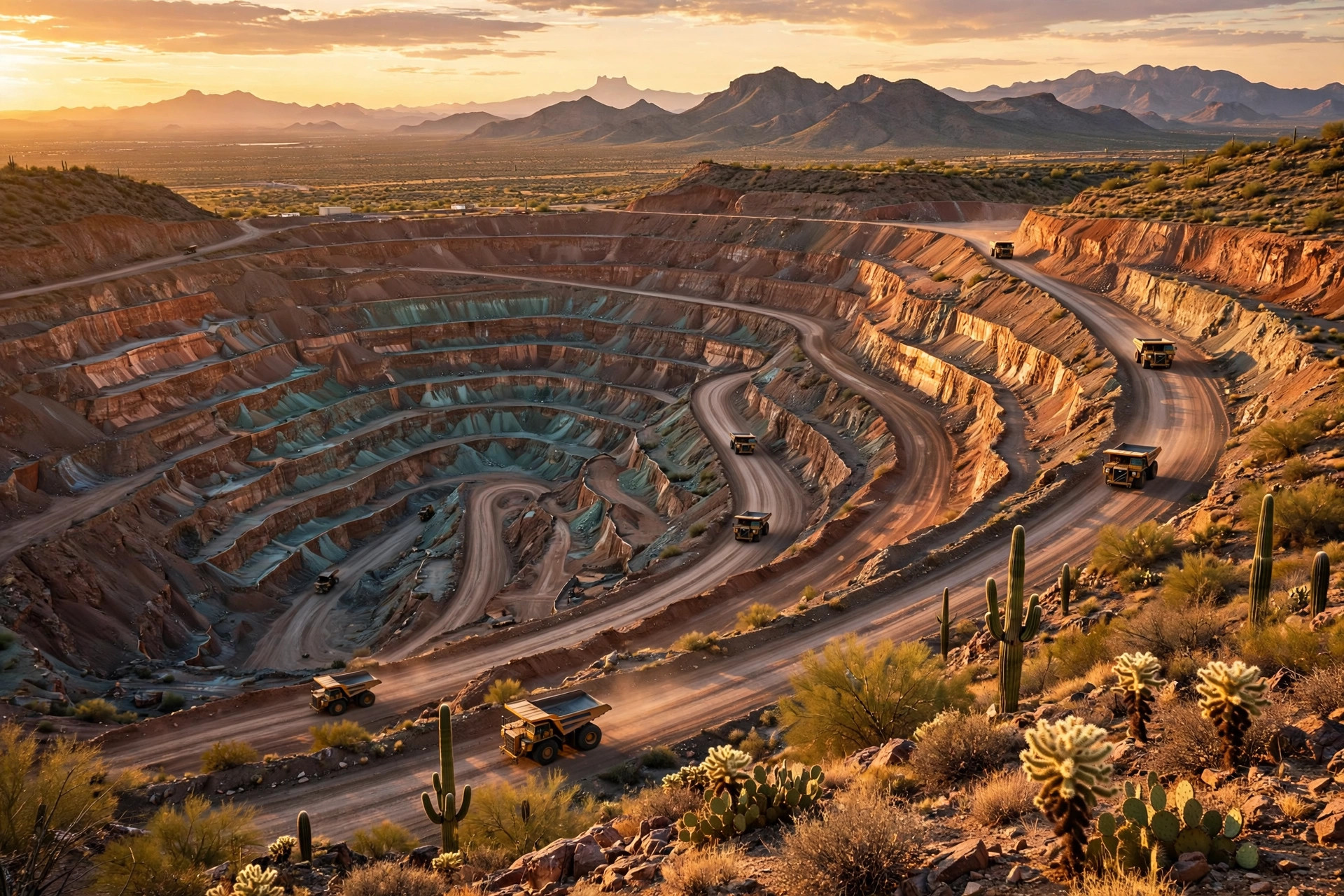
It started with gold-seekers getting the wrong answer. In the 1860s prospectors crossed the White Mountains country looking for gold and found copper instead; underground mining at Morenci began in the 1870s, the Detroit Copper Company took hold in 1872, and Phelps Dodge followed in 1881. The first open pit opened in 1939, and Morenci has been North America’s leading copper producer ever since — a city-sized maze of pits and leach pads in Greenlee County that Freeport-McMoRan inherited in its 2007 acquisition of Phelps Dodge, with Sumitomo as a minority partner.
Globe did it twice. The town rose on silver in the late 1870s — legend says it was named for a perfectly round silver specimen — then reinvented itself around the great disseminated porphyry deposits of the Miami–Globe district. Around 1905, mining men fixed on the region’s low-grade ore, and companies like Miami Copper and Inspiration Consolidated built an empire on rock running just a couple percent copper. Louis D. Ricketts “blew in” the Miami smelter in 1915 for $3 million, fitted with the first Cottrell electrostatic dust treaters in Arizona — a landmark of early mining engineering that has been working, in upgraded form, ever since. Capstone Copper’s Pinto Valley mine works the same district today.
Then came the deep copper, mined underground. In the Mule Mountains, civilian tracker Jack Dunn spotted mineralized rock while scouting for Apaches in 1877, and the Copper Queen became the core of Bisbee, the “Queen of the Copper Camps.” Over nearly a century of mining, Bisbee produced roughly 8 billion pounds of copper, about 100 million ounces of silver, and nearly 3 million ounces of gold, per the city’s official history — plus the Bisbee Deportation of 1917, one of the ugliest labor episodes in the West, and a culture rich enough to support the territory’s first library, opera house, and golf course. The open pits closed in 1974, the underground in 1975.
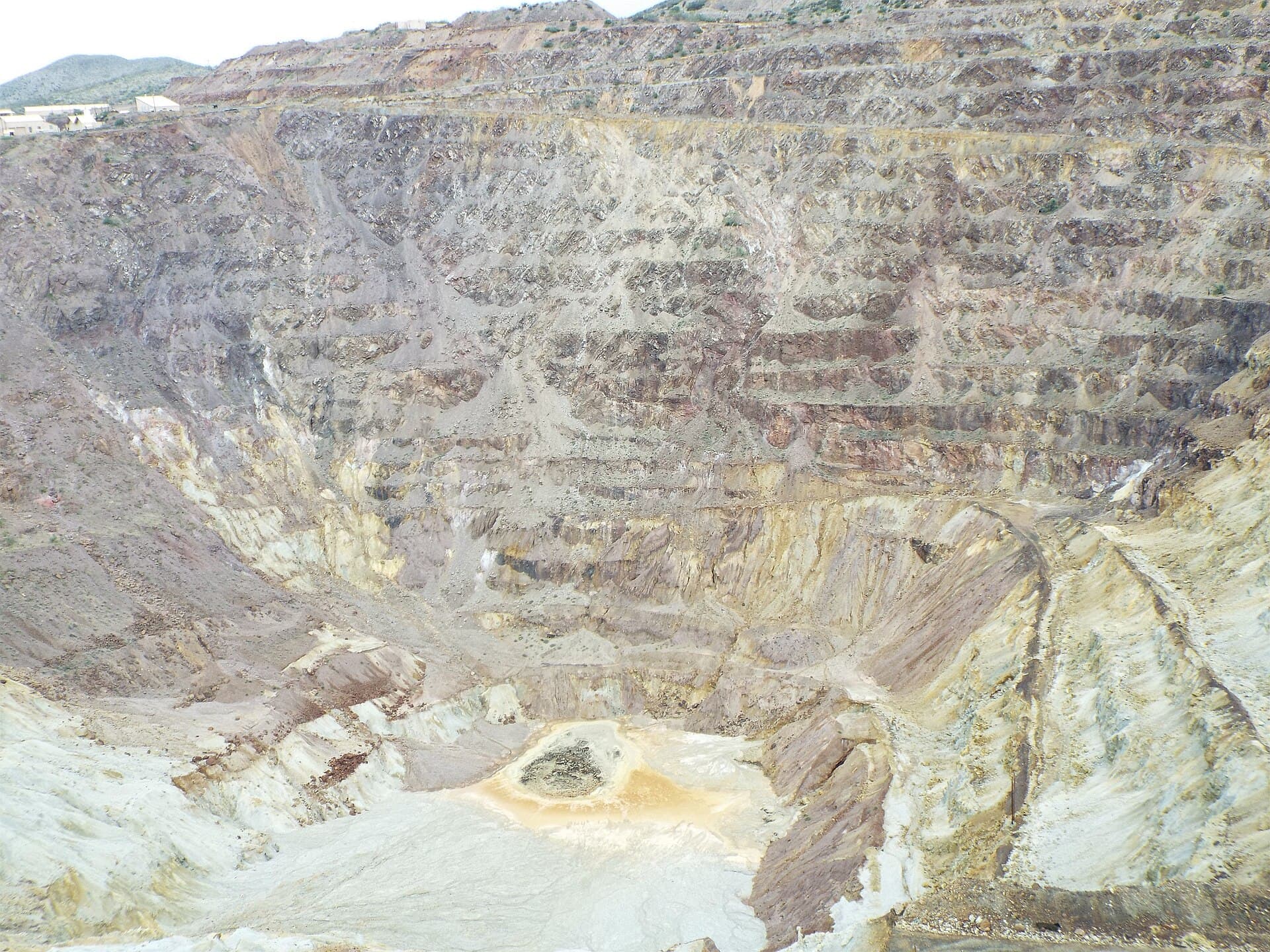
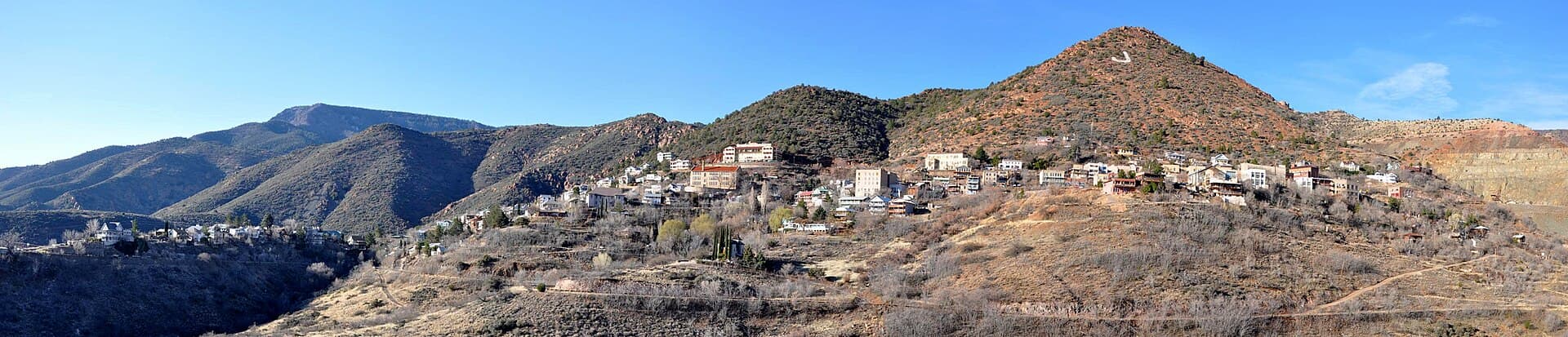
Up in the Black Hills, Jerome sat on something even stranger: two massive sulfide ore bodies born in the caldera of an undersea volcano some 1.75 billion years ago. William A. Clark bought the United Verde in 1888 and made it Arizona Territory’s leading copper producer by 1900; across its 77-year life (1876–1953) the mine produced nearly 33 million tons of ore, and geologists rank Jerome’s combined copper deposits among the richest ever found on Earth. The mines died in the 1950s and the town reinvented itself as an artist colony and National Historic Landmark.
The silver and gold towns wrote their own chapters. Tombstone — named for prospector Ed Schieffelin’s 1877 claim, after a fellow scout joked he’d find nothing but his own tombstone — boomed to some 15,000 people in the 1880s on silver, burned, fought, and outlived its mines to become, in its own slogan, “the town too tough to die.” Oatman, named for Olive Oatman, a pioneer woman taken captive in the 1850s, had its gold boom a generation later: the Tom Reed mine and the United Eastern strike of 1915 touched off one of the desert’s last gold rushes, and Oatman boomed almost overnight. When the gold ran out, Route 66 kept the town alive; today the burros still wander the wooden sidewalks.
The twentieth century belonged to the porphyries. Bagdad, first mined in 1882, grew into one of the country’s largest copper reserves; Sierrita, opened underground in 1907 and converted to an open pit in 1959, became a copper-molybdenum mainstay southwest of Tucson; and Safford–Lone Star, opened in 2008, was the first new copper mine built in the United States in more than 30 years.
And the north had its own secret. On the Arizona Strip, uranium sits in vertical breccia-pipe columns — the first one mined was the Orphan, exposed in the wall of the Grand Canyon itself. Energy Fuels Nuclear chased the pipes in the late 1970s and 1980s, mining the Hack, Pigeon, Kanab North, and Pinenut pipes and producing more than 19 million pounds of uranium oxide through the 1980s, at grades of 0.4 to 1 percent — as rich as any uranium deposit type on the planet.
Arizona today
The past is still working. Freeport-McMoRan runs five Arizona operations — Morenci, Bagdad, Sierrita, Miami, and Safford–Lone Star — a family of pits, mills, and leach pads that keeps the state at the center of American copper. ASARCO, Tucson-based and Grupo México-owned, runs three more: the Mission Complex near Sahuarita, the Ray mine in Pinal County, and Silver Bell, feeding the Hayden smelter that has stood since 1912 as one of the country’s last copper smelters.
The future has real momentum behind it. Resolution Copper, the Rio Tinto–BHP joint venture near Superior, sits on a deposit some 5,000 to 7,000 feet deep that the company says could supply up to a quarter of U.S. copper demand for 40 years — after more than $2 billion invested and two decades of permitting fights, the long-contested federal land exchange finally cleared its last court hurdle in 2026. South32’s Hermosa project in southern Arizona became the first mine to finish the federal FAST-41 permitting program, with zinc and manganese production targeted for 2028. Ivanhoe Electric’s Santa Cruz project near Casa Grande won a potential $1.1 billion financing signal from the U.S. Export-Import Bank, and Hudbay Minerals is advancing Copper World in Pima County. Meanwhile Energy Fuels’ Pinyon Plain uranium mine — the old Canyon mine, about six miles from the Grand Canyon’s south rim — finally produced its first ore in 2024, some three decades after it was first permitted. And the demand sits next door: Lucid Motors builds its electric vehicles at Casa Grande, in the most copper-rich state in the country.
The classroom front
Here's what most people miss about Arizona mining: the industry is fighting for its future in the classroom, on purpose.
Every year, the Arizona Mining Association and the JTED Foundation run a Mining Institute — multi-day, immersive mine tours that put Career and Technical Education instructors on the ground, so the people teaching Arizona's kids can show them where the modern world actually comes from. The association backs a "Mining in the Classroom" partnership with the University of Arizona's School of Mining and Mineral Resources, pushes educator resources all the way down to children's books, and connects into the national Minerals Education Coalition run by SME.
This is the industry answering its own hardest question — where do the next miners come from? — by going and getting them. Fewer than 200 mining engineers graduate in America each year. Arizona's answer is to start earlier: not with a job posting, but with a teacher, a bus, and a hole in the ground big enough to change a kid's mind.
The people in the pit
Mining in Arizona isn't an abstraction; it's neighbors. The association's "Mining Matters" spotlights read like a roll call of the modern workforce: an open-pit mining and quarries manager keeping steep slopes safe for Geobrugg; a US operations supervisor at Clearflow Group treating the water that mines run on; a sector leader at Stantec engineering the next project; a business developer at Clean Harbors out of San Manuel; the communications lead at Resolution Copper, telling the story in Superior, the town that lives in the deposit's shadow.
Pull the modern world out of the ground and you'll find it's pulled by people with names, towns, and mortgages — and Arizona puts theirs out front.
Who matters in Arizona
- Freeport-McMoRan, running Morenci, North America’s leading copper producer, plus Bagdad, Sierrita, Miami, and Safford–Lone Star.
- ASARCO (Grupo México), operating the Mission Complex, Ray, and Silver Bell mines and the Hayden smelter.
- Resolution Copper (Rio Tinto and BHP), advancing one of the world’s largest undeveloped copper deposits near Superior.
- South32, building the Hermosa zinc-manganese project, the first mine through FAST-41 federal permitting.
- Ivanhoe Electric, advancing the Santa Cruz copper project at Casa Grande with up to $1.1 billion in potential EXIM financing.
- Energy Fuels, mining breccia-pipe uranium on the Arizona Strip at the Pinyon Plain mine.
- Hudbay Minerals, advancing the Copper World copper complex southeast of Tucson.
- Florence Copper (Taseko), producing copper from an in-situ recovery wellfield at Florence.
- The Arizona Mining Association, the state's convening machine — annual conference each November, a Mining Day at the Capitol, Safe Miner Awards, and the education programs above.
We add companies to this report as work in the state moves, whether or not they are tour partners.
On the Season 1 tour
Episode 8 is the Copper State episode: it stands at Morenci, North America’s biggest copper mine, and traces the thesis from the pit to the Casa Grande EV plant that cannot exist without Arizona copper.