Colorado belongs on a Western mining tour because the state’s mining story never stopped being public ground: a silver boomtown that became Climax country, a gold camp that still hosts a working open pit, an Uravan uranium-vanadium belt that shaped the Cold War fuel cycle, and a coal industry that remains among the nation’s top ten producers even as it contracts. This is our living master report on Colorado mining — the pulse of who’s working the state right now, updated as Hunting Hidden Treasures grows. Colorado is a new Season 1 stop; the route is living and may keep growing.
How Colorado was built on ore
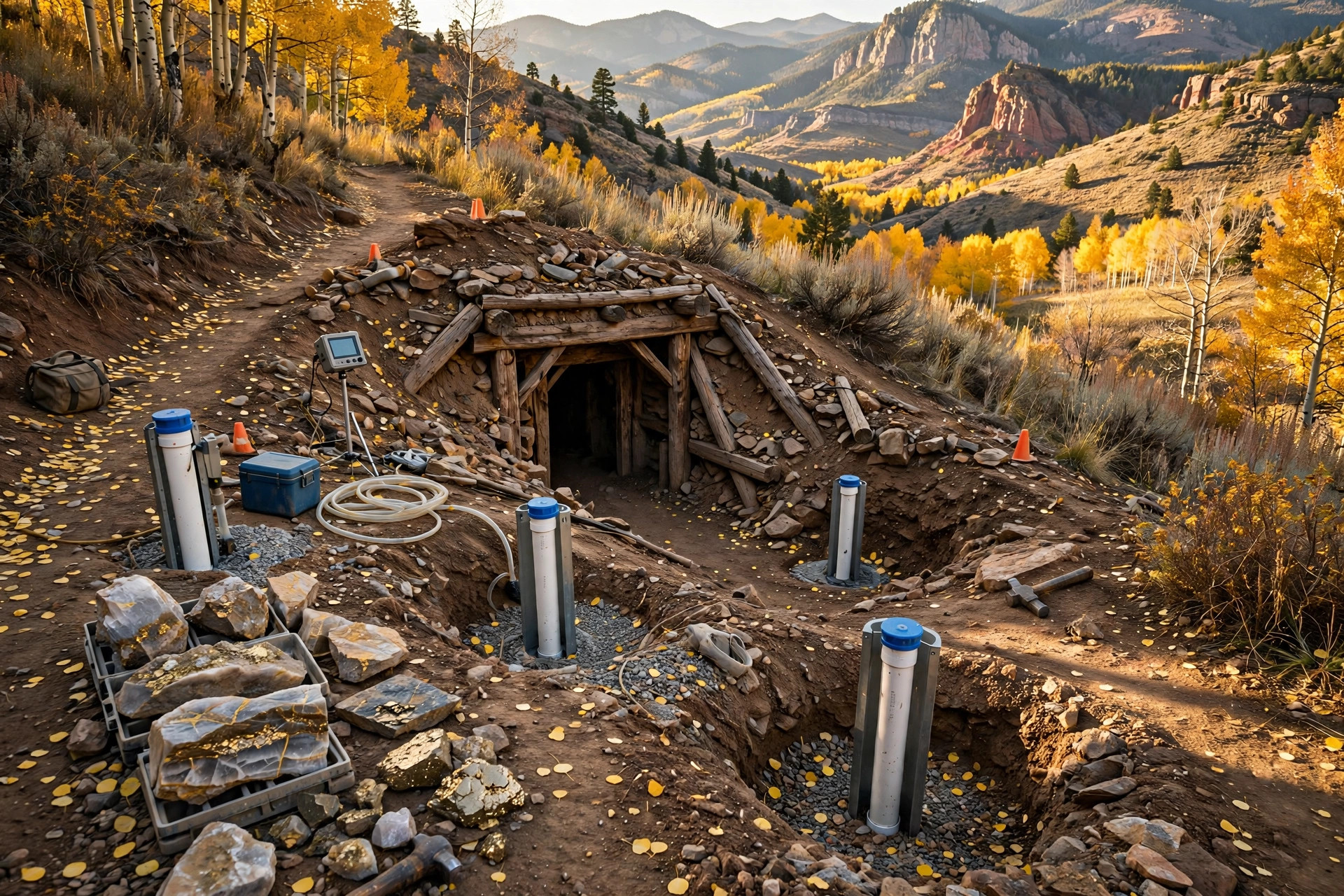
Leadville. Gold first drew prospectors to California Gulch in 1860. Leadville itself rose on silver-lead carbonate discovered in the mid-1870s; the town incorporated in 1878 and, by the end of 1879, held roughly the population of Denver. Horace Tabor and other Colorado fortunes were made here. The 1893 repeal of the Sherman Silver Purchase Act crashed silver and emptied many Colorado camps. Leadville survived by shifting metals, then by the rise of nearby Climax molybdenum. The historic district later became a Superfund cleanup story as well as a heritage and outdoor-recreation town. (Colorado Encyclopedia, “Leadville.”)
Cripple Creek. On the west flank of Pikes Peak, Robert Womack’s gold samples drew a rush in 1891; Winfield Scott Stratton’s Independence claim that July made the district’s first millionaire. After the 1893 silver crash, Cripple Creek became Colorado’s last and greatest gold boom — peak district population and mine count around the turn of the century, then long decline, tourism, and limited-stakes gaming after 1991. Large-scale open-pit work at Cripple Creek & Victor began in 1994. Cumulative district gold is reported above 23 million ounces by 1990. (Colorado Encyclopedia, “Cripple Creek.”)
Climax / molybdenum. The Climax Mine at Fremont Pass, northeast of Leadville, opened in the World War I era to supply molybdenum for steel. By the late 1920s it accounted for a dominant share of world molybdenum production and, for decades after, underwrote Lake County payrolls. A 1980s market collapse shuttered the mine; Freeport-McMoRan returned Climax to commercial production on 10 May 2012 after a multi-year restart. Henderson, Freeport’s block-cave molybdenum mine west of Denver, has operated since 1976. (Colorado Encyclopedia, “Leadville”; Climax Molybdenum Company operations and 2012 restart release.)
Uranium and vanadium. Southwestern Colorado’s Uravan Mineral Belt (Mesa, Montrose, and San Miguel Counties) produced the bulk of the state’s historic uranium and vanadium from sandstone-hosted deposits, with earlier radium and vanadium booms feeding into the mid-century uranium program. The Front Range Schwartzwalder mine was Colorado’s single largest uranium producer. The Colorado Geological Survey reports no producing uranium mines or mills in the state in its current uranium overview, and no uranium mine production in 2024 in Information Series 88 — even as companies hold permits, lease tracts, and advance restart and milling plans. (Colorado Geological Survey uranium page; CGS IS-88.)
Coal. Coal underwrote smelting and power as Colorado industrialized. Production has fallen from boom-era peaks, but Colorado remained roughly the tenth-largest U.S. coal producer in 2024, with both underground and surface mines still active and about 11 million tons mined that year. (CGS IS-88.)
That stack — Leadville silver to Climax moly, Cripple Creek gold still in production, Uravan uranium memory, and a living coal industry — is why Colorado belongs on a Western mining tour.
Colorado today
Freeport-McMoRan’s Climax Molybdenum Company operates the two primary molybdenum mines in the state: Climax (open pit at Fremont Pass near Leadville) and Henderson (underground block cave west of Denver, mill linked by conveyor under the Continental Divide). Colorado Geological Survey’s 2024–2025 industry report ranks Colorado second among U.S. molybdenum producers in 2024 and fourth among U.S. gold producers, with that gold coming from a single mine.
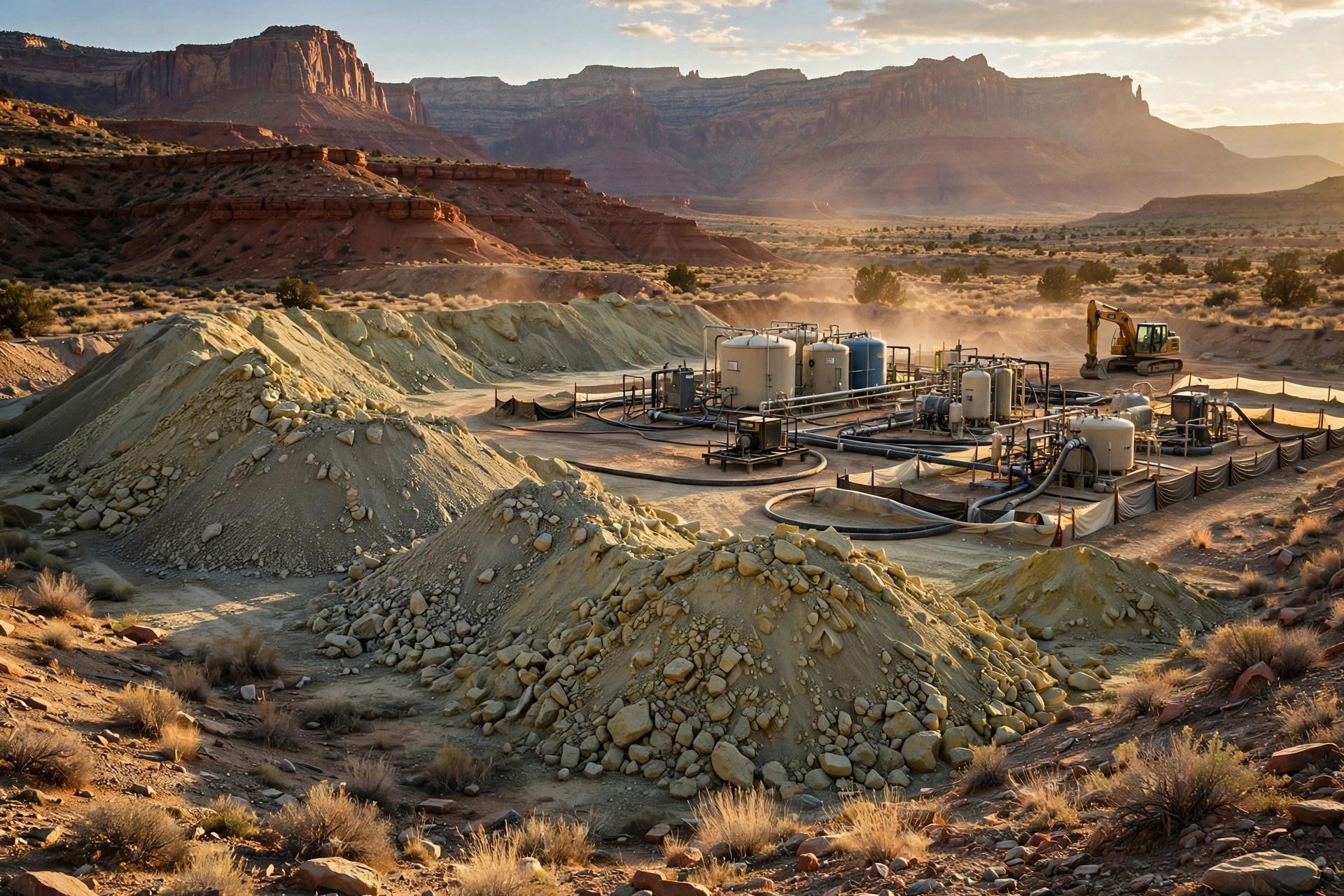
That gold mine is Cripple Creek & Victor in Teller County. SSR Mining completed the acquisition from Newmont on 28 February 2025 and publishes the operation as a conventional open-pit oxide gold mine with valley leach facilities. District mining dates to the 1890s; large-scale surface mining to 1994. SSR’s 2025 technical report summary frames a multi-year mine life on oxide reserves; Amendment 14 permitting work remains a live public story for leach-pad capacity and mine-life extension.
On the uranium-vanadium side, Energy Fuels (headquartered in Lakewood) is advancing rehabilitation at the fully permitted Whirlwind mine on the Utah–Colorado line, with company guidance pointing to potential production as early as 2027 subject to market conditions — not a 2024 Colorado production claim. Western Uranium & Vanadium’s Sunday Mine Complex in San Miguel County’s Uravan belt delivered uranium-bearing material to Energy Fuels’ White Mesa Mill in Utah under a 2025–2026 ore-purchase program and is licensing the proposed Mustang Mineral Processing Plant at the former Pinon Ridge mill site in Montrose County. CGS still records no Colorado uranium mill in operation and no statewide uranium mine production for 2024; treat Uravan names as restart, delivery, and permitting stories unless a newer state production figure supersedes IS-88.
Coal remains a material Colorado industry even as it contracts. CGS IS-88 lists six active coal mines in 2024 (including West Elk, Colowyo, Twentymile / Foidel Creek, King II, and others), with statewide production about 11.04 million tons. Operator and plant-closure timelines continue to move; verify before any shoot day.
Industrial minerals (nahcolite, gypsum, aggregate, cement) and energy fuels sit beside metals on the CGS production ledger. Associations and public desks that belong in this hub as it grows include the Colorado Mining Association, the Colorado Geological Survey, and Leadville’s National Mining Hall of Fame and Museum.
We track public activity only. Appearing here reflects work in the state, not a tour partnership.
Who matters in Colorado
- Freeport-McMoRan / Climax Molybdenum, operating Climax (Lake County) and Henderson (Clear Creek / Grand County corridor) — primary molybdenum production that still defines high-country mining payrolls.
- SSR Mining, operating Cripple Creek & Victor in Teller County after the February 2025 acquisition from Newmont — Colorado’s principal gold producer and the living face of the Cripple Creek district.
- Energy Fuels, Lakewood-based critical-materials company with the Whirlwind uranium mine on the Utah–Colorado line in rehabilitation toward a potential later restart, and the White Mesa Mill in Utah as the regional conventional processing hub.
- Western Uranium & Vanadium, Sunday Mine Complex in the Uravan Mineral Belt (San Miguel County) and Mustang mill licensing in Montrose County — public uranium-vanadium restart and processing story.
- Coal operators named in recent public production tallies, including West Elk (North Fork Valley), Twentymile / Foidel Creek (Routt County), Colowyo (Moffat County), King II (La Plata County), and peer mines listed in CGS IS-88 — a contracting but still material energy-minerals chapter.
- Colorado Mining Association and Colorado Geological Survey — association and state-survey desks for calendar, permitting, and production context.
- National Mining Hall of Fame and Museum (Leadville) — public heritage stop on the same map as Climax country.
We add companies to this report as work in the state moves, whether or not they are tour partners. Uranium and coal names stay in the watch column as public operating, delivery, and permitting stories — not bookings.
On the Season 1 tour
Colorado is a new Season 1 stop. Episode number is still TBD. The dream-tour list for the leg will accumulate potential visits — Climax / Leadville, Henderson country, Cripple Creek & Victor, Uravan / Sunday / Mustang, coal-country pins, association desks in Denver, and heritage stops such as the National Mining Hall of Fame — sorted later into who pays, who doesn’t, and who’s an unpaid attraction.
Appearing on that list is not a booking. Appearing in this report is not a partnership. The Season 1 route is still fluid and may keep growing.