
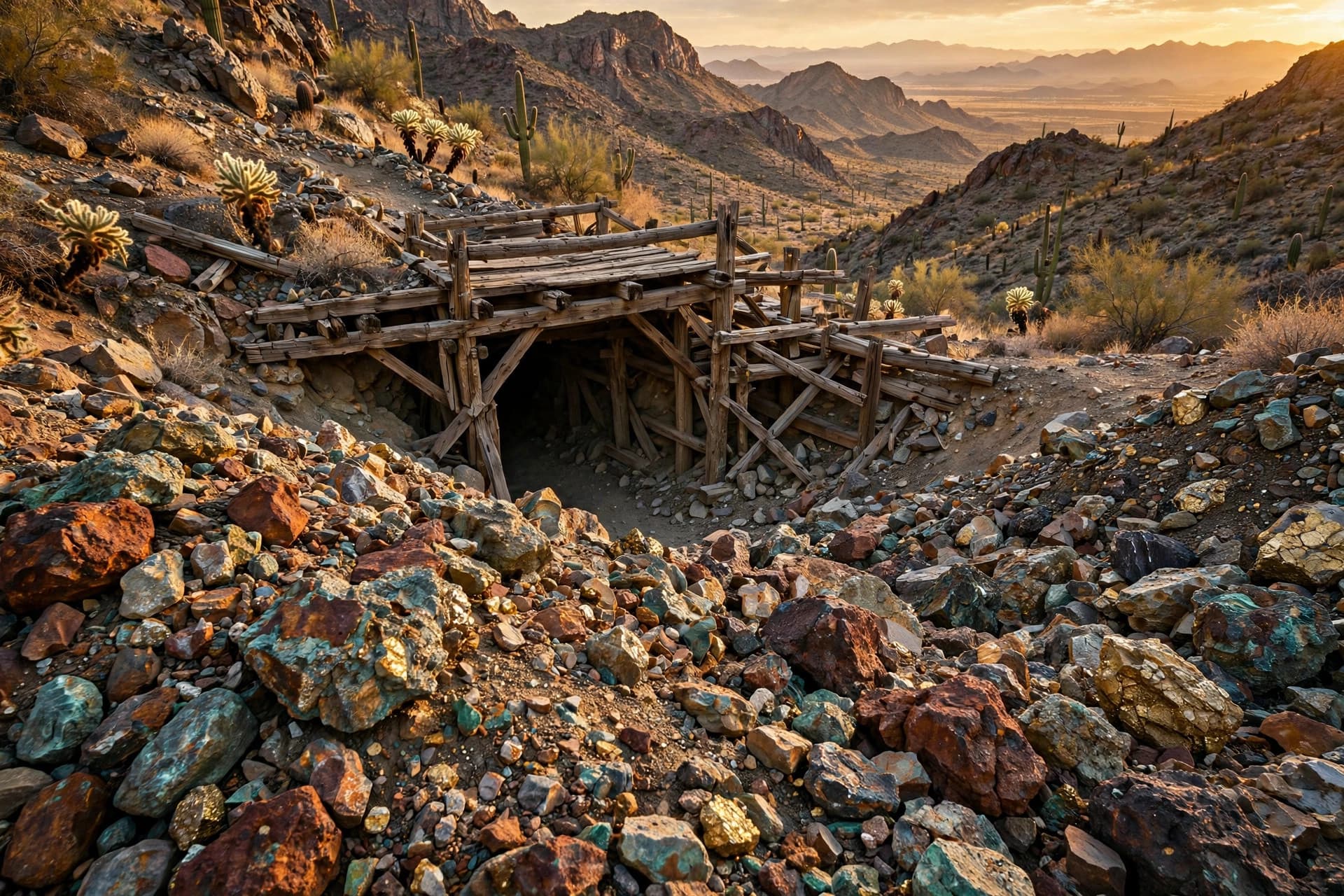
Fieldwork keeps expanding the map at one of Arizona's old gold camps. On October 6, Silver Bullet Mines Corp. (TSXV: SBMI | OTCQB: SBMCF) updated progress at its Columbia / Gold Queen Complex in Arizona, describing surface stockpiles, additional mineralized zones found during road work, and a revised near-term plan for feeding its mill.
- The complex now comprises the past-producing Columbia, Gold Queen, and Steamboat mines — Steamboat was not previously known to the company — plus at least four other newly identified potential high-grade gold zones.
- Crews have walked the Columbia historical adit for more than 350 feet; management believes the historical material removed likely carried very high gold grades, with silver and copper also present — a management interpretation, not an assay result.
- The company reports what it believes are thousands of tons of mineralized stockpiles near the new road, apparently originating from Gold Queen, and says harvesting surface material would cost less than underground mining.
- About 6,000 pounds of concentrate have been produced from a roadside stockpile to date, with third-party assays pending for that concentrate, the stockpiles, and one new zone.
- To fund further development and working capital, Silver Bullet intends a $500,000 unit financing at $0.14 per unit with a $0.18 warrant, subject to regulatory approval.
Why the plan changed
The original sequence was underground material first: Gold Queen material toward a 12,000-ton concentrate commitment and Columbia material toward a separate 36,000-ton direct-ship commitment, once a crusher is installed. The stockpile discovery inserts a cheaper step in front of that — sample the piles systematically, and if assays support it, harvest surface material to complement the concentrate feed while an exploration and mining plan, including diamond drilling, is prepared.
One caveat, kept visible
Almost everything interesting here is still unassayed. The stockpile tonnage is an estimate, the samples taken so far were random and may not be representative, and the high-grade character of the historical workings is inferred from adit inspection rather than laboratory results. The pending third-party assays are the fact that will turn this update from a field report into a grade story — or not.