
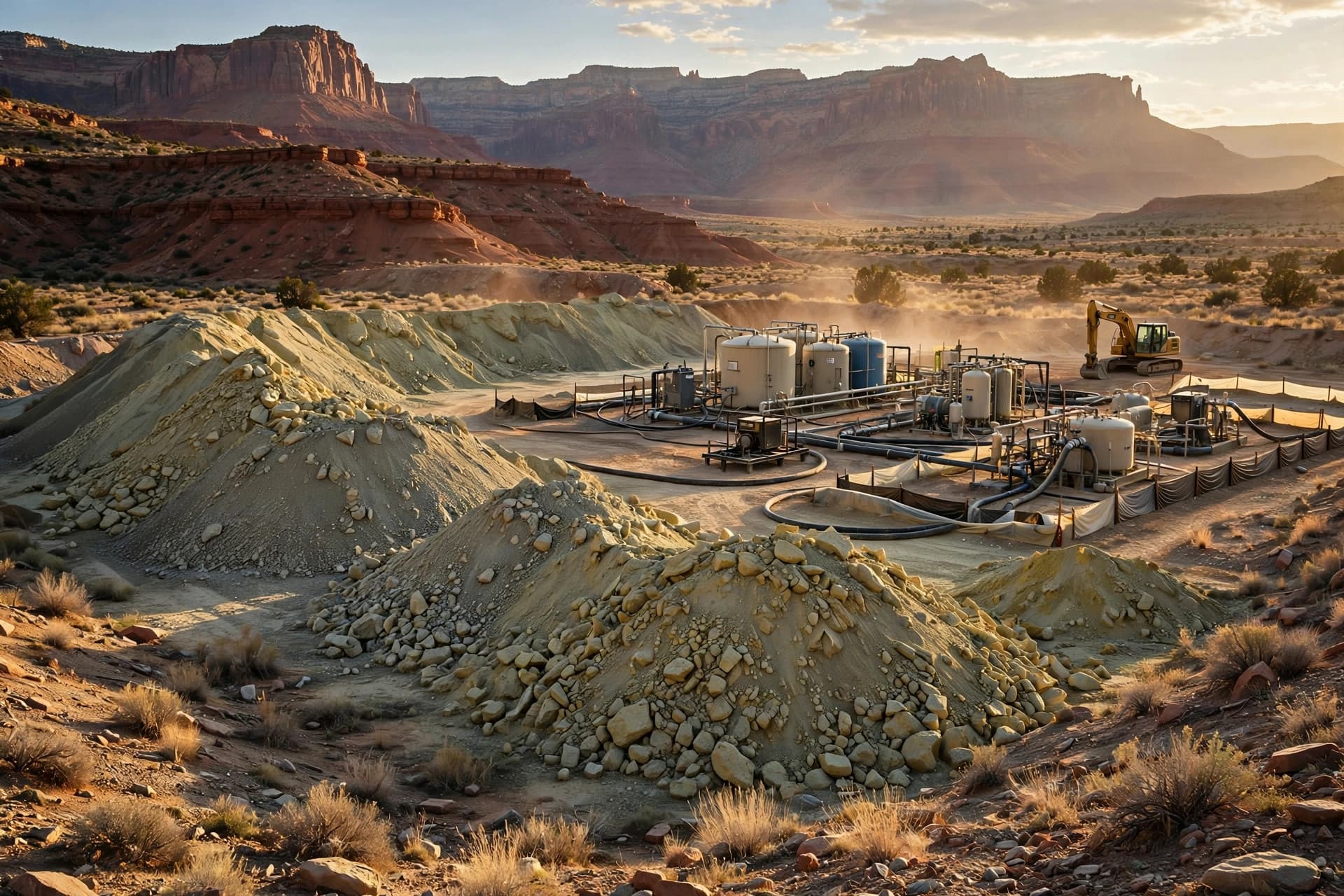
At Stateline, the first material to be worked may not be new ore at all — it may be the waste earlier miners left on the surface.
- Uranium American Resources has entered a Waste Treatment and Use Agreement with DISA Uranium and State Line Mineral Ventures.
- The deal gives DISA access to the Stateline Project to treat abandoned mine waste using its patented high-pressure slurry ablation process.
- Stateline is a cluster of more than 19 historic uranium and vanadium mines spanning Montrose County, Colorado and San Juan County, Utah.
- DISA would own the concentrates it separates; Uranium American would receive a revenue share on sales of uranium and other minerals recovered. No amounts or timetable were disclosed.
- The arrangement is structured to run alongside, not instead of, Uranium American's own development plans for Stateline, which the company calls its initial focus for a return to production.
How the model is supposed to work
Abandoned mine waste is surface material left from earlier mining that was never fully reclaimed. Under the agreement, DISA's process treats that material and produces a fine-particle concentrate stream carrying uranium and other minerals, while the remaining material is handled as part of site remediation. In other words, the same pass is meant to clean up a legacy footprint and recover metal that conventional mining at the time left behind.
DISA states it holds the only U.S. Nuclear Regulatory Commission licence for treating and recovering abandoned uranium mine waste across multiple sites. That licence claim, and the performance of the process at Stateline specifically, will be tested by what happens on the ground — characterisation of the waste first, then treatment at whatever scale permits and results support.
What is not in this release
No waste tonnage, grade, recovery rate, start date or revenue figure was disclosed, and no new mineral resource was stated for Stateline. The company's own forward-looking cautions name the real gates: permitting and regulatory approvals, technology performance, commodity prices and the parties actually performing under the agreement.
What to watch
Site characterisation results, any required approvals, and the first disclosure that puts numbers — tonnes treated and uranium recovered — behind the model. Stateline joins a growing western pattern Pulse has followed this year, from reclamation-led projects in Canada to tungsten and uranium camps in the U.S.: legacy ground being reworked with a cleanup obligation built into the economics rather than bolted on afterwards.