
Colorado gold permitting rarely makes headlines, but it decides whether a deposit ever becomes a mine. On October 9, Zephyr Minerals Ltd. (TSXV: ZFR) announced it had upsized the small financing meant to carry its Dawson Gold Project through that process.
- The placement grows to up to 6,000,000 units at $0.05, for gross proceeds of up to C$300,000, up from the 4-million-unit, C$200,000 version announced September 23. Each unit is one share plus one warrant exercisable at $0.10 for two years.
- Insiders are expected to contribute about $80,000 of the total. Securities will carry a four-month-plus-one-day hold, and closing still needs TSX Venture Exchange acceptance, with finders' fees possible.
- Proceeds go to general working capital and Dawson permitting activities — not to a new drill program.
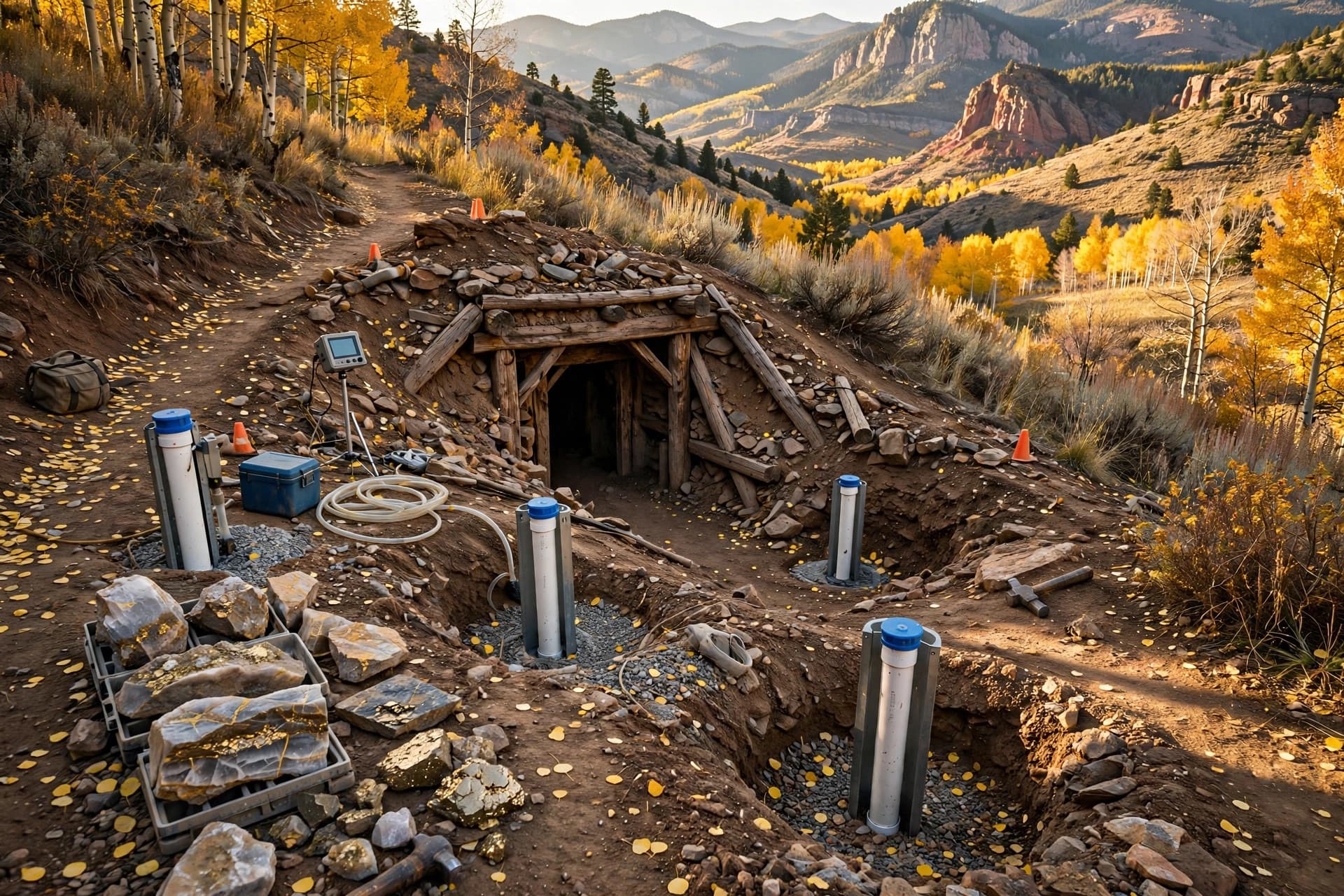
- Context from September 23: Zephyr has finished the fourth quarter of a five-quarter groundwater monitoring and analytical program at Dawson, with the final quarter scheduled for December 2026. The company says it intends to file a new mining permit application with the Colorado Division of Reclamation, Mining and Safety as early as January 2027, once the data are in and reviewed.
- Dawson is 100%-controlled in Fremont County, southwest of Cañon City, and is being advanced as a small-footprint underground gold project.
A small raise with a specific job
This is not exploration capital in the usual sense. Three hundred thousand Canadian dollars does not drill a deposit out; it pays for the monitoring, studies and application work that stand between a known gold deposit and permission to mine it. Zephyr's own timeline makes that explicit: finish the water program by year-end, submit in January, and let the regulatory process set the pace from there.
The Dawson deposit itself is an older technical story — a 2013 inferred resource and a 2017 preliminary economic assessment, both prepared under NI 43-101, neither updated for drilling completed between 2017 and 2020 (details in the caveat below). What is new in 2026 is not the geology on paper; it is the environmental dataset being assembled to support a fresh permit application.
One caveat, kept visible
Scale and status both need stating plainly. The raise is up to C$300,000 and has not been announced as closed, and it is modest money even by junior-explorer standards. Separately, a mineral resource is not a mineral reserve and has no demonstrated economic viability; Dawson's resource estimate dates to 2013 and its economic study to 2017 at a far lower gold price, so neither should be read as a current mine plan. The next honest milestones are completion of the December monitoring quarter, an actual January filing, and what Colorado regulators say in response.