
A resource estimate can grow two ways: more ounces, or more confidence in the ounces already counted. GMV Minerals Inc. did mostly the second at Mexican Hat — and that is the point of its November 23 announcement. The southeastern Arizona deposit now carries almost all of its gold in the two highest-confidence categories.
- The 2026 estimate (effective November 13, 2026): Measured — 32,038,000 tonnes at 0.630 g/t gold for 648,600 ounces; Indicated — 9,527,000 tonnes at 0.559 g/t for 171,300 ounces; combined Measured and Indicated — 41,565,000 tonnes at 0.614 g/t for 819,900 ounces; Inferred — 2,184,000 tonnes at 0.582 g/t for 40,900 ounces. About 95% of total contained ounces are now Measured and Indicated.
- The basis: NI 43-101 estimate by Dr. D.R. Webb, Ph.D., P.Geo., P.Eng., of DRW Geological Consultants Ltd., an independent Qualified Person. Reported at a 0.20 g/t gold cut-off, uncut and undiluted, assuming US$3,600/oz gold, specific gravity 2.57, and constrained within a conceptual open pit (walls 45° to 60°, maximum depth about 300 m, preliminary strip ratio 2:1). A supporting technical report is to be filed on SEDAR+ within 45 days.
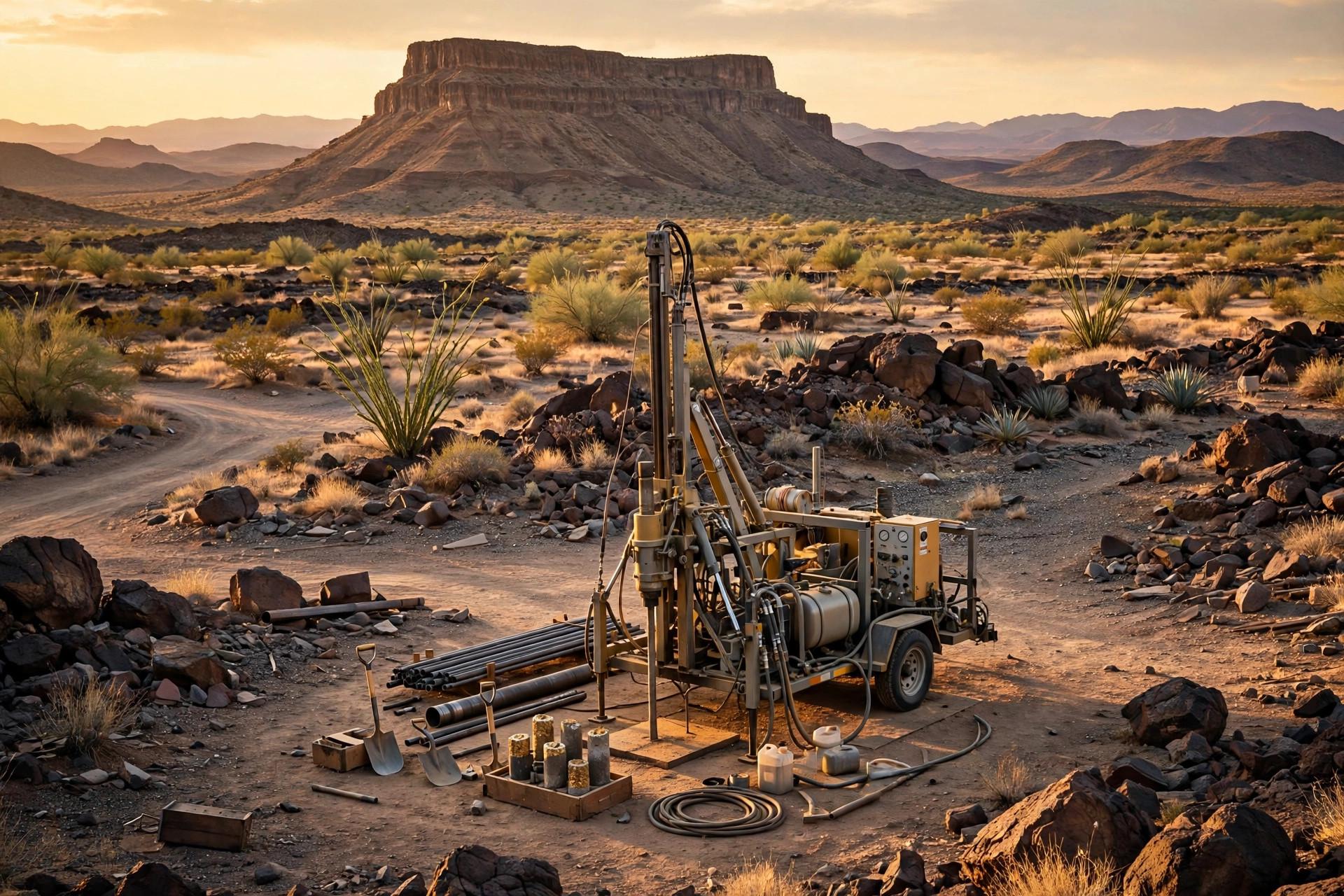
- The work behind it: the estimate incorporates 25 diamond drill holes totalling 4,775 m from GMV's 2026 program, within a database of 1,155 drill holes and trenches totalling 54,845 m drilled between 1989 and 2026. Classification was by drill spacing and continuity: Measured within 25 m of a hole, Indicated within 50 m, Inferred within 100 m.
- What changed: the previous model was entirely Inferred, grading 0.616 g/t under similar cut-off assumptions. The revised model's overall grade before classification is 0.611 g/t — the upgrade was achieved, in DRW's words, while maintaining a virtually identical overall grade. Zone 7 is a significant contributor at depth and was intersected by 10 of the 2026 holes.
- Still open: the deposit remains open at depth and to the west, and not fully delineated to the north or south. GMV says it will broaden its focus to baseline environmental, water management and cultural studies while continuing to evaluate expansion drilling, and sees exploration potential at the nearby Little Hat area.
Why a conversion story matters
Mexican Hat, held under a mining property lease in Cochise County and first explored by Placer Dome (USA) in the late 1980s and early 1990s, is hosted in fractured and altered peralkaline Tertiary volcanic rocks. The 2026 drilling was designed specifically to test the established zones at spacings tight enough to support upgrading — and, per the release, each established zone was intersected generally as predicted, with widths and grades consistent with the previous block model. President and CEO Ian Klassen called the conversion of virtually all of the previously reported Inferred resource into Measured and Indicated the milestone of the program. The release also notes favourable geometry beneath Mexican Hat Mountain and encouraging metallurgical recoveries from previous test work, with clay observed in drilling but no associated recovery issues identified in leach testing to date.
The honesty box
These are Mineral Resources, not Mineral Reserves, and they do not have demonstrated economic viability — the release states this directly. The estimate rests on a US$3,600/oz gold price assumption and a conceptual pit; a different price or pit changes the numbers. Figures are uncut and undiluted in-situ resources, and totals may not add due to rounding. The supporting NI 43-101 technical report has not yet been filed — it is due within 45 days of the release — so the full methodology, data verification and limitations will only be public when that filing lands. Nothing in the estimate is a production decision or a schedule.
What to watch
The SEDAR+ technical report filing within 45 days; the baseline environmental, water and cultural studies GMV says come next; and any expansion drilling to the west and at depth, plus first systematic work at Little Hat.