
Federal permitting is where Idaho gold projects go to wait. On November 23, Freeman Gold Corp. (TSXV: FMAN) (OTCQB: FMANF) (FSE: 3WU) announced that its Lemhi Gold Project has been given the federal government's formal coordination framework for that wait — a single tracked timetable, a named lead agency, and a council charged with holding agencies to it.
- The acceptance: Lemhi is now a FAST-41 Covered Project under Title 41 of the Fixing America's Surface Transportation Act, overseen by the Federal Permitting Improvement Steering Council (the Permitting Council) and posted to the Federal Permitting Dashboard. The U.S. Forest Service is lead agency for federal environmental review and permitting.
- How it qualified: Freeman submitted its FAST-41 Initiation Notice on November 6, 2026. Lemhi qualified under the standard pathway: mining is an eligible sector, the project requires NEPA review, and its estimated initial capital cost of US$329.7 million exceeds the US$200 million threshold.
- The next 60 days: the Forest Service and cooperating agencies will work with Freeman to finalize a Coordinated Project Plan and permitting timetable, expected to be posted to the Dashboard within 60 days. The Permitting Council monitors progress against that timetable.
- State alignment: under a February 19, 2026 memorandum of understanding between the State of Idaho and the Permitting Council, Idaho state permitting actions for Covered Projects are coordinated with federal timelines and tracked on the same Dashboard.
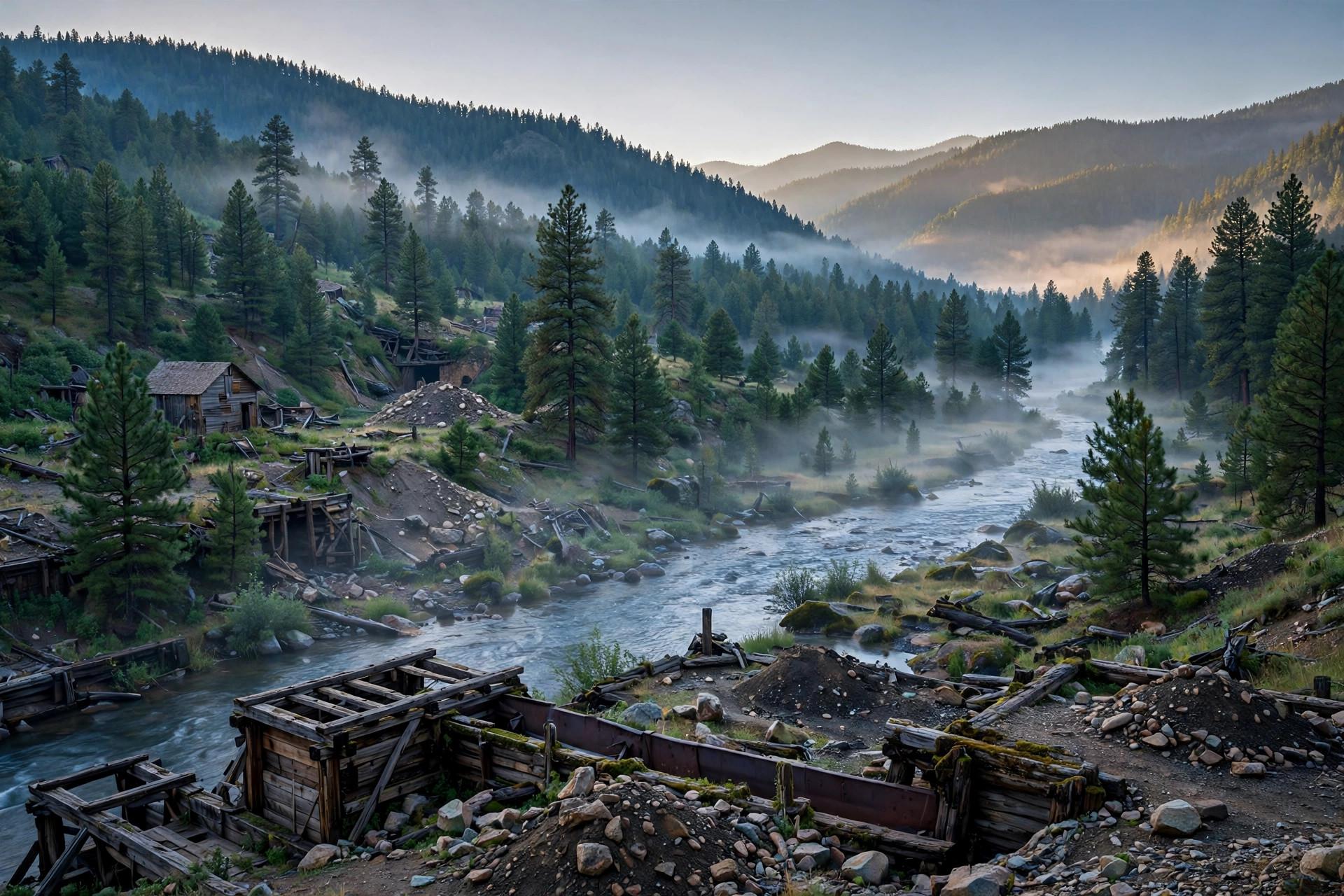
- The project: a conventional open-pit mine on public and private land in the historic Gibbonsville Mining District, 25 miles north of Salmon in Lemhi County. Environmental baseline studies are under way, and Freeman remains on track to submit its Mine Plan of Operations in December 2026. Per the company's 2026 Feasibility Study as cited in its FAST-41 application release: Proven and Probable Mineral Reserves of approximately 1.03 million ounces of gold (43.04 million tonnes at 0.74 g/t Au), a 15.2-year mine life, and average production of approximately 75,100 ounces per year over the first ten years.
What FAST-41 does — and does not do
Covered status provides a coordinated, publicly tracked permitting timetable, greater interagency coordination, and Permitting Council oversight and accountability. It does not approve anything. CEO and director Bassam Moubarak framed the acceptance the same way: FAST-41 gives the project "a clear, coordinated path through federal permitting," and that framework is now in place. Permitting Council Executive Director Emily Domenech said she looks forward to working with Freeman and the Forest Service "to advance this critical project to the finish line." The underlying reviews — NEPA environmental analysis by the Forest Service and the associated federal and state authorizations — still have to be applied for, studied and decided on their own merits.
The honesty box
FAST-41 coverage is a process milestone, not a permit. No mine is authorized by this announcement; the Mine Plan of Operations has not yet been submitted (expected December 2026), the Coordinated Project Plan and timetable do not yet exist (due within 60 days), and target dates on the Dashboard can move under the program's own procedures. The reserve, production, mine-life and capital figures are from Freeman's 2026 Feasibility Study as the company cites them — study estimates for a project that has not been built, not operating results. This post reports the acceptance and the study figures exactly as the company states them.
What to watch
The Coordinated Project Plan and timetable posting within 60 days — the first public dates for Lemhi's federal reviews; the Mine Plan of Operations submission in December 2026; and the start of the Forest Service's NEPA process that the timetable will govern.