The Podcast
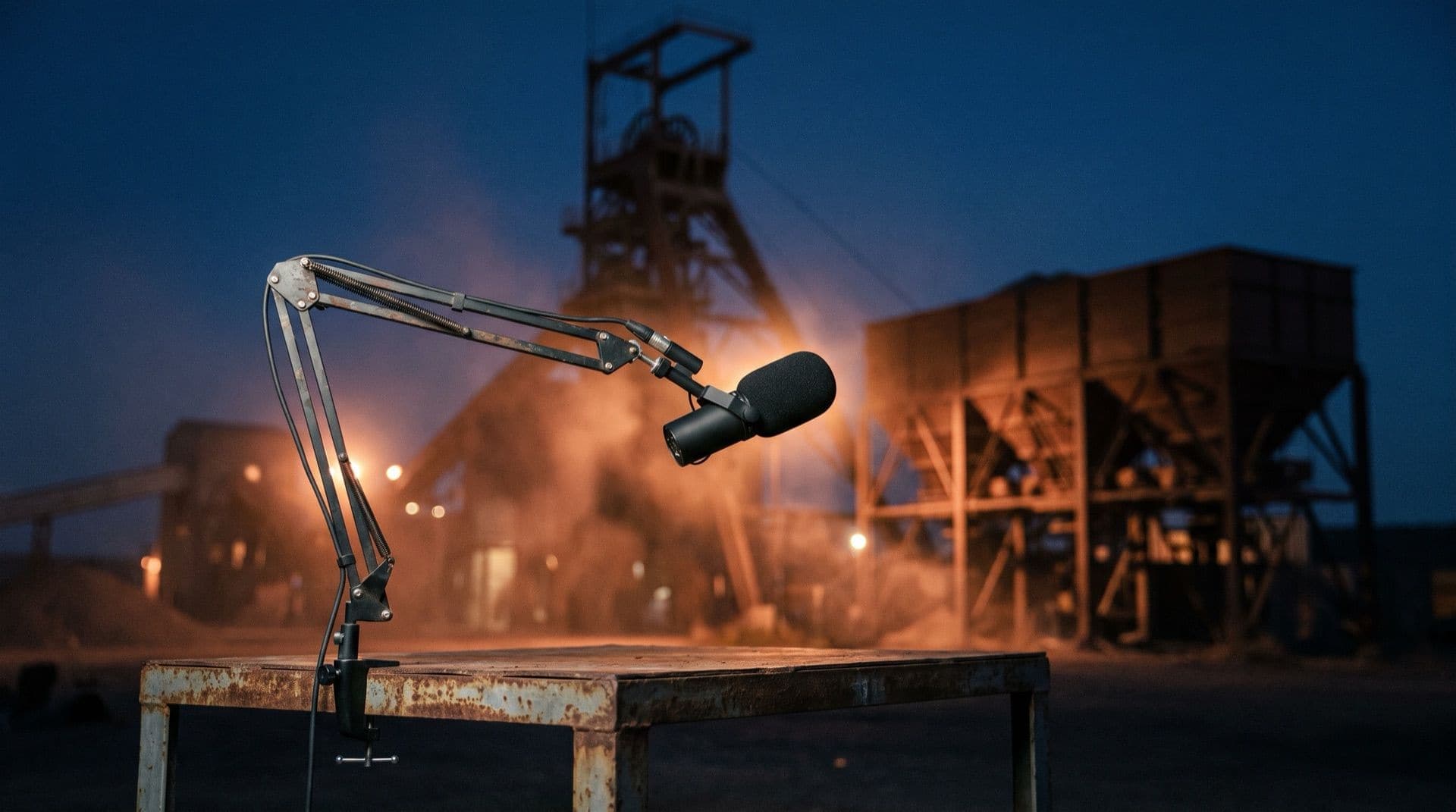
In the Trenches: A Mining Podcast Featuring Industry Leaders
Conversations with the CEOs, geologists, and operators who power everything from EV batteries to national defense. The supply chain, told by the people who live it.
Conversations from inside the industry
In the Trenches is built around the people who find, finance, permit, build, operate, supply, study, and restore mines. The format gives guests enough room to explain the choices behind a project and gives listeners the context needed to follow a technical industry without living inside it every day.
Unlike mining podcasts built only around market headlines, the show follows the full mine-to-product chain. A conversation may begin with a deposit, move through engineering and community questions, and end with the grid, vehicle, building, medical device, defense system, or household product that depends on the material.
The subjects we follow
The show covers exploration, geology, operations, metallurgy, permitting, reclamation, workforce, equipment, supply chains, capital formation, local history, strategic materials, and the changing demands placed on producers. Mining industry insights come from direct experience and are separated from promotional claims through preparation and source review.
Some episodes function as a mining history podcast, using districts, discoveries, and operating lessons to explain how today's industry developed. Others follow copper, silver, gold, uranium, antimony, lithium, rare earths, or industrial minerals from the ground into modern use.
A format designed for useful depth
Every episode starts with research and a guest-specific outline. The host can establish the person's role, the project stage, the key technical terms, the decisions at stake, and the questions a broader audience is likely to carry. That preparation keeps a podcast about mining conversational without becoming vague.
The long-form recording also supports transcripts, clips, show notes, source links, project pages, and follow-up reporting. Mining industry insights remain easier to verify when the complete answer and supporting context are available beside the short excerpts used for distribution.
Commodities, places, and people
A copper mining podcast episode might follow an Arizona porphyry system, a Utah concentrator and smelter, or a development team working through underground access. A silver mining podcast episode may begin in Idaho's Silver Valley, Nevada's historic districts, or a polymetallic project where byproduct economics matter.
A critical minerals podcast conversation can cover antimony, uranium, rare earths, lithium, beryllium, or another material whose supply chain affects technology and national capability. The show keeps the commodity connected to the people, infrastructure, processing, customers, and tradeoffs behind it.
Watch, listen, and continue the story
Mining Our Future publishes the show alongside The Pulse, the Western States Mining Guide, and Hunting Hidden Treasures. Together they let an audience hear the person, see the place, read the supporting context, and return as the project or district changes.
Companies, associations, technical experts, suppliers, community leaders, and operators can review partnership options or contact the team about a guest conversation. Every paid relationship is disclosed, and the program remains educational rather than a recommendation to buy or sell a security.
Questions the series is built to explore
- Podcast about mining becomes more useful when show notes preserve dates, source links, technical distinctions, and the context that a short clip cannot carry alone.
- Where should a listener continue after mining podcasts? Related state, commodity, tour, and Pulse pages turn one interview into a route through the wider subject.
- What can mining podcasts reveal that a short update cannot? A prepared long-form conversation can connect the guest's direct experience to the project, commodity, place, and primary record.
From interview to published episode
A strong episode begins with a question specific enough to guide the hour. Research covers the guest's role, the project or technology, recent milestones, relevant filings or public records, and the points a general listener may not understand. That preparation creates room for a natural conversation without relying on vague prompts.
Guests can include executives, geologists, engineers, operators, suppliers, community leaders, researchers, investors, and policy specialists. The common requirement is direct knowledge. Different roles reveal different parts of the system, and the archive becomes more useful when episodes connect those perspectives instead of treating one voice as the whole industry.
Technical subjects are translated through examples rather than stripped of meaning. A guest can explain what a recovery rate changes, why an orebody geometry matters, how a permit sequence works, or where a component enters a supply chain. Follow-up questions preserve the important distinction between a completed result and a future plan.
The recorded conversation is only the beginning of the publishing workflow. Each release can support a full video, an audio edition, a transcript, show notes, source links, chapter markers, short excerpts, stills, and related pages. A connected package gives listeners several ways to enter the subject and verify the details.
Editorial review protects names, figures, dates, project stages, and the context around shortened clips. Captions are checked against the actual speech, and excerpts are reviewed so a sentence is not made to imply something the guest did not say. Paid participation or sponsor involvement is disclosed to the audience.
Episodes
Season 1 episodes are on the way.
We’re recording on the road. New episodes drop here with full transcripts and show notes. Want the first one in your inbox?
Get notifiedWant to be a guest? Explorer-tier partners and up get a seat at the mic.
See partnership tiers →