
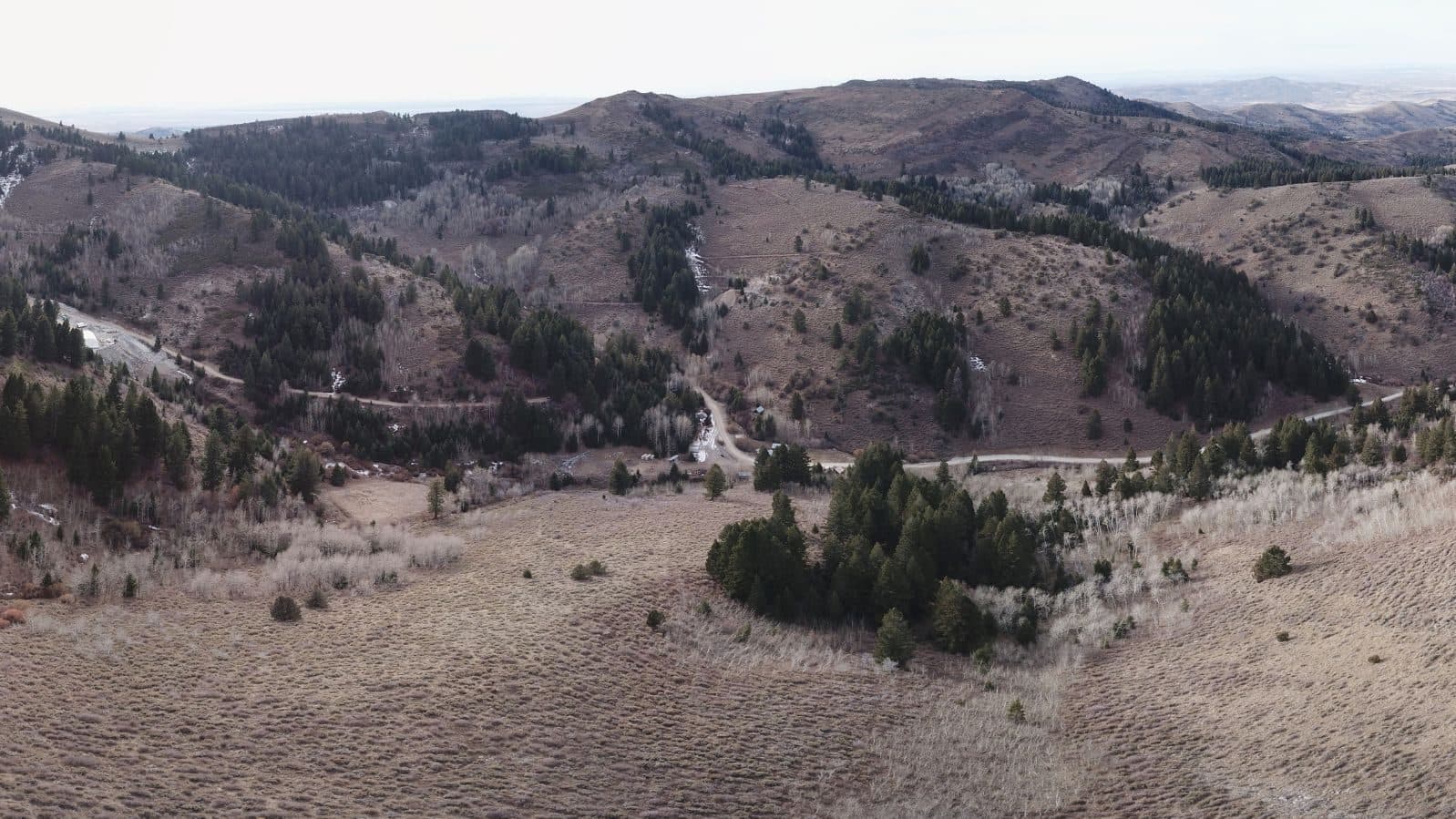
Company Chronicles. Every company has a story. This is Thunder Mountain Gold's.
Start with the name, because the name is a map that points the wrong way. Thunder Mountain Gold is a Boise company, incorporated in Idaho in 1935, and it is named for the Thunder Mountain Mining District in Valley County — a gold camp that boomed in the winter of 1902 and was finished by 1908. The company no longer owns an inch of that district. Its treasure sits some 250 miles south, in Owyhee County hard against the Oregon line: South Mountain, a high-grade underground polymetallic — zinc, silver, gold, copper, lead — that prospectors found in 1868, that Anaconda's smelting company mined through the Second World War, and that nobody has finished mining since. The name made the trip south. The hunt is for what the old-timers left in the walls.
The bones are unusually good for a junior. The mine core sits mostly on private, patented ground. More than 8,000 feet of underground workings already exist, roughly half of them rehabilitated to modern MSHA standards. Historic smelter records document direct-shipped ore at grades most projects never see — 14.5% zinc, 10.6 ounces of silver per ton. And in 2026, after a district-scale geophysics program, the drills turned for the first full season in years: fourteen core holes that stepped out into new mineralization and confirmed two porphyry centers beneath the known system. The company hunting it is ninety-one years old, thinly financed, and — through a Swiss partner's small-scale production framework — sketching a route to ore that does not run through the equity markets. That is the story. The ledger at the end is as honest as the story is good.
The Captains
Eric T. Jones — president, chief executive officer and director — is the continuity. Jones joined the board in 2006 and management in 2008, and has held the president and CEO titles since 2011. His background is operations, not promotion: he was general manager of Dakota Mining's Stibnite heap-leach operation and held roles with Hecla at Yellow Pine — the Stibnite district again — and at Rosebud. His degree is in geological engineering from the University of Idaho. The through-line of his career is Idaho underground ground, and South Mountain is the third act of it.
The field captain is new to the chair and not to the project. Dr. Steven A. Osterberg, PhD, P.G., long the company's technical advisor and qualified person, was appointed senior vice president of exploration on September 8, 2026. Osterberg previously ran exploration at Timberline Resources as vice president of exploration and served as its president and CEO; his signature is on the technical disclosures, including the 2026 drill results. Beside him, vice president of operations Rocky Chase brings thirty-eight-plus years — and the specific memory that matters here: he was previously project manager at South Mountain Mines, running the underground programs on this mountain.
The board carries heavyweight scar tissue for a company this size. Chairman Ralph Noyes spent his career with Hecla and led the Blue Bell redevelopment in Arizona and the La Choya build. Director Jim Sabala was chief financial officer of both Hecla and Coeur. Director Doug Glaspey founded U.S. Geothermal. In October 2026 the company added Ron Clayton — chairman of i-80 Gold and a former CEO of Tahoe Resources and 1911 Gold — to the board. And the technical bench includes carbonate-replacement specialist Dr. Peter Megaw, whose published CRD checklist the company's own district work maps South Mountain against, line by line.
The Name: A Rush That Starved
The company's own filings tell the corporate half plainly. Thunder Mountain Gold was incorporated on November 9, 1935, as Montgomery Mines, Inc. In April 1978, a group of Thunder Mountain property holders obtained the company and renamed it Thunder Mountain Gold, Inc. — in the filing's words, the company "takes its name from the Thunder Mountain Mining District, where its principal lode mining claims were located." It sold its holdings in that district in 2005 and acquired South Mountain in 2007. The name is a survivor of a property the company no longer holds.
The district's chroniclers — the account here is Western Mining History's, distilled from Merle Wells' Gold Camps and Silver Cities, published by the Idaho Bureau of Mines and Geology — record what the name carries. Gold outcrops were noted in the district as early as 1867, but the prospectors were forced out. Twin brothers Ben and Lou Caswell prospected the ground from 1894, taking placer gold in rising amounts: $245 in eight days in 1895, then $190, $900, $3,000 and $4,000 in the seasons that followed. In 1901, Colonel W.H. Dewey bought the Caswell claims for $100,000 and freighted stamp mills into the remote country at $125 a ton.
Then came the winter rush of 1901–02. Thousands moved on a camp that could not feed them. Food ran out; dog sleds hauled resupply through the snow; slides took lives; in the chroniclers' phrase, groceries had become more valuable than gold. Two towns rose — Thunder Mountain City, and Roosevelt, three miles down the valley. More than 2,000 miners had entered by June 1902, against predictions of 20,000, and a road reached Roosevelt in 1904. Dewey did not live to see it: he died May 9, 1903, and his company ultimately recovered only about half of what it invested. The big mines were closed by 1908, and the district is credited with roughly $500,000 in total production across its whole life. A spectacular rush, a thin take. The company that carries its name has spent four decades trying to make a different mountain pay better.
The Country: Owyhee
South Mountain belongs to older country. The Owyhee rush began in 1863, when the Jordan party — ostensibly hunting the Blue Bucket, a lost-wagon-train legend the district's historians label as legend — found gold on Jordan Creek. The placers were largely worked out by 1864, but in October of that year came the first big silver discovery on War Eagle Mountain, and Silver City rose: settled 1864, county courthouse in 1867, telegraph by 1874, some 4,000 residents and a dozen mills at its peak. Nine miles away, Captain Joseph R. DeLamar established his town and mine in 1888 and sold to a London company in 1891 for a reported $2,000,000; by the 1898 county directory the De Lamar mine's gross output had passed $5,000,000. The district produced for nearly fifty years before its last significant production in 1912; the county seat moved to Murphy in 1934, and Silver City endures as a National Register historic district.
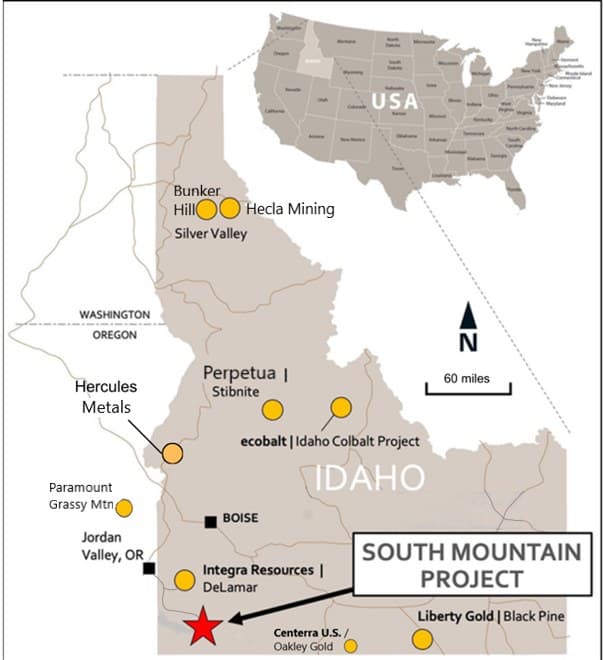
South Mountain stands at the southern end of that country — about 24 miles southeast of Jordan Valley, Oregon, roughly 70 miles southwest of Boise, rising from 5,800 feet to a 7,801-foot summit. It was prospected in the same decades, for the same reasons, by the same kind of men. What they found there was stranger and richer than silver veins: a marble-hosted replacement system carrying five metals at once.
South Mountain's Own Story
The mine's history here is drawn from the most careful compilation available: a 1985 report by W.A. Bowes Inc., preserved in the Idaho Geological Survey's MineDocs archive, which itself works from Raymond's federal surveys of 1870 and 1875, Bell's state reports of 1906–07, Sorenson (1927) and Freeman's 1982 thesis. Where the old record disagrees with itself, this account says so.
The earliest references are Raymond's, in 1870. Gold-bearing quartz veins were discovered in 1868 — Sorenson is the source for the date — followed by the oxidized silver-lead veins that made the camp. Raymond named the lodes: the Original, the Galena, the Young America, carrying $21 to $250 in silver per ton. The early mines — Golconda, Bay State, Cottonwood, Grant — worked the oxides down to the water table, and select samples of lead carbonate ran from 172.5 ounces of silver per ton at the Bay State to 277.4 ounces at the Grant. Some of that ore was shipped all the way to Wales for smelting.
In 1874, San Francisco parties formed the South Mountain Consolidated Mining and Smelting Company, bought the principal mines and built a smelter furnace near the junction of Williams and Wessel's Creeks — its slag pile still sits on the property. Raymond, reporting in 1875, described mismanagement and shady stock manipulation; then the Bank of California failed that year and the ore market with it. The district was virtually abandoned. Even the production total from that first era cannot be stated cleanly: the figures in the early reports are inconsistent, and Bell, in 1907, put it at no less than about $250,000 at 1870 prices. That is the record, with its fog left in.
The mountain then slept and woke in cycles. Idle from 1875 to 1906, when the American Standard Mining Company worked the Standard group and shipped 14 tons. From 1929 to 1931, the Exploration Company of California developed the Sonneman, Golconda and Laxey levels. The great chapter came with the Second World War: from 1940 to 1946, the International Smelting & Refining Company — the Anaconda company's smelting arm — mined the Laxey zone on federal war-production bonuses, shipping more than 50,000 tons worth roughly $1.5 million gross at 1940 prices, selectively mining across 800 feet of rake from surface down to the 1,100 sublevel. A lessor took another 857 tons from the Texas Shaft. The work ceased in 1946 with ore still in the ground.
The 1950s brought the Brandenthaler and H.F. Anderson partnership: 1,321 tons from the Texas Shaft, a Defense Minerals Exploration Administration loan that extended the Laxey level some 1,200 feet into the Texas zone and found eight ore shoots, and a 150-ton-per-day flotation mill that entered production in June 1955. The partners extracted 6,703 tons between 1950 and 1955 and blocked out roughly 180,000 tons. A lease to the Potash Company of America followed in 1956 for about two years; in the mid-1960s the Bunker Hill Company drilled the Laxey; and in 1968 W.A. Bowes Inc. acquired the property from Mrs. Ursa Brandenthaler — optioned that July, purchased outright in March 1973. Through the long tenure of South Mountain Mines Inc., which held the patented claims from 1975 to 2007, the Sonneman Level was extended some 1,500 feet, and a 1985 feasibility study outlined a historic resource of roughly 470,000 tons — historic, stated here as the company's summaries report it, and not a current estimate under modern standards.
Two ore styles run through all of it: the lead-silver fissure veins the first miners chased, and the zinc-rich skarn massive sulphides in the Laxey Marble, which produced the most. And the production totals require the same honesty as the discovery dates. Smelter records document 53,642 tons of direct-shipped ore at realized grades of 14.5% zinc, 10.6 ounces of silver per ton, 0.058 ounces of gold, 1.4% copper and 2.4% lead. The company's own compilation — direct-shipped plus ore milled on site — puts total historic production near 93,000 tons, carrying about 1.2 million ounces of silver, 22.7 million pounds of zinc, 4.9 million pounds of copper, 3.6 million pounds of lead and 3,900 ounces of gold. Bowes counted more than 60,000 tons district-wide. Three counters, three definitions; the piece prints them side by side rather than picking the biggest.
The Modern Reassembly
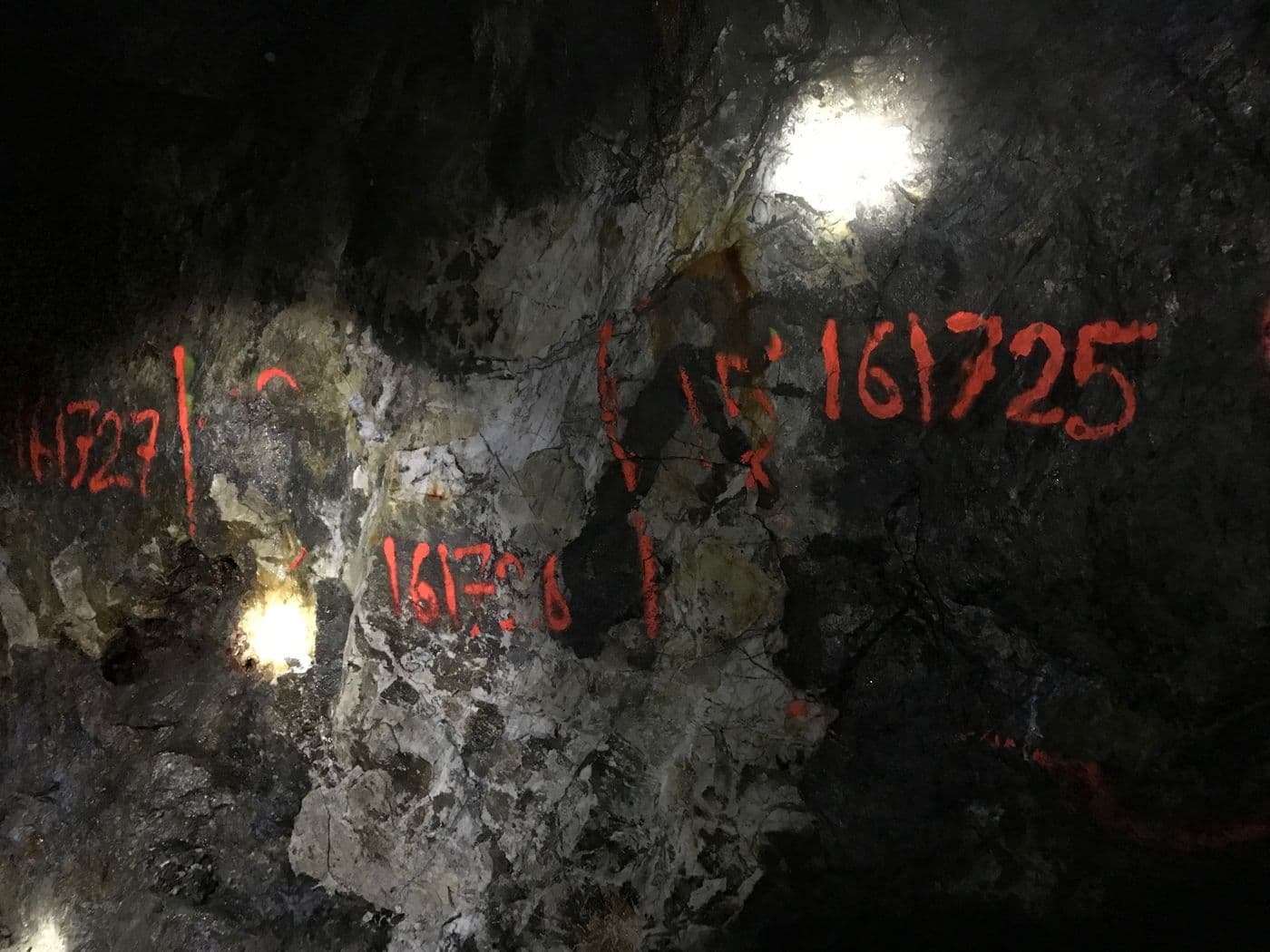
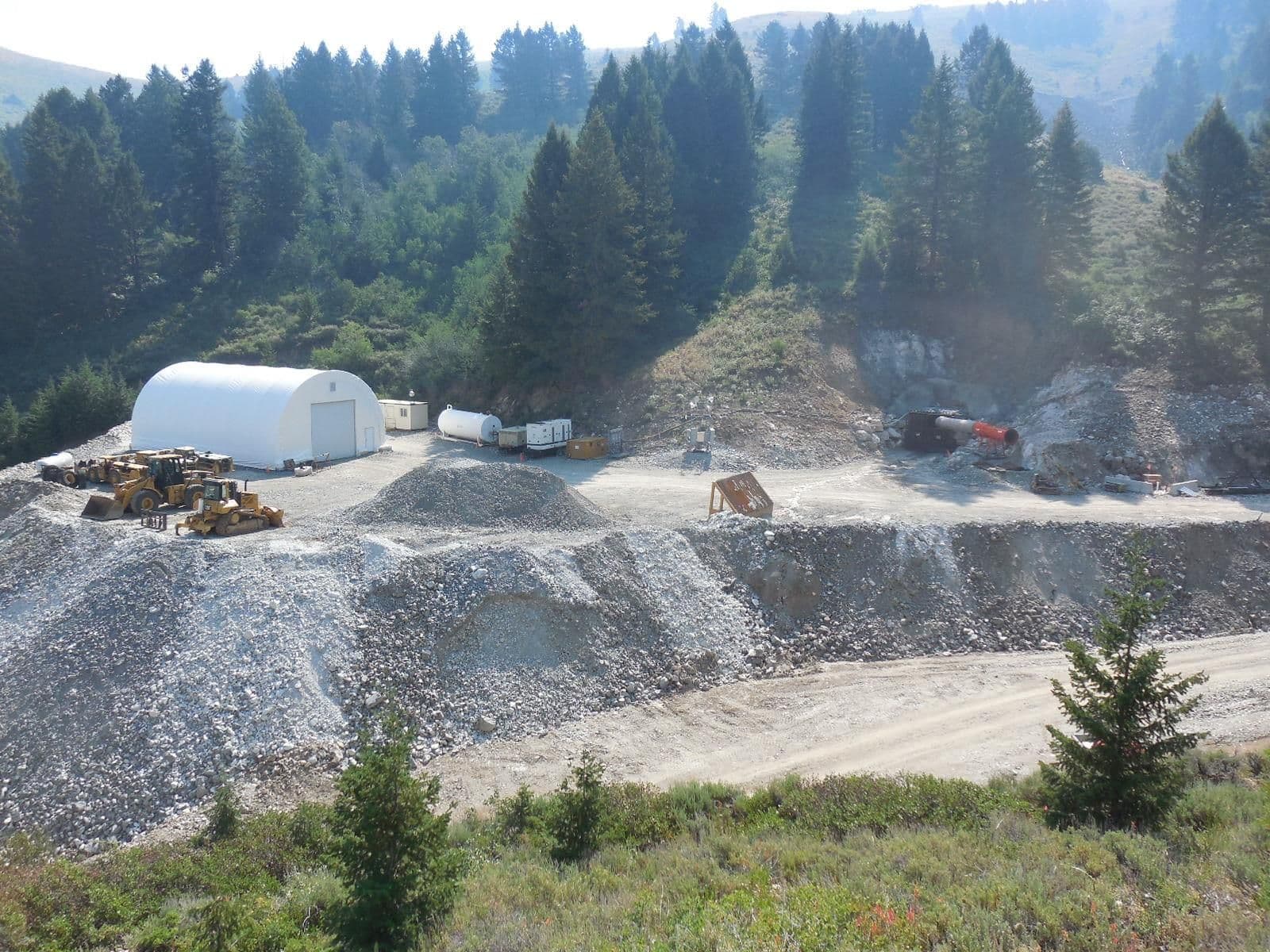
Thunder Mountain Gold acquired South Mountain in 2007 through its wholly owned subsidiary, South Mountain Mines Inc., and by the company's count has invested roughly US$25 million in the property since. The work was unglamorous and compounding: rehabilitating approximately 4,000 feet of the historic workings to MSHA-compliant condition, drilling more than 60,000 feet of modern core, and assembling the land. The mine-area tenure is the part juniors dream about — 18 patented claims over 346 acres, 396 acres of owned private land, 21 unpatented claims and 889 acres of leased private minerals, with a millsite on private land 6.5 miles from the mine. Mostly private ground means the permitting path runs through Idaho, not through a federal plan of operations.
In June 2026 the company added the district's missing piece: a 20-year mineral lease with the Idaho Department of Lands, won at competitive auction with a $210,000 bid, covering approximately 3,675 acres of state land adjacent to the mine property. The lease runs from March 1, 2026 to February 28, 2046, was approved by the State Land Board and signed by Governor Brad Little — the release put the expanded South Mountain property at 13,061 acres, and the company describes the wider district complex at roughly 52 square miles. In early 2025 the company had already restarted the technical line: work toward an updated resource and, beyond it, the project's first modern economic study.
The Treasure, Measured
The current measurement is Hard Rock Consulting LLC's NI 43-101 estimate — effective October 16, 2023, reported December 15, 2023, with resource geologist Richard A. Schwering, P.G., SME-RM, as qualified person, and restated under S-K 1300 as of December 31, 2023. At a US$97.50-per-ton net smelter return cut-off:
- Measured and indicated: 223,000 short tons at 9.02% zinc, 4.27 ounces of silver per ton (953,000 ounces), 0.059 ounces of gold (13,300 ounces), 0.64% copper and 0.94% lead
- Inferred: 959,000 short tons at 7.56% zinc, 5.67 ounces of silver per ton (5.44 million ounces), 0.037 ounces of gold (35,200 ounces), 0.80% copper and 1.06% lead
Against the 2021 estimate, measured and indicated tonnage rose 7.7% and inferred tonnage 15.1%, at grades that held. The modelled zones — Laxey, DMEA, MB4, Texas — remain open; the 2023 model extended the DMEA zone another 250 feet down-dip. It is a small, very rich inventory: at the company's own conceptual rate of 750 tons per day, the measured and indicated tonnage alone is roughly a year of mill feed, which is why everything about this project now turns on conversion and expansion — and why the 2026 drill program mattered.
The 2026 Season
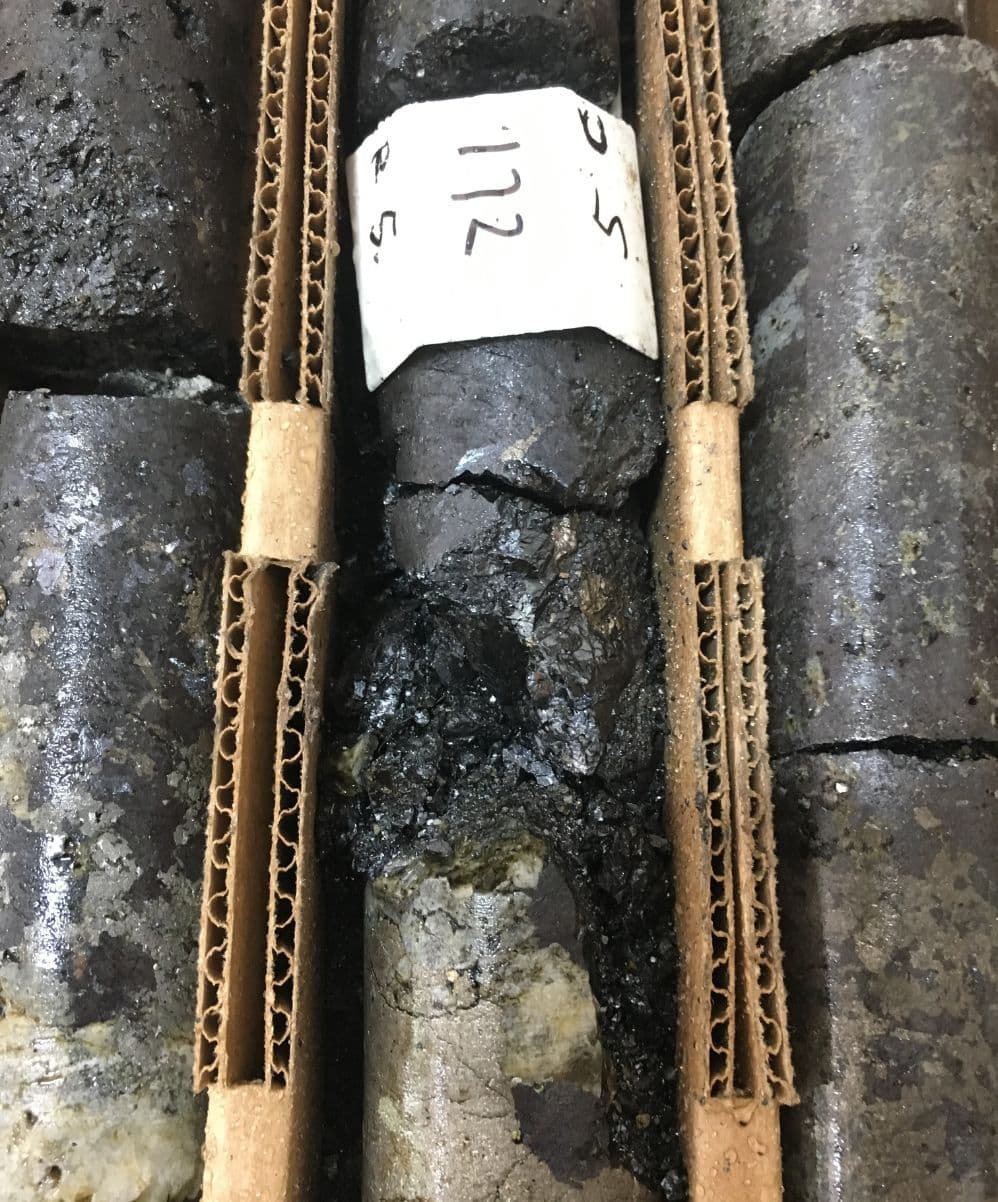
The season was built on geophysics. District work in 2025 — magnetotelluric and pulse-EM surveys across the complex — outlined porphyry-style targets beneath and beside the known replacement system, and on June 22, 2026 the company launched its first full drill program in years: a Boart Longyear LF90D rig with contractor Big Sky Exploration. Fourteen core holes totalling 2,670 metres (8,760 feet) were completed in the third quarter — ten aimed at the CRD massive sulphides, four at the intrusive targets.
First assays, on September 17, 2026, returned broad silver intervals, including a 22.47-metre interval grading 86 g/t silver, and identified new massive sulphide at the Kentucky target, some 250 metres from the resource, below a gossan that had channel-sampled 7.6 metres at 125 g/t silver, 1.2% lead and 1.7% zinc. The full results followed on October 26, 2026:
- Kentucky Ridge — hole SM26-062 cut 22.28 metres at 2.07% zinc and 9.00 g/t silver, including 14.81 metres at 2.98% zinc and 11.9 g/t silver, about 25 metres down-plunge from that gossan channel: new CRD mineralization, roughly 250 metres northwest of and on strike from the known zone
- DMEA extension — hole SM26-060 returned 2.38 metres at 29.2 g/t silver and 0.455 g/t gold, pushing the known zone up-dip toward surface
- Gold Breccia porphyry — hole SM26-054 returned 55.17 metres from surface at 0.112 g/t gold, including 3.0 metres at 0.657 g/t, in the heterolithic breccia the company first identified in 2009
- Birthday porphyry — two holes beneath a strong MT anomaly cut five porphyry intrusive phases with intense sericite alteration and chalcopyrite-bearing veinlets; a third hole was abandoned in the basalt cover, and every Birthday assay is still pending
Assays were in for nine of the fourteen holes, with five outstanding. The season had one scare: the Big Grass Fire, which started in Oregon in late July, crossed the district — and left the company's structures and equipment untouched. Surface work continues through the end of the 2026 field season toward a planned 2027 program.
"The 2026 program identified new CRD massive sulfide-related mineralization and confirmed two highly altered, sulfide-bearing porphyry centers." — Dr. Steven Osterberg, Senior Vice President of Exploration, October 26, 2026
The MFD Door
The most unusual thing about this company is not in the ground. On January 14, 2025, Thunder Mountain Gold signed an option agreement with MFD Investment Holdings SA, a Swiss investment firm: MFD may earn a 10% interest in South Mountain Mines Inc. by incurring US$1.0 million in exploration expenditures on the project by October 31, 2026 — a deadline extended a full year by amendment in September 2025. Layered onto the option, on September 8, 2025, came a small-scale production framework. Thunder Mountain Gold operates; MFD finances 100% of the qualifying capital required to reach small-scale production; revenues split 80/20 in MFD's favour until MFD has recovered 1.5 times its capital, then 50/50; the right ends at the earlier of ten years or 1.5 million tonnes mined, after which MFD holds its 10% of SMMI plus a 0.5% net smelter return royalty. Implementation remains subject to permitting, definitive budgets and final joint-venture terms, and the option agreement itself takes effect on TSX Venture Exchange approval.
"Advancing selective small-scale production without issuing equity keeps our balance sheet intact, creates positive cash flow and positions the company to pursue resource growth." — Eric Jones, President & CEO, September 8, 2025
The framework has begun to move. In December 2025, MFD entered an options review phase with Ocean Partners USA, a metals trading house, to evaluate near-term production pathways — toll milling, direct-shipping ore and concentrate production — targeting a potential commencement in 2026. The company's own words carry the caution: no production decision has been made.
The Wider Map: Trout Creek
South Mountain eats first, but Nevada holds the second ticket. The Trout Creek project is a 100%-owned gold-copper exploration target on the Battle Mountain–Eureka trend, in the Reese River Valley on the western flank of the Shoshone Range — ground formerly held by Phelps Dodge, adjacent to and surrounded by Nevada Gold Mines joint-venture land, near i-80 Gold's Cove-McCoy and south of the Phoenix Complex. Geophysics and soil geochemistry have outlined anomalies; the company's stated next steps are target-definition surveys and evaluating strategic partnerships. It is a well-addressed idea at an early stage.
- Listings: TSX-V: THM · OTCQB: THMG — headquartered in Boise, Idaho; incorporated November 9, 1935 as Montgomery Mines, Inc., renamed for the Thunder Mountain district in 1978
- The captains: Eric T. Jones, President, CEO & Director (with the company since 2006; ex-Dakota Mining, ex-Hecla) · Dr. Steven Osterberg, SVP Exploration & Qualified Person (appointed September 2026) · Rocky Chase, VP Operations · Ralph Noyes, Chairman (ex-Hecla) · directors Jim Sabala (ex-CFO, Hecla and Coeur), Doug Glaspey, Ron Clayton (ex-CEO Tahoe Resources; joined October 2026)
- The flagship: South Mountain, Owyhee County, Idaho — underground zinc-silver-gold-copper-lead CRD/skarn in the Laxey Marble, held through wholly owned South Mountain Mines Inc.; mine core mostly on patented and private land; property package 13,061 acres after the June 2026 state lease; 8,000+ feet of workings, ~4,000 feet rehabilitated
- The treasure (Hard Rock Consulting, effective October 16, 2023): 223,000 tons measured & indicated at 9.02% Zn, 4.27 oz/t Ag, 0.059 oz/t Au, 0.64% Cu, 0.94% Pb + 959,000 tons inferred at 7.56% Zn, 5.67 oz/t Ag, 0.037 oz/t Au, 0.80% Cu, 1.06% Pb — no reserves established
- The history: discovered 1868; first-era smelter built 1874; Anaconda's International Smelting & Refining mined the Laxey on war-production bonuses, 1940–46; DMEA-era development and a 150-tpd mill in the 1950s; documented direct-shipped production of 53,642 tons at 14.5% Zn and 10.6 oz/t Ag; ~93,000 tons all-in by the company's compilation
- The 2026 season: 14 core holes, 2,670 m — new CRD mineralization at Kentucky Ridge (22.28 m at 2.07% Zn, 9.00 g/t Ag), DMEA extended up-dip, two porphyry centers confirmed at Gold Breccia and Birthday; five holes' assays pending, including all of Birthday's
- The path: MFD Investment Holdings SA may earn 10% of SMMI for US$1.0M of exploration spending by October 31, 2026, and funds 100% of qualifying capital under a small-scale production framework (80/20 revenues to 1.5× payback, then 50/50, capped at 10 years or 1.5M tonnes); Ocean Partners evaluating toll-milling and direct-shipping pathways since December 2025
- The treasury: US$1.11 million cash at June 30, 2026 (10-Q), rebuilt to approximately US$3.39 million by August 7, 2026 after a unit placement; 101.6 million shares outstanding per the company's investor page; accumulated deficit US$12.23 million
- The wider map: Trout Creek gold-copper target, Battle Mountain–Eureka trend, Nevada — 100%-owned, formerly Phelps Dodge, surrounded by Nevada Gold Mines ground
Where It Stands
The honest ledger, because the story is strong enough to carry it.
This is a resource, not a reserve, and no current economic study exists. There is no preliminary economic assessment on the 2023 resource. The company's own website circulates preliminary concept figures — a 750-ton-per-day operation over roughly ten years — but its pages do not agree with each other: capital cost appears as roughly US$50 million in one place and US$70 million in another, operating cost as US$140 per ton in one place and up to US$200 in another, with a 25% IRR and US$50 million NPV quoted on the project page. None of it is filed in a technical report. The company restarted technical work in early 2025 toward an updated estimate and a PEA; neither has been delivered yet.
The tonnage is small, and most of it is inferred. The measured and indicated inventory — 223,000 tons — is about a year of feed at the company's own conceptual rate, and inferred material makes up roughly four-fifths of the total resource tonnage. The investment case is grade, conversion and expansion, in that order, and the 2026 step-out at Kentucky Ridge is the first hard evidence on the third leg. It is evidence, not yet tonnage.
Equivalent grades move with price decks; the rock doesn't. The 2023 release expressed the measured and indicated resource at 20.55 ounces per ton silver-equivalent; the company's May 2026 deck expresses the identical tonnage at 13.30 ounces per ton silver-equivalent. Both are the company's numbers, three years apart, on different price assumptions. The metal-by-metal grades in the filed estimate are the firm ground, and they are the numbers this Chronicle prints.
The MFD door is a framework, not a mine. Through June 30, 2026, the company had recorded US$203,498 of MFD-funded project expenditures against the US$1.0 million earn-in, whose deadline fell on October 31, 2026; completion of the earn-in had not been announced in the company's releases as of this writing. Small-scale production still requires permits, definitive budgets, a finalized joint venture and exchange approval of the option agreement, and the Ocean Partners review is — in the company's words — an evaluation for which no production decision has been made.
The treasury runs in tranches, and the meter runs fast. Cash was US$1.11 million at June 30, 2026 against a six-month net loss of US$1.60 million; the parent company's own shareholders' equity stood at negative US$60,578, and a shares-for-debt settlement of up to 1.57 million shares was proposed in July 2026. A unit placement closed after quarter-end rebuilt reported cash to roughly US$3.39 million by August 7, 2026. That is the model — raise, drill, repeat — and the dilution is part of the file: 101.6 million shares out, with warrants and options above that.
The porphyries are real rocks, not yet real grades. Two intrusive centers with the right alteration are confirmed by drilling — a genuine scientific result in a district whose sulphides need a source. But Gold Breccia's best 2026 interval is 0.112 g/t gold over 55.17 metres: broad and low-grade. Every Birthday assay is pending. The porphyry story is a beginning, and beginnings are what exploration companies sell; price it as one.
What stands, after all of that: a five-metal underground system on mostly private Idaho land, mined at remarkable grades by serious operators in three different centuries and never finished by any of them; a 2023 measured estimate that is small and exceptionally rich; a 2026 drill season that found new mineralization where the geophysics pointed; and a financing structure that — if its permits, budgets and approvals land — could put ore through a mill without waiting for a major's cheque. The company took its name from a rush that starved in the snow and produced half a million dollars. South Mountain has already produced more than that at 1940 prices. The captains hunting it now are betting the mountain was never the problem — only the finishing.
---
Treasure Hunter Chronicles · Company News · Thunder Mountain Gold (TSX-V: THM · OTCQB: THMG) · South Mountain District, Owyhee County, Idaho. Written from Thunder Mountain Gold's own releases and filings and the public record linked above. Not investment advice.