
Company Chronicles. Every company has a story. This is Peruvian Metals'.
- 36,616 tonnes — processed at Aguila Norte in 2025, a record year at full permitted capacity — and every tonne of it was third-party mineral
- 221,020 tonnes — processed since the plant started up in 2017, as of September 2026
- 100 tonnes per day — the plant's current permitted rate; its environmental permit allows expansion to 350 tonnes per day
- C$3.1 million — revenue for the fiscal year ended March 31, 2026, with C$0.88 million of income from plant operations, per the company
- 80% — Peruvian Metals' ownership of the plant, held through Minera Aguila de Oro S.A.C. (MADOSAC)
- 10 years — the surface-rights term renewed in March 2026, securing the plant site for another decade
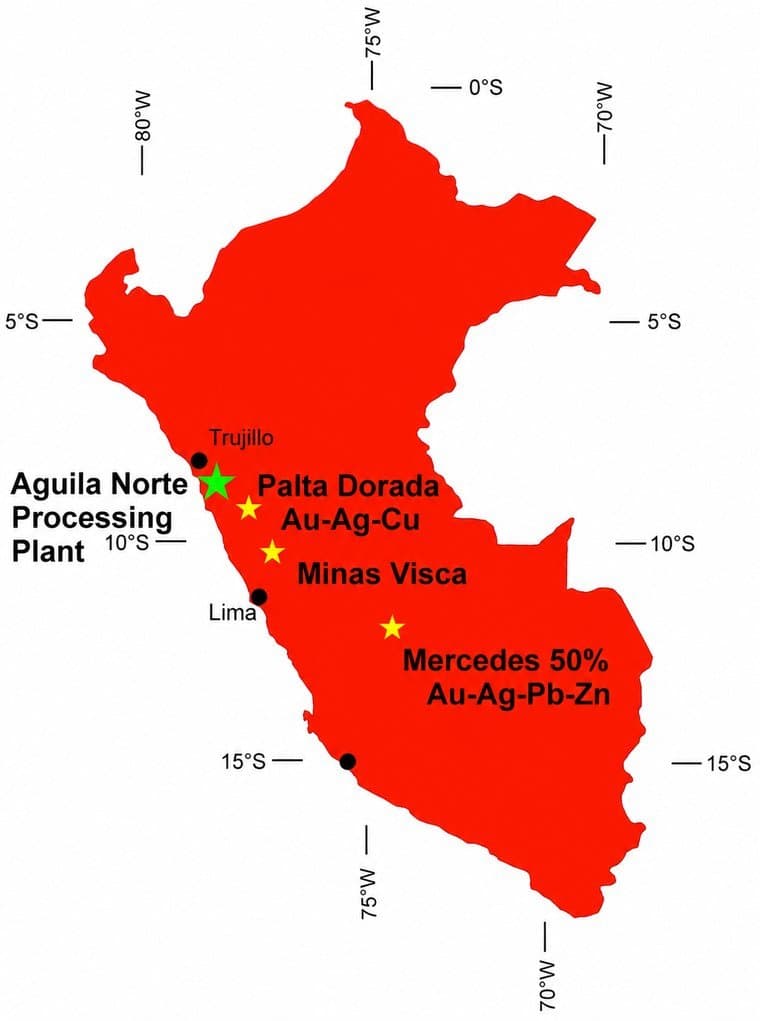
- ~2,250 hectares — Palta Dorada, the 100%-owned gold-silver-copper property 140 kilometres southeast of the plant
- 89% — gold recovery from Palta Dorada sulphide material in flotation testing at the plant's own laboratory standards
- 3,999,999 shares — of Rio Silver Inc., received in December 2025 for the sale of the Minas Maria property, making Peruvian Metals the single largest shareholder of the company Reeder used to run
The Long Game
Most junior mining companies are a hope and a drill program. Peruvian Metals Corp. (TSX-V: PER; OTCQB: DUVNF) is something rarer: a junior that owns a working industrial asset — a permitted processing plant — because its chief executive has been playing a longer game in Peru than almost anyone else on the Venture Exchange.
Jeffrey Reeder, P.Geo., has been working in Peru since 1994, by the company's account a general manager there since 1996. He is a University of Alberta geology graduate, registered as a professional geologist in British Columbia since 1992, and his early career reads like the treasure-hunter archetype this series exists for: exploration in British Columbia, then Venezuela, Peru and Brazil — where, in the Tapajós region, he identified a style of gold mineralization previous operators had not recognized. His conceptual work drew joint ventures with IAMGOLD, Rio Tinto, Cambior, First Quantum and Rio Alto over the years. He joined the board of this company — then called Duran Ventures — in 2006, became its chief executive in September 2009, added the chairman's seat in 2017, and in September 2018 renamed it Peruvian Metals Corp. Management is the company's largest shareholder group; Reeder himself holds roughly 10.9 million shares.
For most of that tenure, Peruvian was a conventional prospect generator: stake ground, model it, farm it out, repeat. The pivot — the decision this Chronicle is really about — came in 2015, and Reeder explained it himself in a March 2026 news release:
"We noticed that the small miner in Peru was in a unique position to benefit from new regulations allowing provisional permits for mineral extraction and processing. The Peruvian Government required that the small miner must process their mineral in permitted processing plants. Therefore, we decided to build a flotation plant to treat sulphides and to build relationships with the small miners in Peru." — Jeffrey Reeder, CEO, Peruvian Metals (news release, March 2, 2026)
Peru's formalization drive had created a bottleneck, and bottlenecks are where money collects. Thousands of small miners suddenly needed permitted plants to treat their ore legally, and northern Peru had very few. Reeder's answer was not to find a bigger deposit. It was to build the toll booth.
The Engine: Aguila Norte
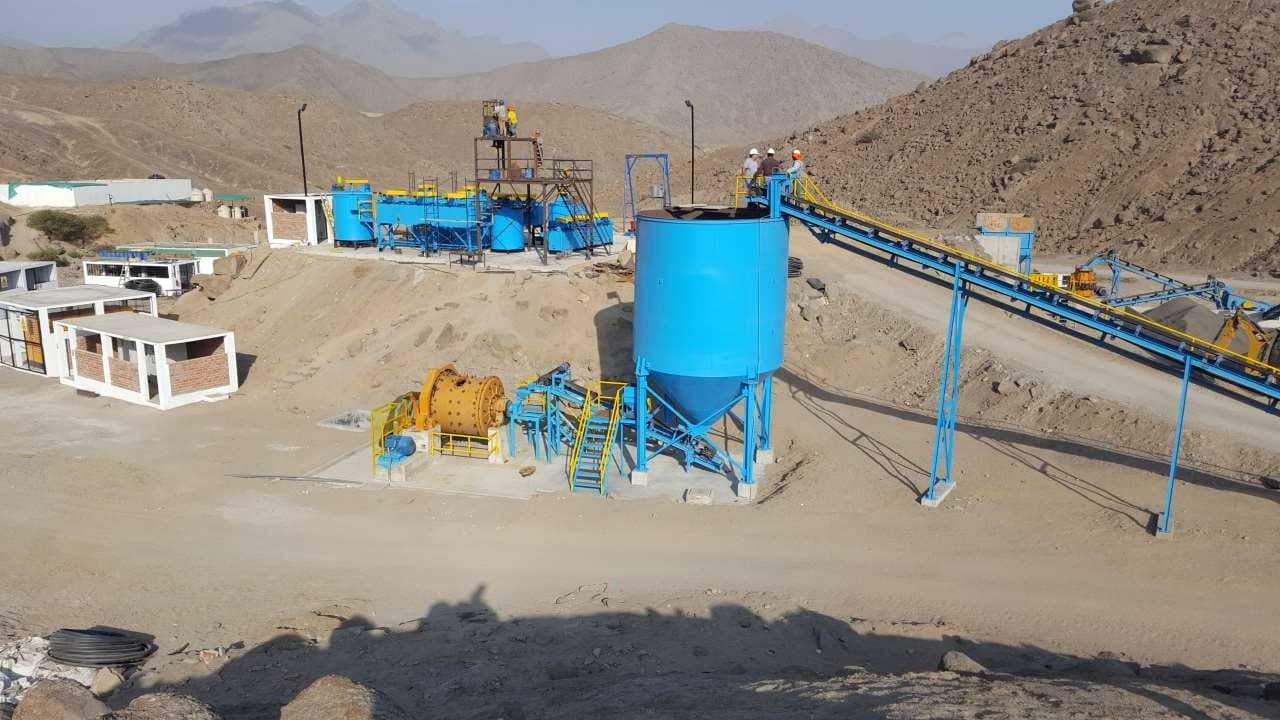
The plant sits on a 120-hectare concession in the dry coastal foothills near Trujillo, Peru's second city, ten kilometres off the Pan-American Highway. Peruvian holds its 80% through MADOSAC; the other 20% belongs to the Peruvian concession owner. Filings put the investment for that 80% at more than US$1.5 million. Surface rights came in February 2016, construction finished late that year, the environmental permit (the IGAC) followed in mid-2017, and the first third-party mineral went through the circuits in early 2017.
Inside the fence it is a complete, conventional plant: crushing, milling, gravity separation and flotation, able to produce up to three distinct concentrates. In 2019, an early record year, it turned out 4,091 tonnes of zinc concentrate averaging 52.4% zinc and 1,364 tonnes of lead-silver concentrate averaging 52.9% lead and 125 ounces of silver per tonne. The feed comes two ways — toll milling, where small miners pay to have their ore processed, and mineral purchases, where the company buys ore and keeps the concentrate. Either way, the plant eats first.
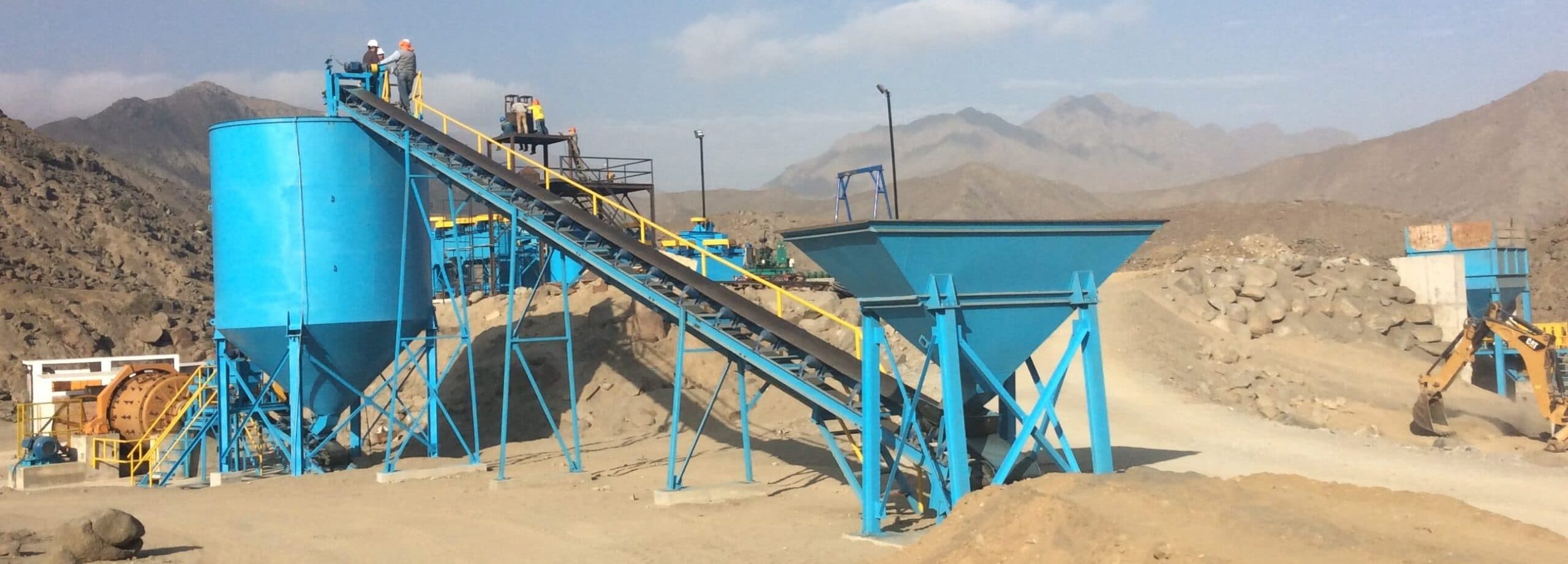
The throughput record is the story the market keeps underrating. Eighteen thousand five hundred ten tonnes in 2019 — itself a 380% jump on 2018. Then 28,654 tonnes in 2021, 29,667 in 2022, 30,199 in 2023, and a record 36,616 tonnes in 2025, an 8% increase on 2024, with the plant at full capacity for the year. By the company's count the mill has run at full production capacity for nine of the last ten quarters, including 9,065 tonnes in the third quarter of 2026 alone, and it has now processed more than 221,000 tonnes since start-up. The financial shadow of that record: revenue of roughly C$3.1 million for the fiscal year ended March 31, 2026, and — the line that matters — C$0.88 million of income from plant operations that year, per the company. The company also notes it has raised minimal equity since 2018. The mill pays the rent.
There are two growth levers, and both are already in motion. The first is expansion: the existing permit contemplates 350 tonnes per day, engineering studies on expanding throughput and connecting to the national grid are under review, and in October 2026 Reeder told shareholders the company is "planning to expand the production levels for the second quarter of 2027." The second is the plant's own waste. Sampling of the tailings area this fall returned twenty samples averaging 2.4 grams of gold and 90 grams of silver per tonne; a composite metallurgical sample confirmed recoveries of 93% for gold and 87% for silver. A hand-auger drilling program — holes at ten-metre spacing, eight to ten metres deep — is now defining the tailings so the company can file the reprocessing plan with Peru's Ministry of Mines. The engine, in other words, has been quietly stockpiling a second feed source behind the plant for nine years.
And the neighbourhood keeps giving. In 2025 the company received 54 tonnes of oxide gold material grading 5.31 ounces of gold per tonne — as a royalty, from a small miner working old workings on the company's own concession. The toll booth, it turns out, was built on prospective land: MADOSAC's ground around the plant hosts gold-silver-copper veins the company began re-examining in 2026.
The Property in Hand: Palta Dorada
A toll mill running flat out on other people's ore is a business. A toll mill about to run on its own high-grade ore is a different business entirely — the toll margin becomes a mining margin, and fixed costs stop being a ceiling and start being leverage. That is what Palta Dorada is for.
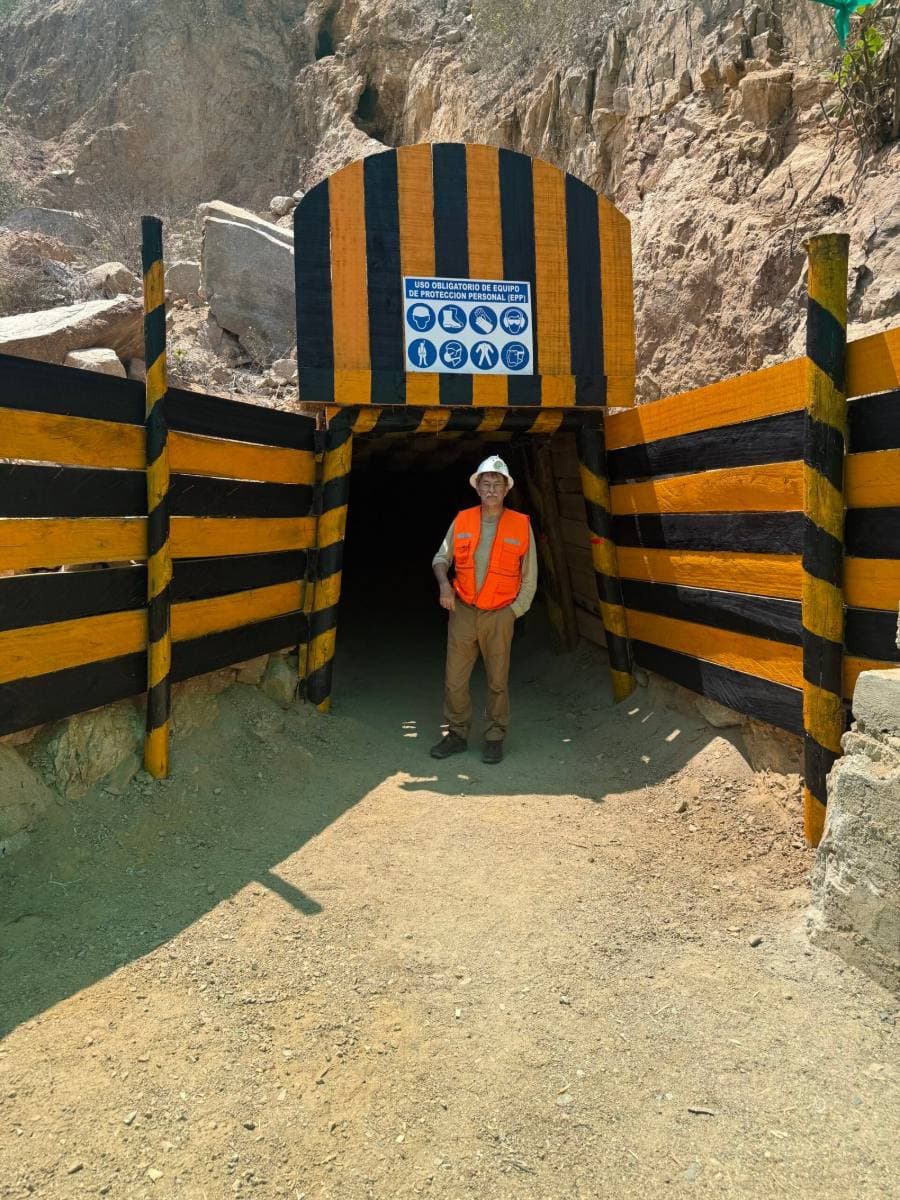
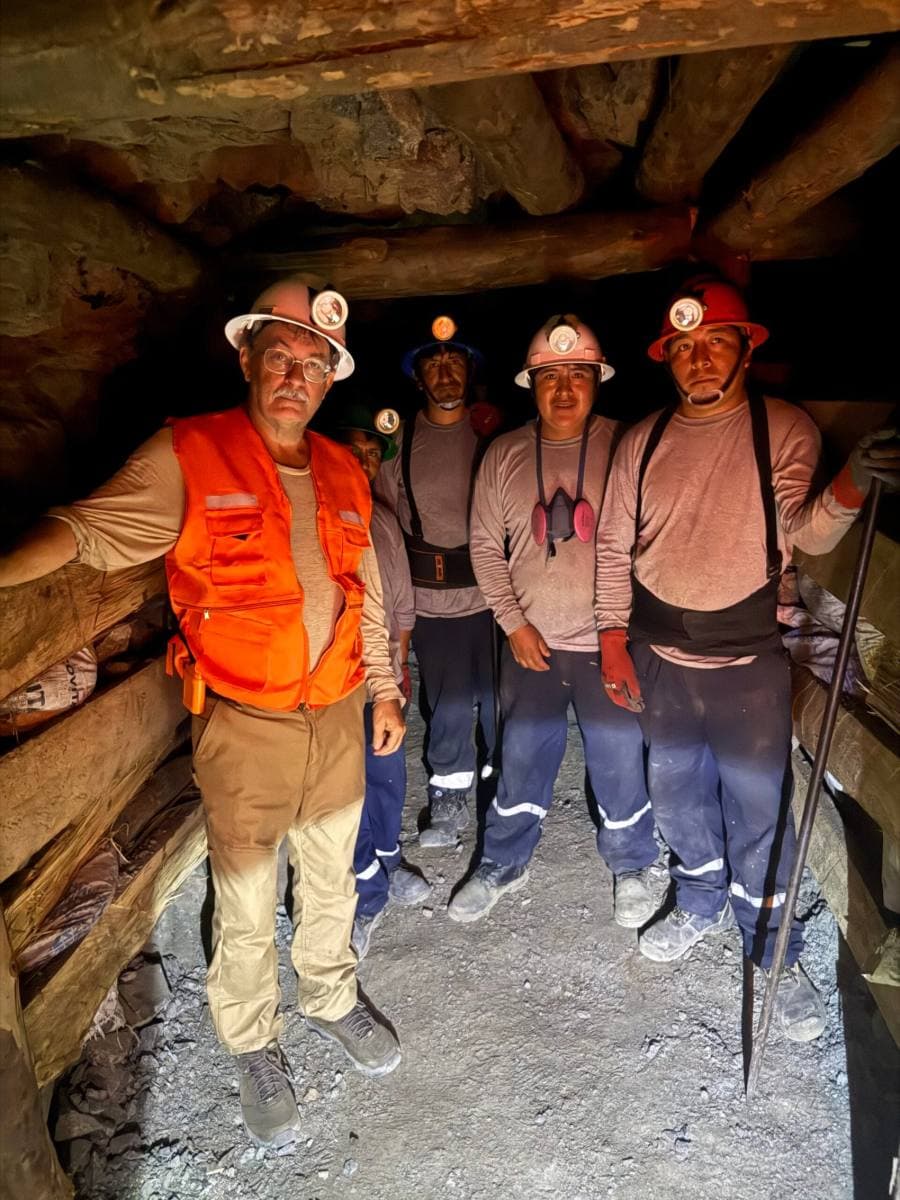
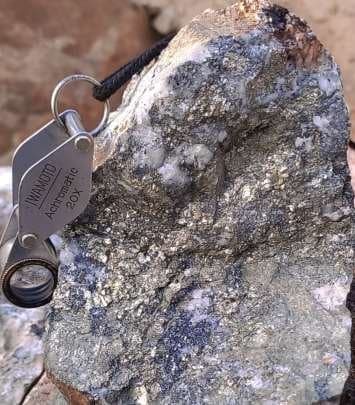
The property — the company spells it Palta Dorada — covers about 2,250 hectares in the Ancash department, roughly 140 kilometres southeast of the plant by mainly paved road, and Peruvian owns 100% of it. The main structure is the San Juan vein, exposed for at least 840 metres of strike, one of at least four mineralized structures on the property. The old-timers were here first, as always: a historic shaft goes down 53 metres through oxide into sulphide, and the company has rehabilitated it, driven a 160-metre access drift on the lower level, and sampled what the shaft exposes. Chip samples from the vein in the shaft ran from 3.06 to 24.1 grams of gold per tonne, 36 to 865 grams of silver, and up to 4.94% copper — selective samples, as the company itself cautions, but the kind of numbers that justify going underground properly.
The metallurgy says the rock and the mill fit each other. Flotation testing on sulphide material head-grading 8.30 grams of gold and 3.39 ounces of silver per tonne recovered 89% of the gold; an updated sample at 11.10 grams of gold and 4.67 ounces of silver returned 89% gold and 75% silver recoveries. Oxide material leaches well too — 82% to 92% gold recovery in cyanide testing — and has its own route to market: the company sold Palta Dorada gold oxide material in 2022, and oxides can go to local toll mills while sulphides come home to Aguila Norte.
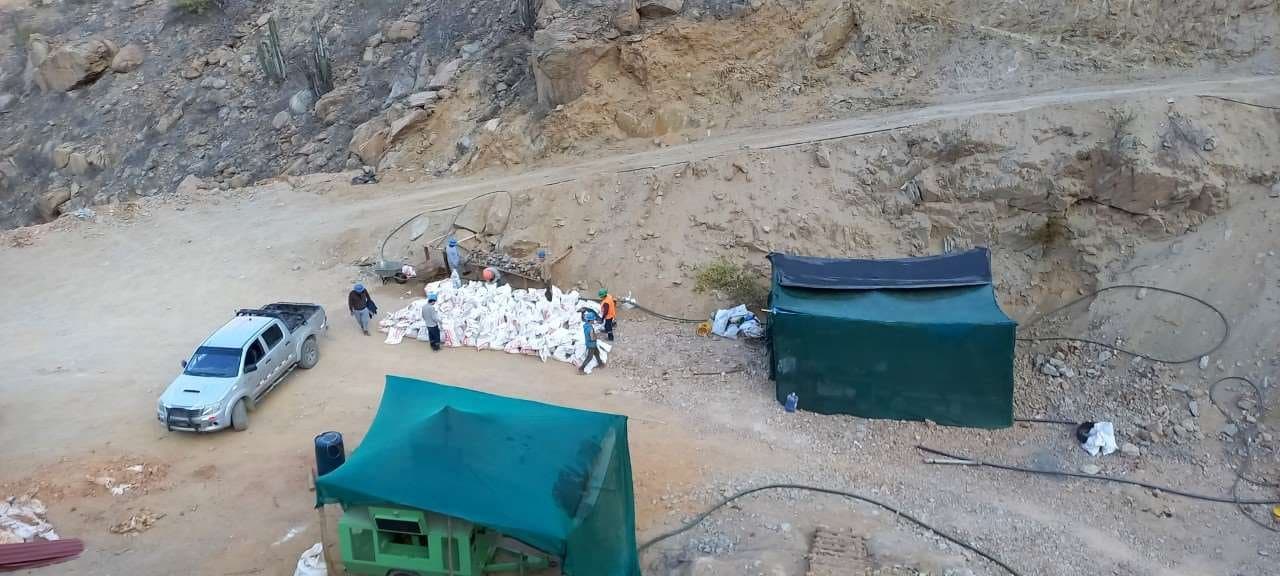
In September 2026, development went from sampling to extraction: the company commenced underground development to reach the sulphides below the oxide-sulphide transition, and began stockpiling. The October sampling of that stockpiled sulphide material returned randomly selected assays of 20.97 grams of gold and 10.87 ounces of silver per tonne, and a sample from the exposed oxide zone ran 89.50 grams of gold per tonne — again, selective material, reported as such. Reeder's framing of why the timing works is a gold-price story as much as a geology story: when Peruvian acquired its initial interest, gold traded near US$1,500 an ounce; near US$4,200, the economics of a high-grade, narrow-vein property with a company-owned mill down the road are transformed. The company's stated expectation: the first gold-silver concentrates from Palta Dorada's own rock during the fourth quarter of 2026.
Where did a property like this come from? From the last company Reeder ran — which is where the track record gets its proof.
The Proof: What Happened at Rio Silver
Before Aguila Norte, there was Niñobamba. In Peru's Ayacucho department, Reeder personally staked the Niñobamba silver-gold ground for Minera Rio Plata S.A.C.; Rio Silver Inc. acquired it in 2011, and in July 2013 made Reeder its President and CEO. It is the cleanest earlier example of his method: find a big, overlooked system, then consolidate it.
The 2012 trenching program at Niñobamba's main zone — run under Reeder's leadership — discovered a new gold-silver zone outright: trench TR-01 cut 56 metres of 1.03 grams of gold and 98.9 grams of silver per tonne, and TR-04 cut 21.77 metres of 1.32 grams of gold and 102.46 grams of silver, ending in mineralization. Then, in 2016, Rio Silver bought the adjoining concessions from Newmont Mining and Southern Peru Copper — ground the majors had explored and set aside — and with them the database from an earlier substantial program, including AngloGold's 2001 drilling, which had cut intervals like 87 grams of silver over 130 metres (historical results Rio Silver itself noted it had not verified). By January 2017 the mineralized system was consolidated into one package over six kilometres of strike, and Rio Silver had brought in Magellan Gold on a 50% earn-in worth US$2 million in spending.
The ending was less tidy — the Magellan option was mutually terminated at the end of 2017, and Niñobamba's hardest problem was never the rocks but the social licence every Peruvian project lives or dies on. Reeder resigned from Rio Silver's board in November 2019, by then its past CEO, and stayed on as a consultant. In May 2025, Rio Silver optioned Niñobamba to Magma Silver Corp., now advancing it toward drilling — with Reeder, the man who staked it, serving as Magma's Senior Technical Advisor.
And then the wheel turned twice more, in Peruvian Metals' favour. Palta Dorada itself was bought out from Rio Silver: Peruvian acquired Rio Silver's 50% interest in 2024 for payments totaling US$250,000, completing 100% ownership, with Rio Silver keeping a 3% net smelter return capped at US$2 million. And in December 2025, Peruvian sold its Minas Maria property to Rio Silver — the deal that became Rio Silver's new flagship, Maria Norte — and took payment in 3,999,999 Rio Silver shares. Peruvian Metals is today Rio Silver's single largest shareholder. The company Reeder used to run now works, in part, for the company he runs.
The People
Peruvian Metals is, to an unusual degree, one man's company — the filings and the share register say so plainly. Jeffrey Reeder is chief executive, chairman, and the Qualified Person who signs the technical disclosure: the man selling the story is the man who has to certify the science, and he has been on this board since 2006 and in the chief executive's chair since 2009. He is also, with management, the largest shareholder — the minimal equity raised since 2018 is what a register looks like when the boss funds growth from a mill's cash flow instead of dilution.
At the plant, the metallurgy belongs to José Orlando Moncada Rejas, Ing., the chief metallurgist at Aguila Norte, whose name stands behind the recovery figures in the company's releases. On the board, Lima-based director Oscar Pezo — the company's vice president of corporate development from 2012 to 2018 — anchors the in-country relationships that three decades of Peruvian operating history are made of. The head office is Edmonton; the business is a camp, a plant and a set of workings in the Peruvian north, run by people who have been there, in some cases, since the last century.
Where It Stands
Honesty is the house rule in this series, so here is the ledger, straight.
Nothing in this Chronicle is a mineral resource. The company's own disclosure is explicit: none of its projects carries a mineral resource estimate, and the Palta Dorada numbers in these pages — the shaft chips, the stockpile samples, the 89.50-gram oxide result — are selective samples of high-grade material, not averages of a deposit. Palta Dorada is a development-stage property whose first concentrates are, as of this writing, an expectation for the current quarter, not a shipped fact. The story's blue sky is real, and it is still sky.
The plant, by contrast, is the opposite of speculative — but it is modest in scale, and its limits deserve the same plain statement. One hundred tonnes per day is a small mill. The 350-tonne expansion exists as a permitted possibility and an engineering study, not as steel; the tailings reprocessing needs its ministry submissions completed first; and the plant's C$0.88 million of operating income sits inside a small public company whose consolidated bottom line swings hard — a C$1.87 million profit in the December 2025 quarter, a C$2.14 million loss in the June 2026 quarter, with the mark-to-market on that large Rio Silver share position a named driver. The engine prints. The holding company's earnings statement also carries an explorer's costs and a volatile securities portfolio, and anyone reading only the plant story should know both halves of that sentence.
And the Peru risks are the Peru risks. The Niñobamba chapter of this very story shows that community access, not geology, decides timelines in the Peruvian Andes — Rio Silver spent years working to regain social licence on ground Reeder had staked. Palta Dorada's workings are small and growth beyond their current scale is a permitting journey, not a formality.
Set against all of that: a permitted plant, full for years, in a region where permitted capacity is the scarcest asset in the mining economy — owned by a man who has been operating in the country for over thirty years and who owns more of his own company than any banker would advise.
What Happens Next
The calendar is unusually concrete for a company this size. In the fourth quarter of 2026: the first gold-silver concentrates from Palta Dorada's own sulphide, if the company's expectation holds — the moment the plant stops being purely a toll business. Alongside it: completion of the tailings auger program and the ministry filing that would let the plant reprocess nine years of its own tailings into saleable concentrate. At Mercedes, the 50%-owned silver-gold property in Junín — where metallurgical testing on the Victor II vein returned recoveries above 92% for both silver and gold — permitting and bulk material advance toward a first shipment, processed at a third-party mill twelve kilometres away. And through 2027: the plant expansion Reeder has flagged for the second quarter, the exploration of the veins around the plant itself, and design work on a future carbon-in-pulp plant for the oxide material.
Most treasure hunters spend their lives looking for a deposit rich enough to justify building a mill. Jeffrey Reeder inverted the hunt. He built the mill first — bought the toll booth on the road every small miner in northern Peru has to travel — and let a decade of other men's ore pay for the privilege of choosing his own ground at leisure. Palta Dorada was bought from his old company for US$250,000. The plant it will feed cost millions and prints revenue every quarter it runs. Whether the sulphides under the San Juan vein turn a good business into a great one is now a question of tonnes and time.
The treasure, as always, was never the point. This time, the man hunting it owns the machine that cashes it in.
Next in the series: the Peruvian Metals story in the company's own words — Jeffrey Reeder, on the record.