
Company Chronicles. Every company has a story. This is Panther Minerals'.
- 1950 — the year a Navajo sheepherder's find near Haystack Butte started the Grants rush
- 348 million pounds — New Mexico's total U₃O₈ production from 1948 to 2002, 37.5 percent of everything the United States produced in those years
- 211 million pounds — produced from the Ambrosia Lake subdistrict alone, the largest of the Grants district's eight subdistricts
- 1,419,000 pounds — of U₃O₈ shipped from the two mine complexes on Panther's claims between 1954 and 1980 — historic production, not a mineral resource
- 0.20 percent — the average grade of that ore; the Mesa Top mine also shipped 144,610 pounds of V₂O₅ alongside it
- 24 — unpatented lode mining claims, all on federal Bureau of Land Management land, carrying no royalty
- More than 45 years — since a drill last turned on the property, by the company's own count
- C$25,000 — the cash that opens the door; 1,850,000 shares and C$300,000 of work complete the earn-in
- 409 million pounds — of uranium the New Mexico Bureau of Geology and Mineral Resources says was identified in the Grants district and never mined
The Captains
The treasure hunter here is the company — Panther Minerals Inc. (CSE: PURR; OTCQB: GLIOF; FWB: 2BC), a Vancouver-based explorer that calls itself a North American critical minerals exploration company. Until this week its map held two Canadian fronts: the Rubidium Ridge lithium-cesium-tantalum property near Atikokan, Ontario, and the East Brouillan property in Quebec's Abitibi district. The Mesa Top option, announced November 16, 2026, is the company's entry into the United States and into uranium — a third front, in a different metal, in the most storied uranium country in America. It is, on its face, an acquisition company's move: Panther describes itself in its own filings as a mineral acquisition and exploration company, and Mesa Top was acquired the way such companies acquire — cheaply, in stages, with most of the price payable in shares and work rather than cash.
The current captain is Ram Kumar, chief executive officer and a director since September 18, 2025. Kumar is not a geologist, and this Chronicle will not dress him as one. He is a dealmaker: private equity first, at Novacap Management; then investment banking in Montreal and New York with BMO Capital Markets, Lazard and DNA Capital, advising on mergers, acquisitions and capital markets transactions; then director of mergers and acquisitions at Valsoft Corporation, running buy-side acquisitions of software companies around the world. He holds a Bachelor of Commerce in finance from Concordia's John Molson School of Business and sits on the board of Usha Resources. What a captain with that résumé brings to a uranium property is not a drill hand — it is a nose for an underpriced option on a good address, and the capital-markets craft to fund the look. The Mesa Top deal is exactly that shape. Whether the ground rewards it is a question only the work can answer, and the work has not started. Captains change; the claims, the old workings and the two-year clock do not.
The Ground
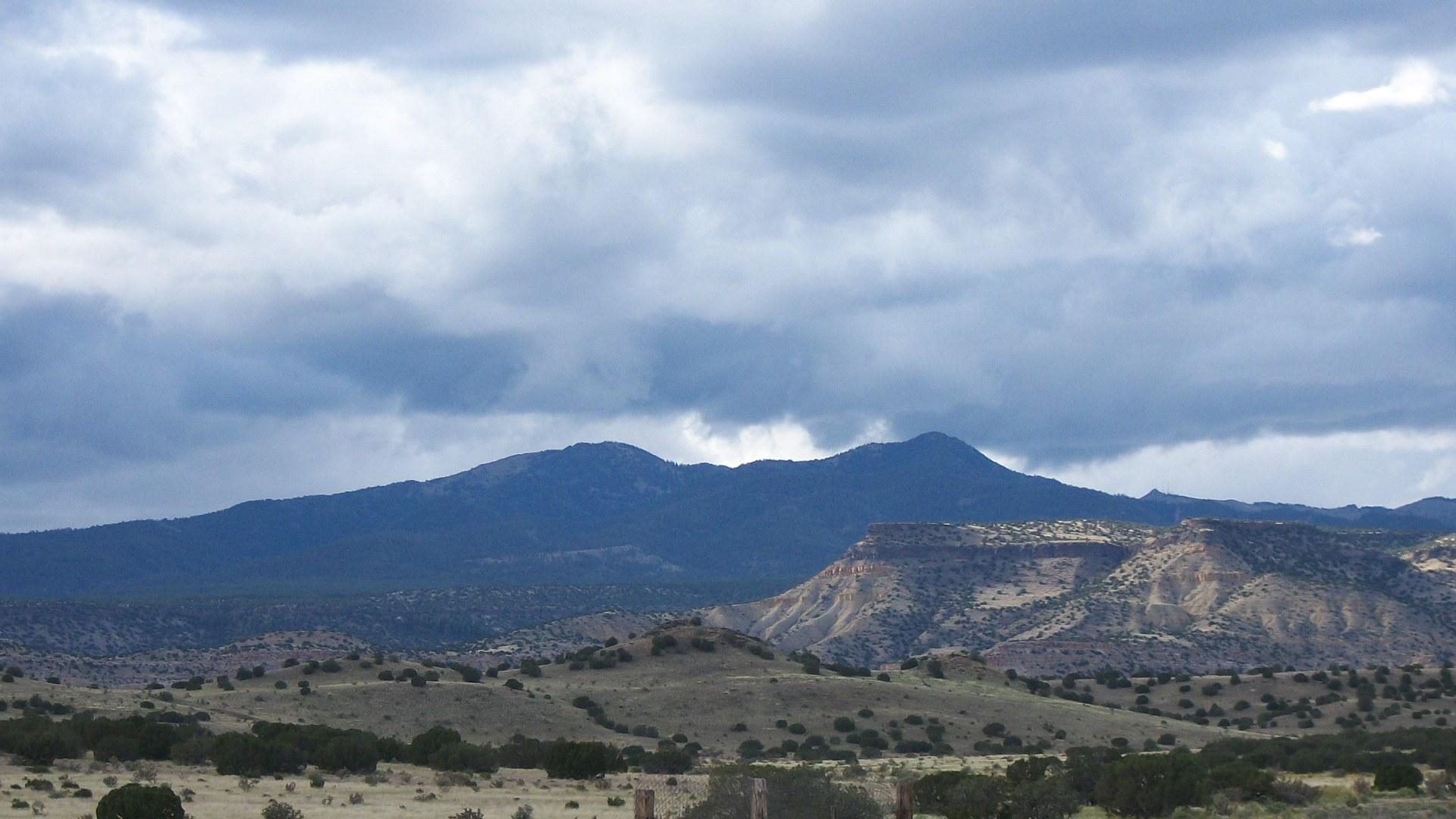
The Mesa Top property is 24 unpatented lode mining claims on federal BLM land covering Section 20, Township 13 North, Range 9 West, in McKinley County — high desert mesa country north of Grants, in the shadow of the old volcano of Mount Taylor, around which the whole Grants uranium district arcs. The claims sit on the Poison Canyon Trend of the Ambrosia Lake subdistrict, the subdistrict that produced more uranium than any other in the district: over 211 million pounds of it. The trend itself, a modest piece of that whole, produced about 11 million pounds from roughly sixteen small mines. Mesa Top's ground is two of them.
The uranium here lives in sandstone — the Poison Canyon sandstone of the Jurassic Morrison Formation, the same river-laid rock package that hosts the district's great deposits. Two mine complexes worked the claims: the Mesa Top mine and the Dog/Flea mine. Between 1954 and 1980 they shipped approximately 1,419,000 pounds of U₃O₈ from about 352,000 tons of ore at an average grade of roughly 0.20 percent, and Mesa Top shipped 144,610 pounds of vanadium oxide besides — figures drawn from U.S. Atomic Energy Commission production records, compiled by the New Mexico Bureau of Geology and Mineral Resources and corroborated by the U.S. Geological Survey's mine records. Then the market died, the mines stopped, and nothing modern has touched the ground since: no recent drilling, no modern geophysics, no three-dimensional model of the workings has ever been built. What Panther says it will hunt is specific: remnant and pillar mineralization left around the old workings, the untested ground between the two complexes, fault-controlled "stack" targets along the San Mateo fault, and a deeper Westwater Canyon horizon that has never been tested here at all.
The tenure is as clean as American mining ground gets. All 24 claims stand active on the BLM's records, maintenance fees paid through September 1, 2027, and the property carries no royalty — a rarity worth underlining, because it means every pound the ground might yet give up is unencumbered. And the first chapter can start small: a program disturbing five acres or less can proceed under a BLM Notice, the lightest instrument in federal mining law, rather than a full plan of operations.
The Yellow Rock
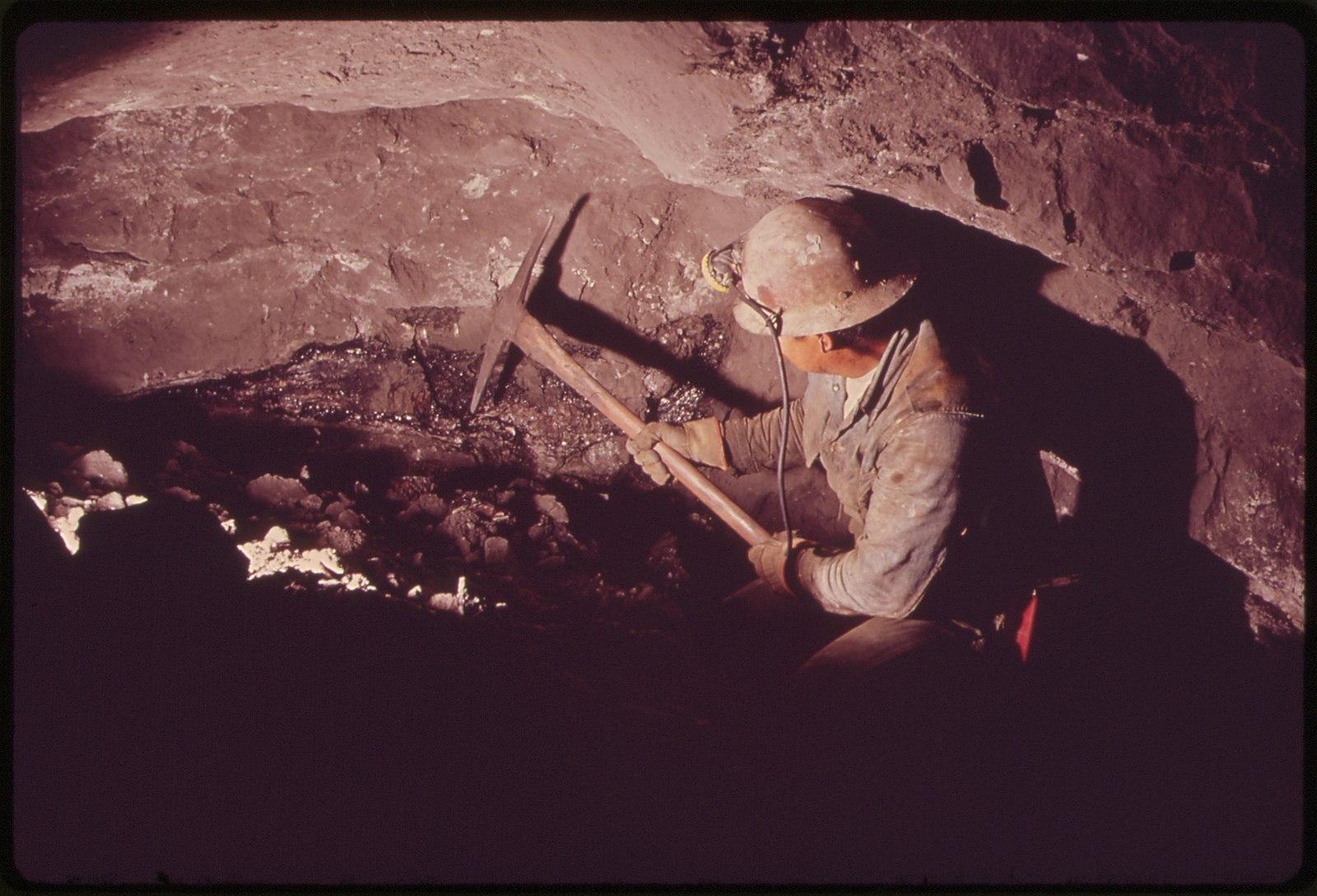
The rush began, as the documented record has it, in the fall of 1950, when Paddy Martinez, a Navajo sheepherder, found uranium minerals in the Todilto Limestone near Haystack Butte, west of Grants, and brought the yellow rock to town. Uranium had been reported near Grants as early as 1913 and mapped on outcrops in the 1920s and again in 1948; none of it started anything. Martinez's find did — Grants has told the story ever since with a prospector's embroidery, that he took the yellow rock for gold. The embroidery is the district's folklore. The find, and what it lit, are in the federal record: the Atomic Energy Commission was guaranteeing prices and buying ore, its buying station drew prospectors from everywhere, and within months the hunt had spread across the belt from Laguna to Gallup.
In January 1951, uranium was found in a Morrison Formation sandstone in Poison Canyon — on the same canyon trend where Mesa Top's claims now sit. That November, an airborne radiation survey flown by the Anaconda Copper Mining Company picked up the anomaly that became the Jackpile mine near Paguate, on Laguna Pueblo land: in its day the largest open-pit uranium mine in the world, shipping some 24 million tons of ore between 1953 and its closure in 1982. Ambrosia Lake, north of Grants, built out through the 1950s into the district's engine room — Kerr-McGee and Homestake-Sapin mills, four mills in the subdistrict in all, and a workforce that turned Grants into a boomtown. Grants styled itself, without much argument from anyone, the Uranium Capital of the World. For three decades, 1951 to 1980, the Grants district produced more uranium than any other district in the United States — more than 340 million pounds from the Morrison Formation across the period, over 30 percent of the nation's total, in a state whose 348 million pounds amounted to 37.5 percent of all American production.
Mesa Top's part in that roar was small and real. Its two mines were among the sixteen-odd small producers of the Poison Canyon Trend, shipping ore from 1954 — 1.42 million pounds of uranium over twenty-six years, at grades a modern ISR engineer would call rich and a modern accountant would call subscale. It was the classic Grants story at claim scale: good rock, small mines, federal demand, and then, at the end of the 1970s, no demand at all.
The Long Quiet
The national market for uranium collapsed at the end of the 1970s, and the district wound down the way booms do — slowly, then all at once. Mesa Top's mines shipped their last ore in 1980. The Jackpile closed in March 1982. The mills were decommissioned. New Mexico's production dwindled to a trickle of mine-water recovery and ended entirely in 2002; the state has not produced a pound of uranium since. The Bureau of Geology's ledger of what was left behind is the standing invitation of this whole district: roughly 409 million pounds of uranium resources, identified by the companies of the 1980s and never mined, still in the ground.
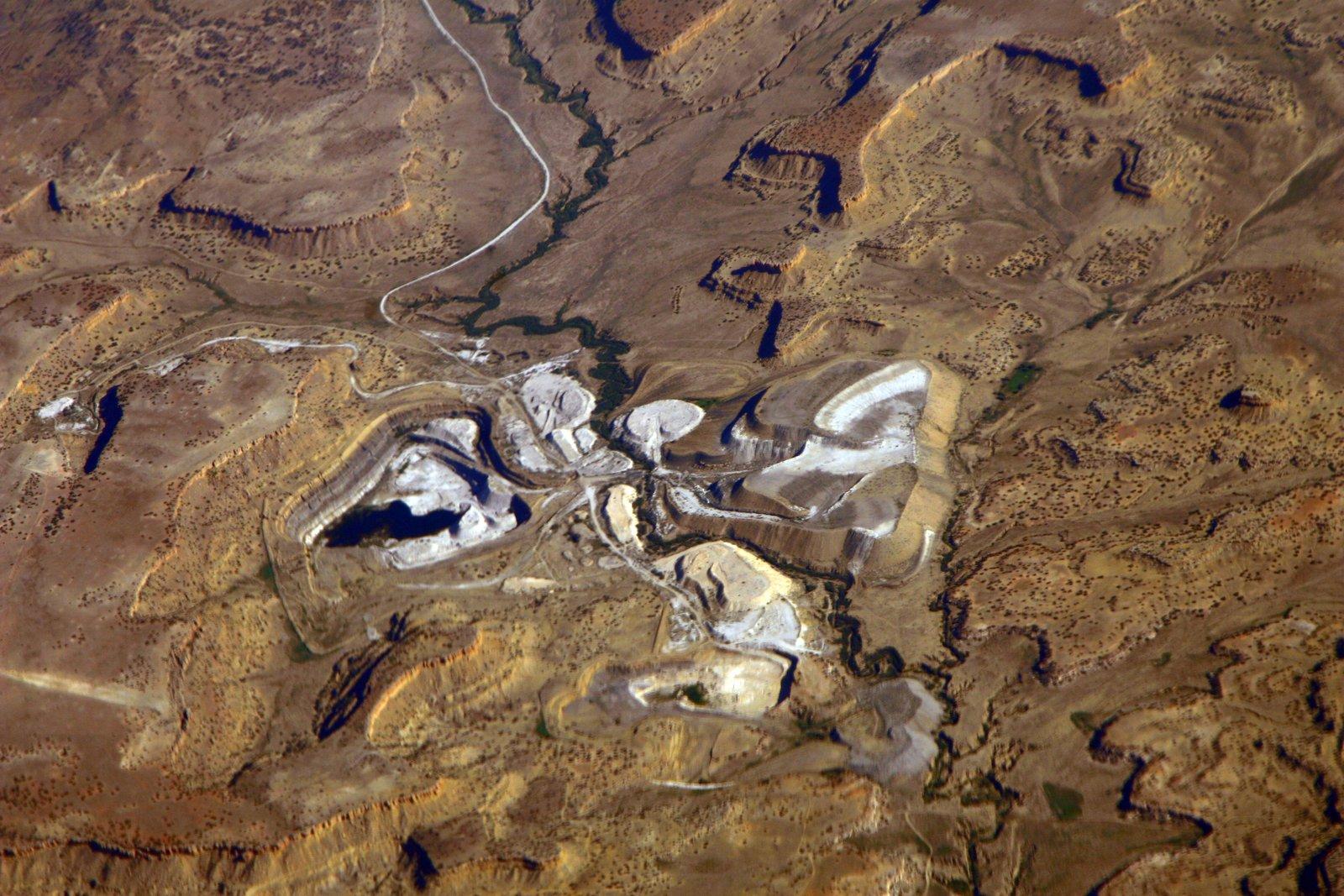
A Chronicle keeps the whole ledger, and this district's has a hard page. On July 16, 1979 — the year Mesa Top's mines were in their last full season — the tailings pond dam at United Nuclear's Church Rock mill, west of the district in the same uranium belt, breached. The U.S. Environmental Protection Agency's record: over 1,000 tons of solid radioactive mill waste and 93 million gallons of acidic, radioactive tailings solution poured into the Puerco River, contaminants travelling 80 miles downstream — the largest release of radioactive material in United States history, at a site placed on the Superfund National Priorities List in 1983. Across the wider district, a 2020 study in the Journal of Environmental Management counts roughly a thousand abandoned uranium mines and seven large mill tailings piles, with the groundwater plumes to match. The Navajo Nation, whose people mined much of this ore and bore much of its cost, has declared that no uranium production will occur on tribal lands, and Mount Taylor itself is designated a Traditional Cultural Property. Mesa Top sits on federal BLM land, not tribal land — but any new chapter in the Grants district gets written in full view of that history, under modern rules, and there is no conventional mill left in New Mexico to take the ore: the Bureau notes it would have to travel to the White Mesa Mill in Utah. That is the honest ground Panther is walking onto. It is also, not incidentally, why the ground was cheap.
The Deal
The instrument is an arm's-length option agreement dated November 16, 2026, between Panther and Live Energy Minerals Corp. (CSE: LIVE) with its wholly owned subsidiary, Lithium Valley Holdings Corp. — the vendors, who took the property out of the district's long quiet and now hand it to Panther to work. To earn 100 percent of Mesa Top, Panther must pay C$25,000 in cash within fifteen days of the agreement's effective date; issue 1,850,000 of its common shares to the vendors in stages over thirty months — 100,000 up front, then 250,000 at twelve months and 500,000 at each of eighteen, twenty-four and thirty months; and spend C$300,000 on qualifying work on the property by the second anniversary. If Panther files a technical report estimating a mineral resource within five years, the vendors also collect a resource bonus — C$75,000 per million pounds of contained U₃O₈, indicated and inferred categories combined, above the first half-million pounds, capped at C$300,000. There is no royalty and there are no finder's fees. The deal is subject to Canadian Securities Exchange acceptance where required, both boards' approval, and Panther's own thirty-day due diligence — legal, title, environmental and regulatory; if CSE acceptance is required and not obtained within ninety days, either side may walk away.
Kumar's own framing of it, from the release, is the demand side in two sentences: "Mesa Top puts Panther on American soil in America's most productive uranium district, on ground that has shipped 1.42 million pounds and has not had a drill on it in more than 45 years. We intend to move quickly to find out what the old operators left behind." The backdrop he is pointing at is real enough: the United States burns more uranium than any nation on earth and, by the figures in Panther's release, bought about 95 percent of it from foreign suppliers in 2023; uranium sits on the final 2025 U.S. List of Critical Minerals; and the executive orders of May 2025 set a national goal of quadrupling nuclear capacity by 2050. None of that puts a single pound in a Panther bag. It explains why a C$25,000 door into the Grants district was worth opening.
The Open Door
What happens next is mostly clocks. The due diligence runs thirty days from signing. The first cash and the first 100,000 shares fall due within fifteen days of the effective date. The C$300,000 of work must land by the second anniversary — and the fine print matters: the option vests when the shares and cash are paid, the spending may be completed after vesting, but if the work falls short Panther must pay the shortfall in cash or shares within thirty days, and if it does not, the vendors can terminate or take the property back. The earn-in is real, and so is the road back out of it.
Now the other side of the ledger, because a Chronicle keeps one. Mesa Top has no mineral resource and no mineral reserve — none. The 1.42 million pounds in this article is historic production, ore already mined and gone, taken from Atomic Energy Commission records that a qualified person has not verified; Panther's own release says the figures should not be relied upon, and neither does this Chronicle — they are printed here as the property's history, which is what they are. What remains in the ground — pillars, remnants, the untested gaps and the deeper horizon — is a target list, not an inventory. Panther today owns nothing at Mesa Top but an option, held by a micro-capitalization company — some 20.8 million shares outstanding on its spring 2026 CSE filing — whose corporate shell has worn other names and other metals before this one. The district it has entered has no mill, a hard environmental inheritance, neighbours with long memories and standing to be heard, and a permitting road that lengthens considerably beyond a five-acre Notice. And over all of it sits the uranium price, which has buried more Grants revivals than geology ever did.
What is true today is narrower, and it is not nothing. For C$25,000 down and a staged promise of shares and work, a Vancouver junior holds the pen on the first modern chapter of a past-producing property in the most productive uranium district in American history — ground that shipped real ore for twenty-six years, carries no royalty, and has waited forty-five years for somebody to ask what the old operators left behind. The asking starts with due diligence. The drills, if they come, get the next word.
A Reader's Note on the Record
This Chronicle is built on Panther's November 16, 2026 news release and the vendor's release of the same day, the New Mexico Bureau of Geology and Mineral Resources' uranium record, the U.S. Geological Survey's mine database, the U.S. Environmental Protection Agency's Grants district and Church Rock records, and the federal exploration history compiled by the U.S. Energy Research and Development Administration. Five wrinkles in that record deserve daylight. First, the Mesa Top production figures are Atomic Energy Commission records compiled in McLemore (2021) and corroborated by USGS mine records — historic production, unverified by a qualified person, and not a mineral resource; this article treats them exactly that way throughout. Second, the qualified person who reviewed the technical disclosure in Panther's release, Adrian Smith, P.Geo., is the chief executive of the vendor, Live Energy — a fact the release itself discloses, noting he is independent of Panther; readers weighing the geology should know whose geologist signed it. Third, the two companies' releases were checked against each other line by line on the money: the cash, the share schedule, the work commitment and the resource bonus agree in both, and no conflicting figure was found. Fourth, Panther's own materials are mid-pivot — its website still leads with its Quebec property and its exchange filings carry its former "Bolt" name and an older nickel-cobalt brief; this article follows the November 16, 2026 release for the company's present shape. Fifth, district totals vary slightly by source and vintage: the Bureau's table totals 348 million pounds for New Mexico from 1948 to 2002, while the company's release speaks of more than 340 million pounds from the Morrison Formation; the two are consistent within their definitions, and where they differ this article uses the Bureau's table.
Seventy-six years ago a sheepherder carried yellow rock down from Haystack Butte and started the loudest uranium rush in American history. The district it built out-produced every other in the country for thirty years, then slept for a generation, leaving its mines, its mills and its unfinished business to the high desert. Panther Minerals is the newest name to walk back into that country — not with a mill, not with a mine plan, but with a C$25,000 cheque, a two-year work clock and a question the whole Grants district has been waiting four decades to hear asked again: what did the old operators leave behind?