
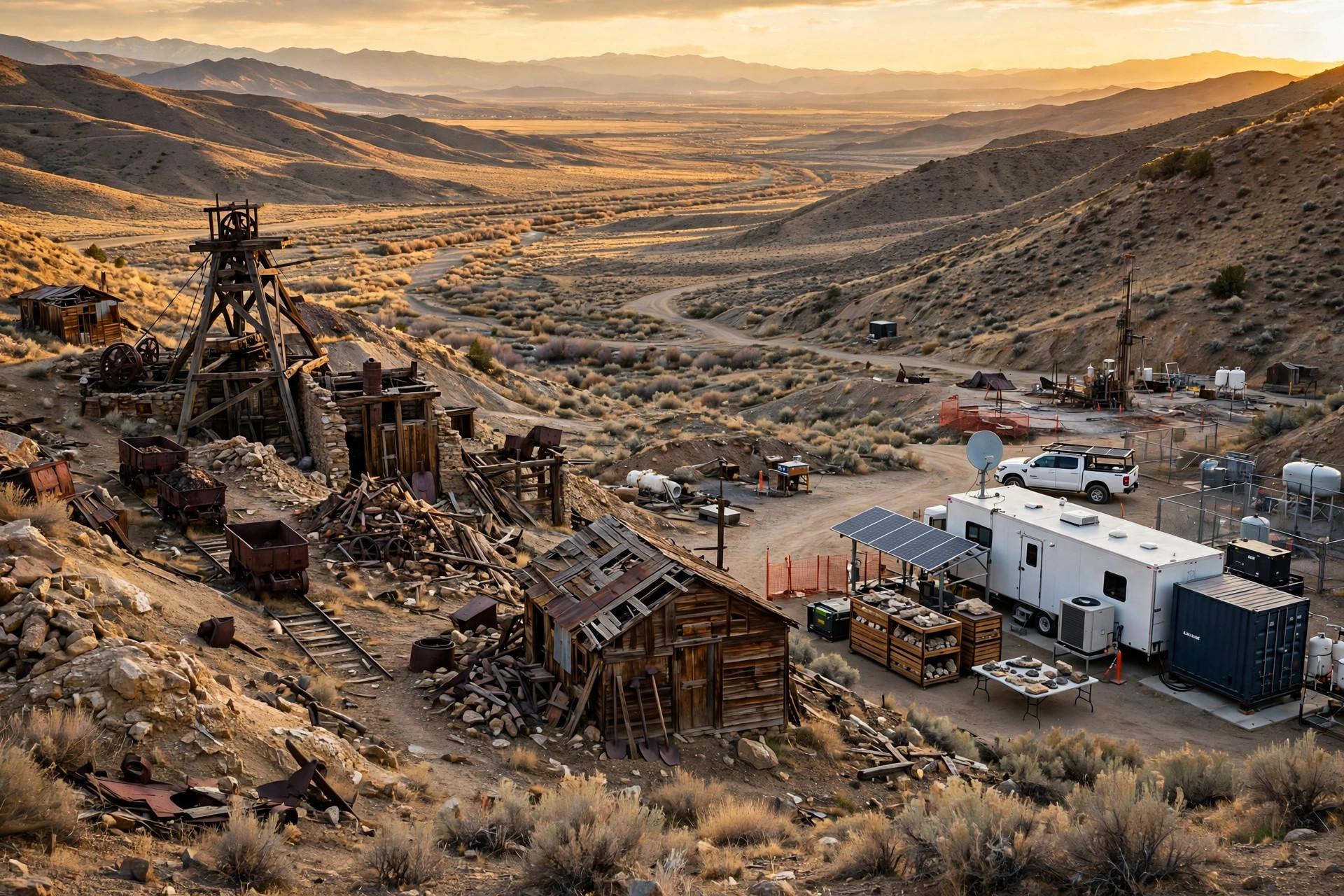
Mercur's ground is now, on Revival Gold's account, under one company's ownership for the first time. Revival reported on November 9 that it has exercised the private-property options it has held since 2021 and added peripheral state leases — land work, not drilling, aimed at clearing the tenure underneath a study due next quarter.
- The option exercise: through subsidiary Revival Gold (Utah) Inc., the company has completed the exercise of previously disclosed purchase options with Geyser Marion Gold Mining Company and Sacramento Gold Mining Company, originally entered into October 25, 2021 and amended October 13, 2023.
- What the options cover: the Geyser Marion agreement covers interests in 157 patented mining claims and 257 fee lots in the Main Mercur and West Mercur areas; the Sacramento agreement covers interests in 19 patented mining claims in the Main Mercur area — 176 patented claims in total, plus the fee lots.
- What remains to pay: US$127,188 to Geyser Marion and US$37,500 to Sacramento, described as the only consideration remaining outstanding under the option agreements. No royalty is retained by either seller under the options.
- Closing and a lease ended: closing of the acquisitions was scheduled for November 9, 2026, and completion of the Geyser Marion purchase terminates the existing lease covering 61 patented mining claims at West Mercur previously leased to Revival Utah.
- The state leases added: two peripheral 10-year mineral leases totalling 425 hectares (1,051 acres) in Tooele County, Utah, secured through a State auction process for US$54,700, plus an annual obligation of US$3 per acre — approximately US$3,150 annually across the two leases.
- The study clock: the transactions come as Revival advances Mercur toward completion of a pre-feasibility study (PFS) near the end of Q1 2027.
One owner, on the company's telling
President and CEO Hugh Agro said exercising the options "brings the entire Mercur land position under a single company's ownership for the first time, marking an important milestone as we work toward a potential return to gold production as early as 2029." The district's history he cited is production history, not a current estimate: Mercur produced approximately 2.6 million ounces of gold between 1890 and 1998.
Revival describes itself as advancing Mercur in Utah and exploration at its Beartrack-Arnett Gold Project in Idaho, headquartered in Toronto with a U.S. exploration and development office in Salmon, Idaho. The technical information in the release was reviewed by John Meyer, P.Eng., the company's Executive Vice President, Engineering and Development.
The honesty box
This is a land consolidation announcement — no drilling, assays, resource or reserve figures are reported in it, and the 2.6-million-ounce figure is historic production (1890–1998), not a compliant resource. The PFS targeted near the end of Q1 2027 is not yet complete, and a "potential return to gold production as early as 2029" is a forward-looking statement in the release, dependent on the study, permitting and financing that have not yet happened. The option exercise is described as completed with closing scheduled for the same day, November 9; the remaining payments stated above are the consideration the release says is still outstanding to complete them.
What to watch
Confirmation that the November 9 closings completed as scheduled; delivery of the Mercur PFS near the end of Q1 2027 and what mine plan, if any, it supports on the now-consolidated ground; and any exploration follow-up on the two new peripheral state leases.