
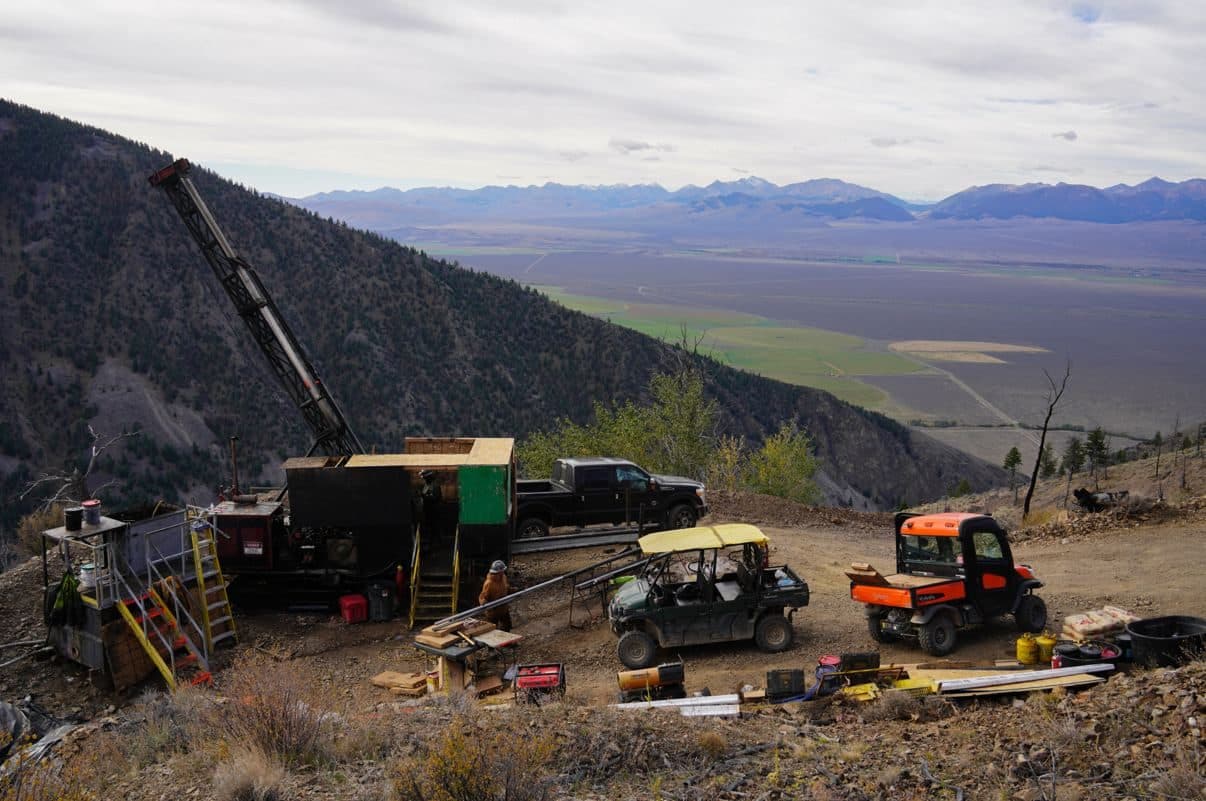
The IMA Mine in Lemhi County shipped tungsten through America's wars, then sat silent for nearly seventy years while the United States imported the metal its defenses run on. This year the drills came back to Patterson — and this week, they found a new vein.
High in a canyon above Patterson, in Idaho's Lemhi County, there is a mine that has already done what American industry now says it desperately needs. The workings run some fifteen miles through the mountain, on patented ground, and this fall a core rig has been turning above the valley floor — drilling a tungsten system that produced for the United States once before, and then, for almost seventy years, didn't.
Tungsten is the metal that melts last — the highest melting point of any metal on Earth. It hardens armor-piercing munitions and missile components, edges the cutting tools that machine everything else, and runs through aerospace, semiconductors and energy. The IMA Mine began as a silver prospect in the 1880s, and tungsten was identified there in 1903. Its moment came in 1945, when Bradley Mining Company took up the property and put it into production under the federal government's defense-minerals program. Through the end of one world war and into the Cold War, the IMA produced approximately 199,449 metric ton units of tungsten trioxide — one of the most significant tungsten outputs in the country.
Then the era turned, the way it did at a hundred American mines. Production ceased in 1957. The majors took their turns with the ground — American Metal Climax leased it in 1961; Inspiration Development, an Anglo American subsidiary, ran feasibility work in the early 1980s and walked away when tungsten demand and prices fell; Gentor Resources drilled 25,000 feet in 2008 looking at the molybdenum below. Nobody restarted it. And while the IMA slept, the market moved: China came to mine roughly 84 percent of the world's tungsten and control about 80 percent of its processing. North American tungsten production ceased entirely in 2015. The United States — whose military runs on the metal — has had no domestic tungsten mine since.
The option that became a company
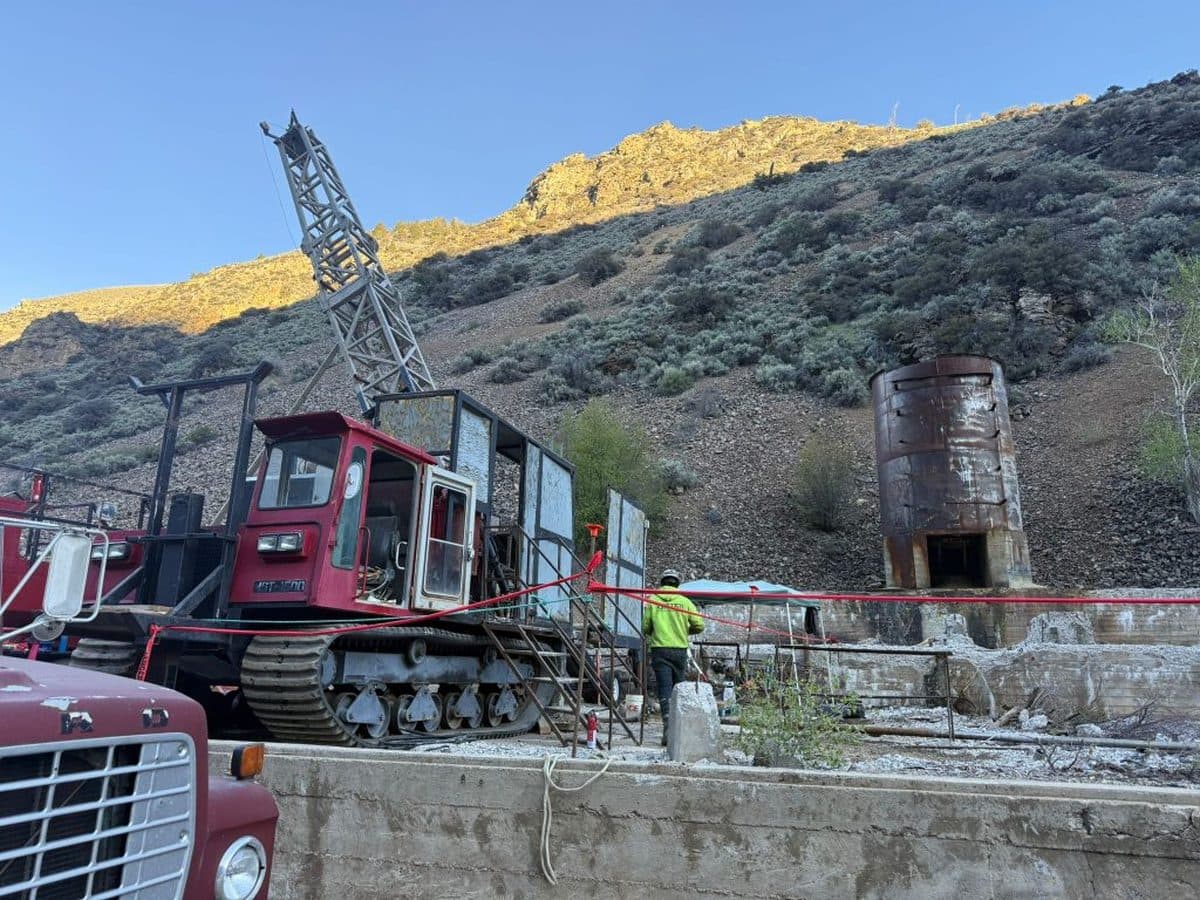
American Tungsten's claim on the IMA dates to November 6, 2024, when the company signed a definitive option agreement with IMA-1, LLC for the property. The company — formerly Demesne Resources, rebuilt around this asset — did not arrive with a drill and a press release. It arrived with a rehabilitation program: a specialist underground contractor engaged to reopen the old workings, roads contracted out for repair, baseline environmental sampling begun, and decades of historical records digitized into modern models. "The team is excited to have come back from a successful site visit that paves the way to rehabilitation, environmental sampling and stakeholder relations," CEO Ali Haji said as the work began, "in order to begin plans to bring Ima back to production."
Drilling started in December 2025. What has happened since is best measured in the calendar. In March 2026, the company closed a C$40 million bought deal financing led by Stifel Canada. In May, it launched a 35,000-foot surface and underground drill program and graduated from the CSE to the TSX Venture Exchange. In August, it published the mine's first modern resource estimate — and the ground turned out to be considerably bigger than the old-timers' paperwork suggested.
A resource eight times the old estimate
The August 20 estimate, prepared independently by Minetech, defines 316,000 tonnes of indicated resources and 2,178,000 tonnes of inferred resources, both grading 0.55 percent WO₃ — plus more than 2.25 million ounces of silver, and a separate indicated resource of 267,000 tonnes in the surface tailings the old operation left behind. When Haji's team started, the historical estimate on the property ran to roughly 300,000 tonnes. The modern one is more than eight times that. "When we started the company, the vision was to ensure that we had a seven to ten year mine life," Haji said. The technical report followed on October 5.
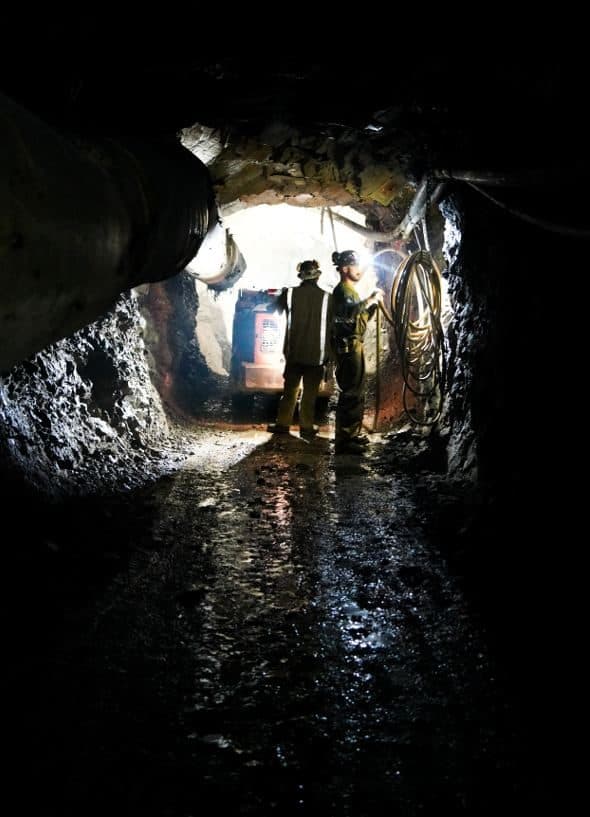
The freshest proof arrived this morning. Drilling at the base of the canyon has discovered a new vein — the 360 Portal vein, a tungsten-silver structure the old miners worked at surface and never followed down — with one hole returning 18.9 feet grading 0.54 percent WO₃ and 1.29 ounces per ton silver. Underground, infill drilling on the D level keeps hitting the high-grade core of the system: 18.4 feet at 0.804 percent in the No. 5 vein, and a five-foot interval at 1.53 percent. The company drilled some 9,300 feet in August and September alone, is driving new crosscuts to open fresh underground drill stations, and has roughly 24 holes and 12,000 feet planned next — all of it feeding a preliminary economic assessment Haji says lands before year-end.
Companies promoting a tungsten project publish market studies. Companies building one drive crosscuts.
The operator
The man running American Tungsten has a stated shape for where this ends. In Haji's own outline, the restart carries roughly US$25 million of capital cost, including a 500-tonne-per-day mill — output he expects could meet about 8 percent of United States tungsten demand. The ground helps him: fifteen miles of existing workings on private patented land, administered at the state level, and workings that sit above the water table — no dewatering or water treatment standing between the plan and the ore. Washington has noticed the shape of it too: the company holds a letter of interest from the Export-Import Bank of the United States for potential financing of up to US$25.5 million, and joined the Defense Industrial Base Consortium in 2025.
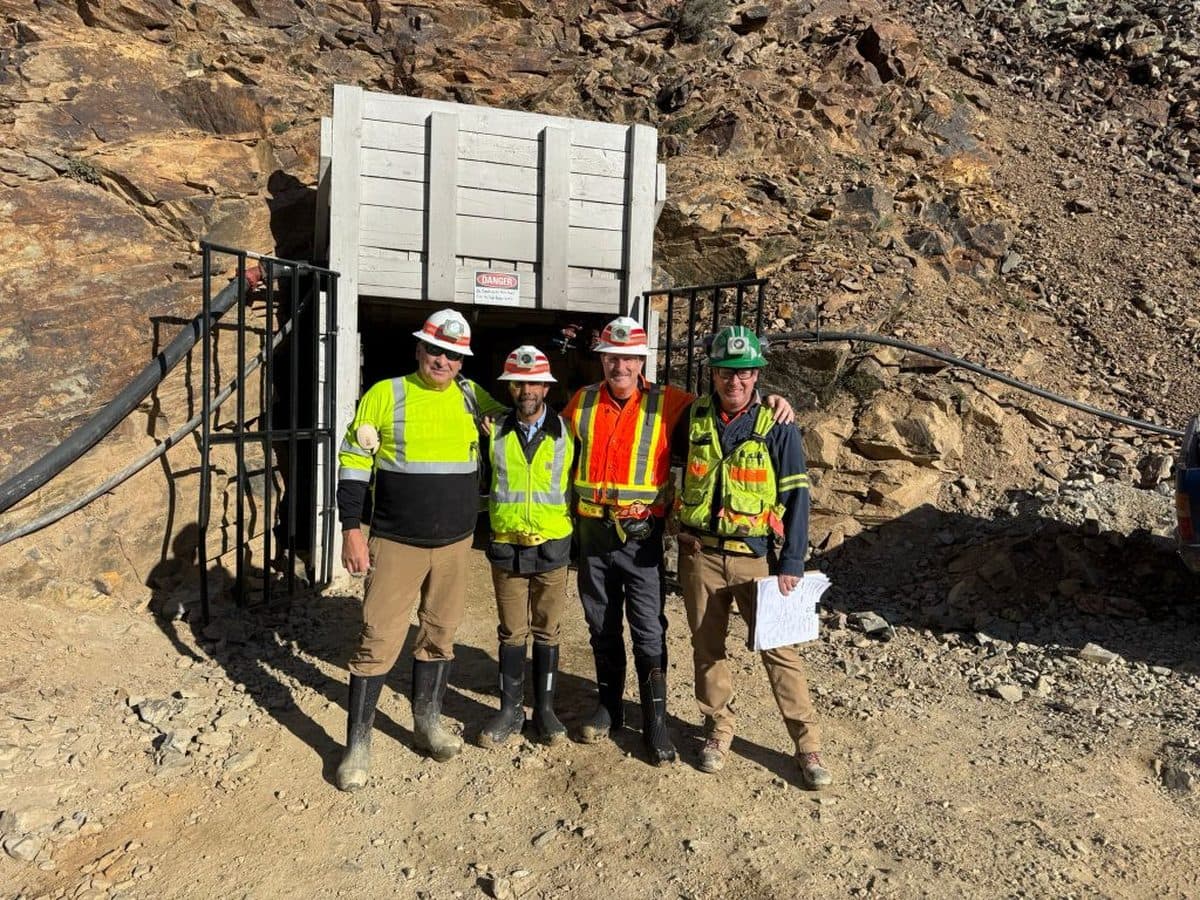
What shows in the record is a pattern of presence — on the ground in Lemhi County, where the rigs and rehab crews are local facts, and in the rooms where critical-minerals supply is being reassembled. The plan itself is phased and deliberately unglamorous: first, evaluate processing the surface tailings — a lower-capital path to early production; then restart the underground mine behind it.
The road from here
The calendar ahead is short and legible: conversion drilling to pull the inferred tonnage into higher-confidence categories, the economic assessment before year-end, and the phased restart behind it. Nothing about the IMA is a greenfield guess. The veins produced before; the concentrate sold before; the mountain has already answered the first questions a mine has to answer.
Idaho has been mining country since before it was a state, and the IMA is a reminder of how the story actually works. The tungsten never left. The customer changed, the price changed, and a team willing to reopen the workings and drill showed up. If it's not grown, it's mined — and above Patterson, tungsten is American again.
— Mining Our Future follows the people and projects building the next chapter of American mining.