
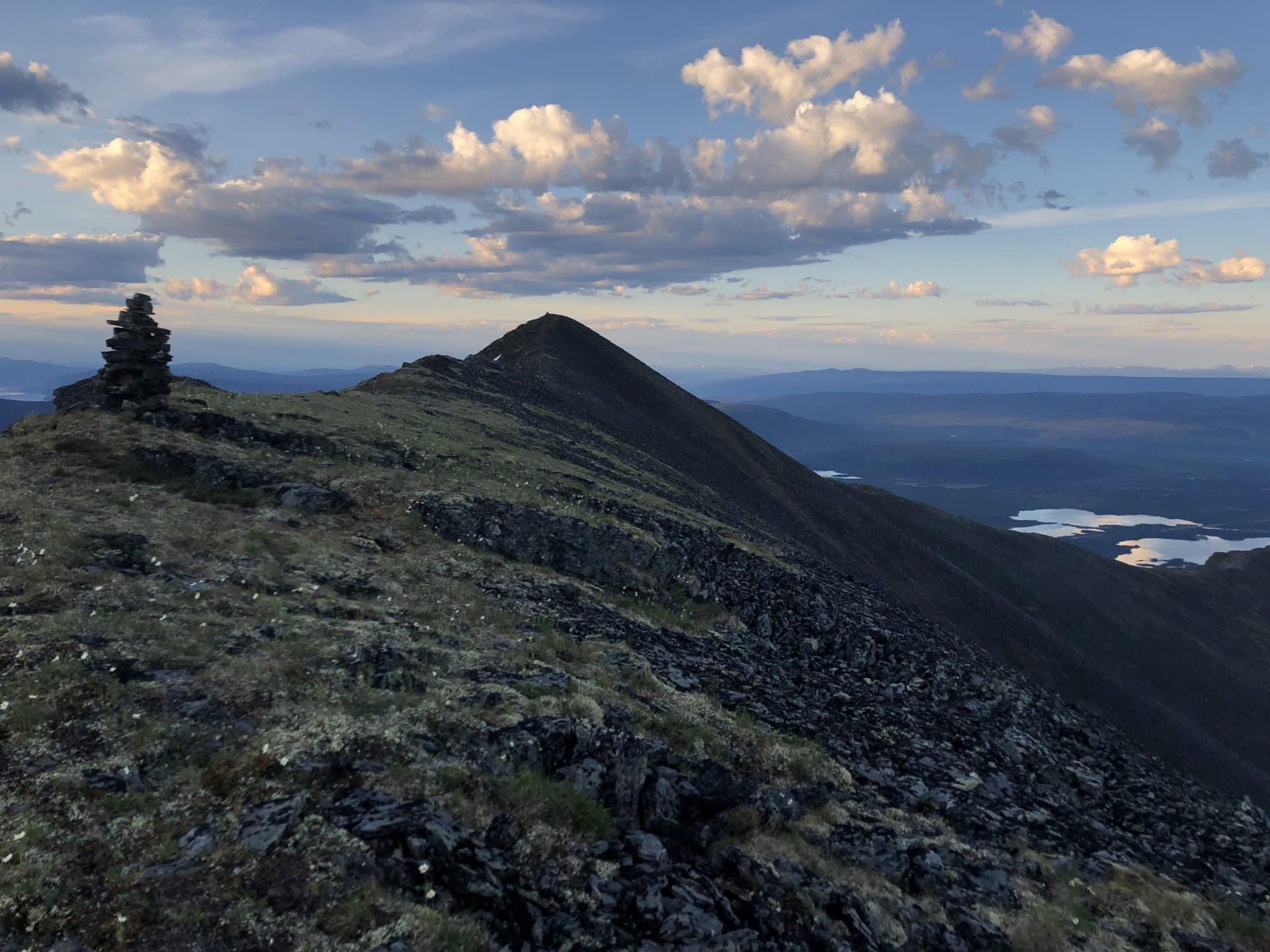
Treasure Hunter Chronicles. Every company in our purview has a story. This is Haldane's.
- 1,669 g/t silver — over 4.41 metres (3.87 m true width) in hole HLD26-41, the October 2026 headline intercept at the Main Fault, inside 12.16 metres averaging 727 g/t silver
- More than 6,600 g/t silver — the richest single sample in that hole, 0.41 metres of it; another ran 4,910 g/t over 0.30 metres
- 818 g/t silver over 13.15 metres — hole HLD25-31 in 2025, the hole that proved the Main Fault carries bonanza grades across real width, with a 3.2-metre stretch above 2,000 g/t
- 217 million ounces — the silver the Keno Hill district produced between 1913 and 1989: 4.87 million tonnes at an average grade of 1,389 g/t silver, by the Yukon Minfile figures the company cites
- Three discoveries — Bighorn (2019), West Fault (2020) and Main Fault (2024), all Keno-style veins, all found by one small company's drill
- 24 holes, 6,169 metres — the 2026 drill program, the largest in the project's history; 21 holes still to report through the fourth quarter
- 8,579 hectares — the Haldane property, 100%-owned, road-accessible, 25 kilometres west of Keno City and next door to Hecla Mining's producing Keno Hill mine
- Roughly 12 kilometres — of cumulative vein strike potential across the property, most of it never drill-tested
- Fully funded — a $2.25 million financing in December 2025 and an $11.6 million financing in February 2026 pay for the 2026 and 2027 campaigns outright
The District Nobody Could Finish
There is a short list of places on Earth where silver came out of the ground at grades that read like misprints, and the Keno Hill district in Canada's Yukon Territory sits near the top of it. Between 1913 and 1989, miners took some 217 million ounces of silver out of these hills — 4.87 million tonnes of ore averaging 1,389 grams of silver per tonne, with 5.62% lead and 3.14% zinc riding along. More than 65 deposits and prospects were found in the district, almost all of them the same animal: galena, sphalerite and silver-bearing tetrahedrite in quartz-siderite veins, cutting the Keno Hill quartzite along northerly faults. It was, ounce for ounce, one of the highest-grade silver camps on the planet.
The camp never really emptied — it just paused. Production stopped in 1989, flickered back briefly in the 2010s, and in 2023 Hecla Mining, the district's biggest player, restarted the Keno Hill mine in earnest; it produced more than three million ounces of silver in 2025. The mills are turning again. The district is a going concern.
But the famous mines cluster at the district's eastern end, around Keno City and Galena Hill. Twenty-five kilometres west, the same quartzite runs through a mountain of its own — Mount Haldane — inside the traditional territory of the First Nation of Na-Cho Nyak Dun. The veins are there. The old-timers found them early and proved the grades with their own hands. What Mount Haldane never got was the century of drilling the rest of the district received. The west end of one of the world's great silver camps sat, essentially, unfinished.
Silver North Resources Ltd. (TSX-V: SNAG; OTCQB: TARSF; Frankfurt: I90) is the company that went back to finish it.
The Mountain Remembers
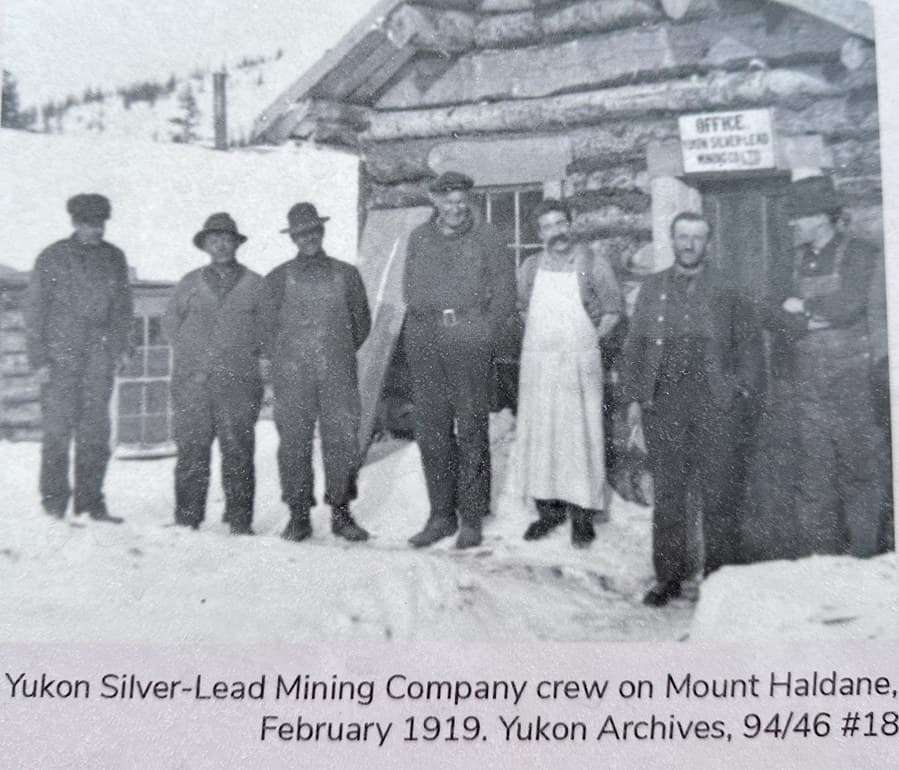
The first man to find silver on Mount Haldane did it the nineteenth-century way. Prospector Andy Johnson is credited with the first lead-silver discovery on the mountain in 1896; he staked the first claims in 1905. The serious work came a generation later, and it came in a rush of winters. On the south side of Bighorn Creek, at what became the Middlecoff Zone, crews traced mineralized veins for 600 metres on surface, then went underground — 207 metres of drifting and a 56-metre raise in 1919 alone. What they shipped tells you everything about the grade of this mountain: 24.7 tonnes of hand-sorted ore grading 3,102 g/t silver and 59% lead. Hand-sorted. Men underground with picks, keeping only the rock that glittered, and the keepers averaged three kilograms of silver to the tonne.
Across the creek, the Johnson Vein — named for the prospector himself — had some 340 metres of underground workings and produced, in 1926 and 1927, a total of 2.1 tonnes at 4,602 g/t silver. Two tonnes. A pickup load. That was the scale of mining on Mount Haldane: not a camp, a scratch.
And then the mountain went quiet, and stayed quiet for the better part of a hundred years. It was not for lack of silver. A 1960s drill hole at Middlecoff, UM02, cut 2,791 g/t silver over 1.2 metres about 40 metres south of the old workings — and was never followed up. The problem was the ground itself: above the valleys, Mount Haldane escaped the worst of glaciation, so its rock is weathered and broken to remarkable depth, with oxidation reaching as deep as 150 metres. At surface, the sulphides that carry the silver are rotted away and the grades muted; the mountain hides its best rock under a skin of rust. The old-timers, working that skin, found the veins. What they could not do — what nobody did — was drill through the weathered cap and test the fresh rock below at any scale.
That is the whole riddle of Haldane in one sentence: a mountain in a 217-million-ounce district, with bonanza grades documented since 1919, that went a century without a modern drill program.
Three Discoveries in Seven Seasons
Silver North — then called Alianza Minerals — acquired Haldane in 2018 and did what the mountain had been waiting for: a systematic evaluation of the entire property, not just the old workings. The discoveries started coming almost immediately, and they have come in a rhythm — roughly one every two seasons, each one a different fault.
Bighorn, 2019. Three kilometres northwest of the old vein system, soil sampling built an anomaly 900 metres long with values up to 63 g/t silver. The first hole ever drilled there, HLD19-15, cut four structures, including 2.35 metres averaging 125.7 g/t silver and 4.4% lead. One hole, one new zone.
West Fault, 2020. This one had been found before — and lost. A previous operator's 2011 hole had cut 320 g/t silver over 1.2 metres at shallow depth in what nobody recognized at the time as a major structure, and nobody followed it up for nine years. Silver North's insight was depth: drill the same structure below the weathered zone, into fresh sulphide. Hole HLD20-19 returned 311 g/t silver over 8.72 metres true width. Follow-up hole HLD21-24 cut 1,351 g/t silver over 3.14 metres true width, including a stretch at 3,267 g/t. The West Fault has now been traced over roughly 100 metres of strike and 90 metres down dip, and remains open.
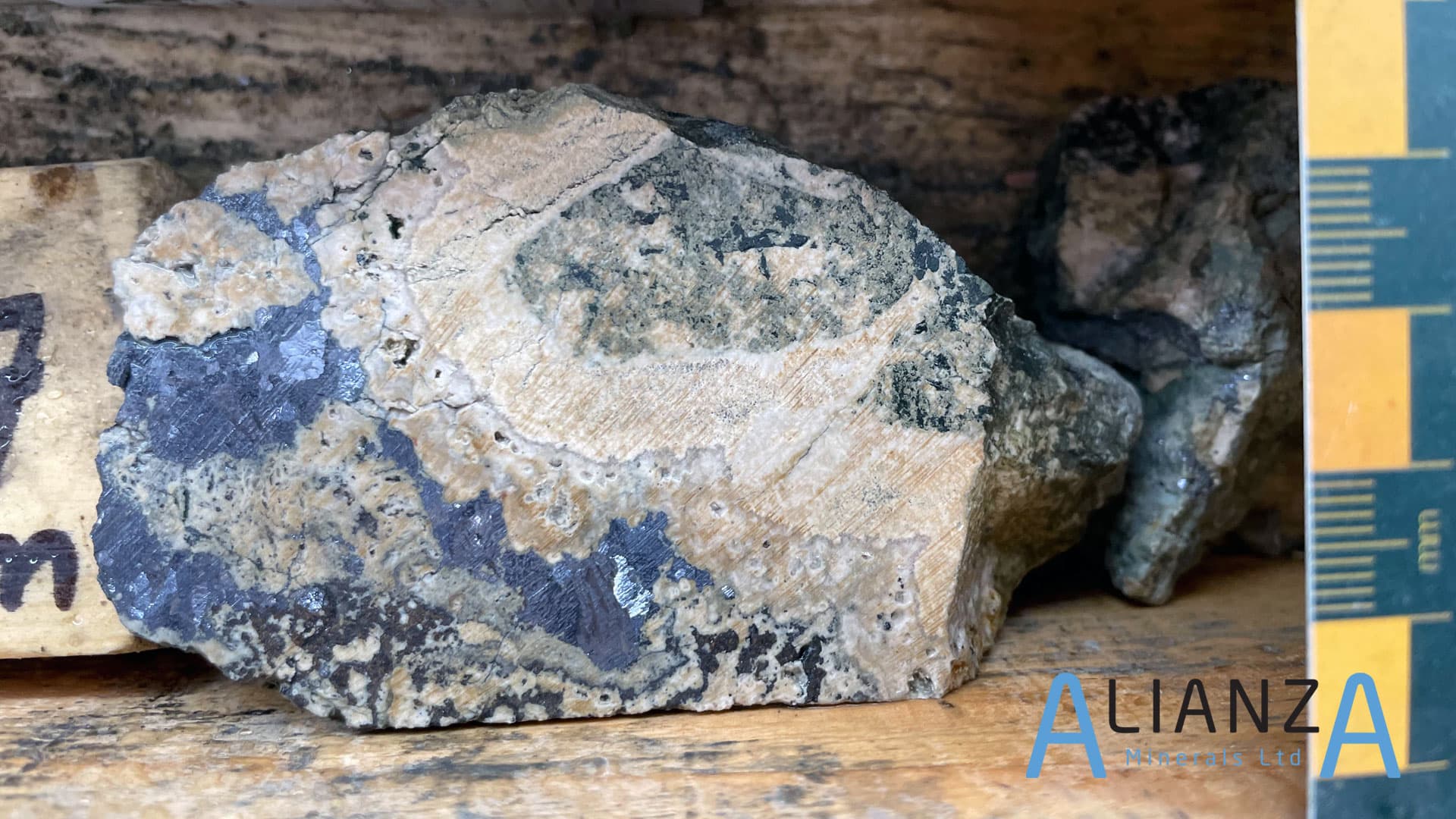
Main Fault, 2024. The Main and Main South showings — surface chip samples of 151 g/t silver over 7.6 metres and 223 g/t over 3.6 metres — had marked this structure for years, and previous operators had tried to drill it and failed to recover the veins in the broken ground. Silver North's first two holes succeeded: HLD24-29 and HLD24-30 intersected a broad structural zone of siderite-sulphide veins, breccias and stockwork — 13.75 metres true width at 157 g/t silver in the first hole, swelling to 28.36 metres true width at 130 g/t fifty metres deeper in the second. At the zone's upper boundary, hole 30 cut 1.83 metres true width at 1,088 g/t silver and 3.90 g/t gold, including 0.73 metres at 2,470 g/t silver and 9.64 g/t gold — gold grades the property had never shown before.
Three faults, three discoveries, one pattern: every time this company has aimed a drill at a fresh structure on Mount Haldane, the mountain has answered with Keno-style silver.
The Main Fault Opens Up
The 2025 season turned the Main Fault from a discovery into the main event. Eight holes and 1,759.5 metres, aimed at expanding the zone along strike and down dip — and hole HLD25-31 delivered the hole of the year: 13.15 metres averaging 818 g/t silver, 1.39 g/t gold, 2.54% lead and 0.98% zinc from 249.9 metres down, including 3.2 metres above 2,000 g/t silver and a 1.25-metre stretch at 1,112 g/t silver with 4.6 g/t gold. Bonanza grade, across a width a miner can stand in.
The market noticed. A $2.25 million financing closed in December 2025, and in February 2026 the company closed an $11.6 million brokered placement — enough, by the company's own accounting, to fully fund the 2026 and 2027 field seasons. The 2026 program was designed as the largest in the project's history: a SkyTEM airborne geophysical survey over the property in the spring, then two drill rigs all summer. Twenty-four holes and 6,169 metres were completed by early October, expanding the Main Fault from the roughly 100 metres of strike and 150 metres of downdip extent defined going in, stepping out along the structure, and taking another run at Bighorn.
The first results arrived on October 14, 2026, and they did not disappoint. Hole HLD26-41, stepped out 40 metres along strike from hole 31, cut the Main Fault across 16.2 metres of true width and returned 12.16 metres averaging 727 g/t silver — including 4.41 metres at 1,669 g/t silver, 0.34 g/t gold, 3.33% lead and 2.00% zinc, with individual samples running to 4,910 g/t silver and beyond 6,600 g/t. And in hole HLD26-40, some 120 metres above the Main Fault, the drill clipped something nobody had seen before: 0.80 metres at 1,985 g/t silver in oxidized, broken core — a blind vein, a brand-new target hiding in the Main Fault's hanging wall.
"The Main Fault continues to deliver strong silver grades over wide intersections, with HLD26-41 rivalling last year's hole 31 as the best hole drilled to date at Haldane." — Jason Weber, P.Geo., President and CEO, Silver North Resources
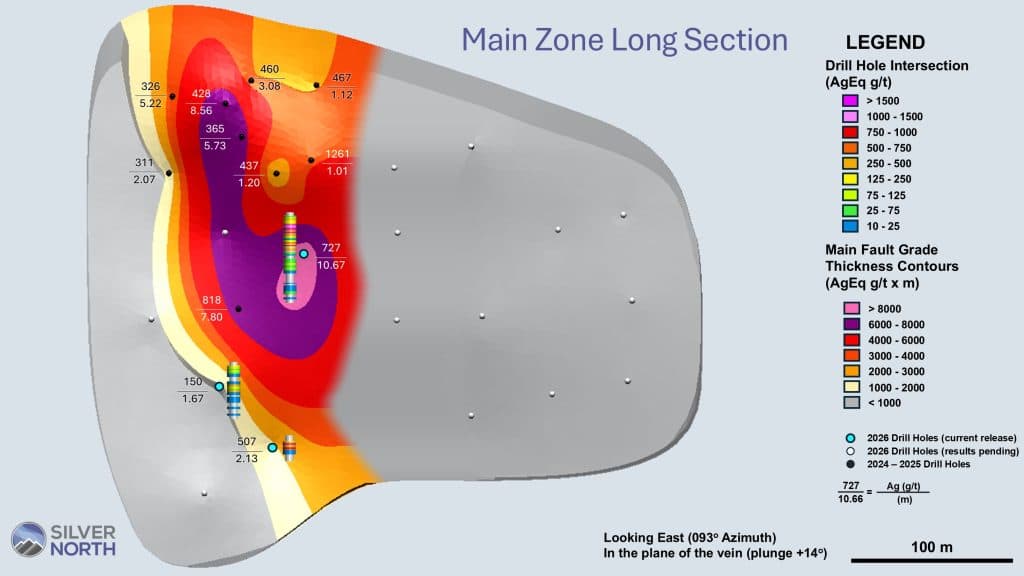
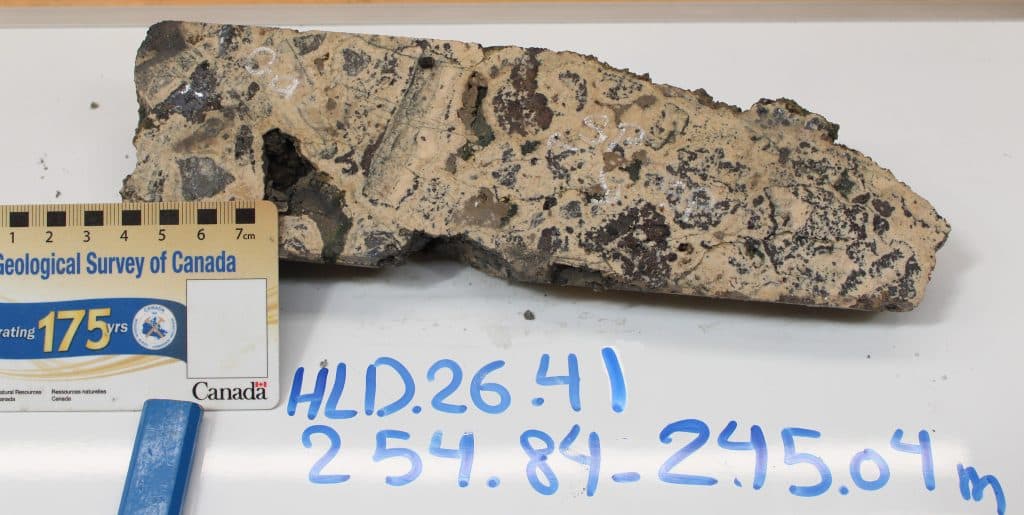
Twenty-one holes from the 2026 program were still in the assay lab queue when the first three reported, with results expected through the fourth quarter of 2026. The Main Fault, meanwhile, remains what it has been since 2024: open in every direction the drill has pointed.
The People
Silver North is a small company run the way exploration companies used to be run: the chief executive is a geologist, and his name stands behind the technical disclosure.
Jason Weber, P.Geo., President and CEO, is the company's Qualified Person under NI 43-101 — he supervised the preparation of the technical information in the releases quoted above, which is another way of saying the man selling the story is the man who has to sign for the drill core. Weber has led the company through its whole silver reinvention: in August 2023, the old Alianza Minerals — a prospect-generator that had spent years farming out other people's money across a portfolio of gold and base-metal projects — consolidated its shares one-for-five, changed its name to Silver North Resources, and pointed itself at two high-grade silver projects in known silver camps. Haldane was the spearhead. The discoveries in this Chronicle are what that decision produced.
Around him: Rob Duncan, Vice President Exploration, runs the technical programs; Winnie Wong is CFO and Corporate Secretary; and the board is chaired by Mark T. Brown, with directors Nancy Curry (Vice President of Corporate Development at Kodiak Copper), Marc Blythe and Craig Lindsay. On the ground in the Yukon, the drilling itself is executed and managed by Hardline Exploration Ltd. of Smithers, British Columbia. It is a lean machine — a Vancouver-listed junior whose centre of gravity, like its flagship, sits in the Yukon bush.
More Than One Mountain
Haldane is the flagship, but it is not the whole fleet. Down in the Silvertip district of southern Yukon and northern British Columbia, Silver North holds a second front in the making.
Tim is a carbonate replacement (CRD) silver target 19 kilometres from Coeur Mining's Silvertip deposit, in the same rocks that host the Silvertip mineralization. Coeur liked it enough to option it — an earn-in that could have taken Coeur to 80% — and in 2024 Coeur drilled six holes and 2,250 metres into the Wolf Fault, work that confirmed a CRD mineralizing system had been active at Tim. Then, in April 2026, Coeur gave notice: it was terminating the option, effective May 24, 2026, to focus on Silvertip itself. Silver North kept the property, kept 100% of it, and kept a major mining company's drill data in the drawer. Majors walk away from options for portfolio reasons every season; what they leave behind is rarely worthless.
Veronica, part of the three-property GDR Project next door to Tim and about 12 kilometres from the Silvertip mine, delivered the portfolio's newest discovery in the fall of 2025. Before that program, no silver-bearing mineralization had ever been found on the property. Prospectors working the Betty target — a soil anomaly the 2025 program stretched to a full kilometre square — picked up float cobbles of massive galena running 2,860 g/t silver, with the lead overlimit coming back at 76.8% lead. The 2026 field program at Veronica is complete, with results pending.
And the wider market has begun to price the ground, too: in August 2026, Orogen Royalties acquired a 2% net smelter return royalty on the Haldane project — a royalty house deciding that a slice of Mount Haldane's future production was worth owning today.
Where It Stands
Honesty is the house rule in this series, so here is the ledger, straight.
Silver North is an exploration-stage company, and there is no mineral resource at Haldane — not a small one, not an inferred one — and none anywhere else in the portfolio either. Everything in this Chronicle is drill intercepts and surface samples: real, assayed, quality-controlled, and reported under NI 43-101 discipline with Weber as Qualified Person. But intercepts are not ounces in a bank, and nobody should read 1,669 g/t over 4.41 metres as anything more than what it is — evidence that the Main Fault carries bonanza silver across mineable-looking widths, over a defined footprint that so far measures roughly 100 metres of strike and 150 metres of dip extent. Against that, set the scale of the opportunity: some 12 kilometres of vein strike potential on the property, four known vein targets, and a district next door that produced 217 million ounces. The drilled part of this mountain is a small fraction of the prospective part.
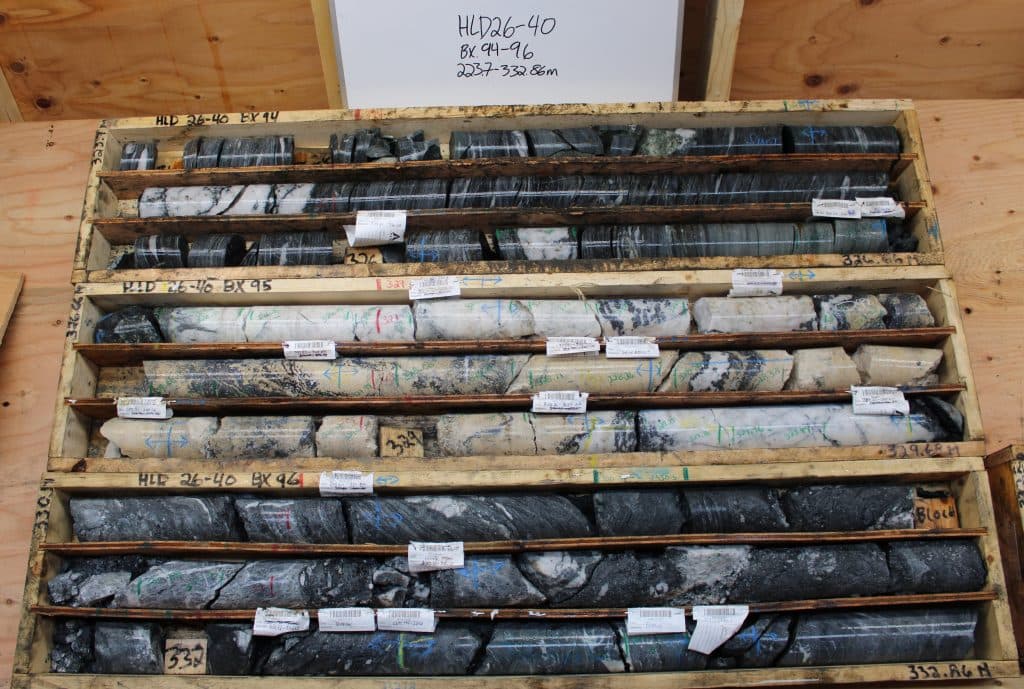
The other honest line in the ledger is money. Juniors live and die on treasury, and this one has done the unglamorous thing well: roughly $13.85 million raised across the December 2025 and February 2026 financings, and by the company's own statement, the 2026 and 2027 campaigns are fully funded. The drill plan does not depend on the next quarter's market mood.
What the ledger cannot yet say is what Haldane adds up to. That answer is being drilled, one hole at a time, and as of this writing most of the evidence — 21 of the 24 holes from the largest program in the project's history — is still sitting in ALS assay queues in Whitehorse and Vancouver.
What Happens Next
The calendar writes itself. Through the fourth quarter of 2026: assays from the remaining 21 holes of the 2026 program, expanding or extending what HLD26-41 started. Through 2027: the second half of a two-year, two-rig campaign of up to 14,000 metres aimed at growing the Main Fault and testing the structures beyond it — including the blind hanging-wall vein that hole 40 stumbled into, and Bighorn, where one hole in 2019 found silver and the target has waited seven years for its second look. In the Silvertip district: results from Veronica's 2026 field program, and Silver North's own plans for Tim now that a major's option has handed the property back, data and all.
But the larger story is the mountain. A hundred and thirty years ago Andy Johnson found silver on Mount Haldane, and a generation later, men in a log office in the snow shipped two dozen tonnes of hand-sorted ore off it and called that mining. The district around them went on to produce 217 million ounces; the mountain itself produced anecdotes. The silver never left. It sat under its skin of weathered rock, in veins the old-timers could see but never follow down, waiting for the one tool that could settle the question — a drill, aimed by people willing to test fresh structures instead of re-digging old ones. Three discoveries in seven seasons say the tool is working.
The treasure, as always, was never the point. The hunt was. This time the hunt is on a mountain that kept its silver for a century — and the keeping is just about over.
Next in the series: the Silver North story in the company's own words — Jason Weber, on the record.