
Treasure Hunter Chronicles. Every company in our purview has a story. This is Mount Sicker's.
- 400,000+ tonnes of mineralized waste rock still sitting on the surface
- Up to 8% copper — the historic cutoff grade; rock carrying just under it went over the side as waste
- pH 3 — runoff acidity measured off parts of the site, roughly the acidity of vinegar
- 97-sample grid: the waste averages 1.86 g/t gold, 48.6 g/t silver, 1.22% copper, 3.05% zinc
- 528-kg X-ray sort test: the sorted fraction ran 6.43 g/t gold, 180 g/t silver, 4.92% copper, 8.7% zinc, with more than 95% of the sulphides pulled out of the waste stream (a selective test result, not run-of-pile)
- ~2,000 legacy mine sites in British Columbia; estimates across Canada run to 10,000
- $671,000 closed in August 2026, over-subscribed; the CEO's salary is C$60,000
- 400 pages — Okane's engineered closure and reclamation plan, now with BC regulators
The Boom
The Cowichan Valley, on the southeast shoulder of Vancouver Island, is not the kind of place that makes men rich in a hurry. It is wet, green, and patient. But in 1897 somebody looked up at a bare-shouldered mountain above Duncan and saw something the valley's farmers had walked past for a generation: copper, gold, silver and zinc in the rock — a volcanogenic massive sulphide system, the kind of deposit that built coastal British Columbia.
The rush that followed was the real thing. The Lenora and Tyee claims came first. By 1900 the Tyee Copper Company — London money, the expensive kind — had bought in. They sank a main shaft over a thousand feet into the mountain, built a smelter down the valley at Ladysmith, and by 1905 the Tyee was the largest copper producer on the BC coast. Four mines eventually worked the mountain: Lenora, Tyee, Richard III and Twin J.
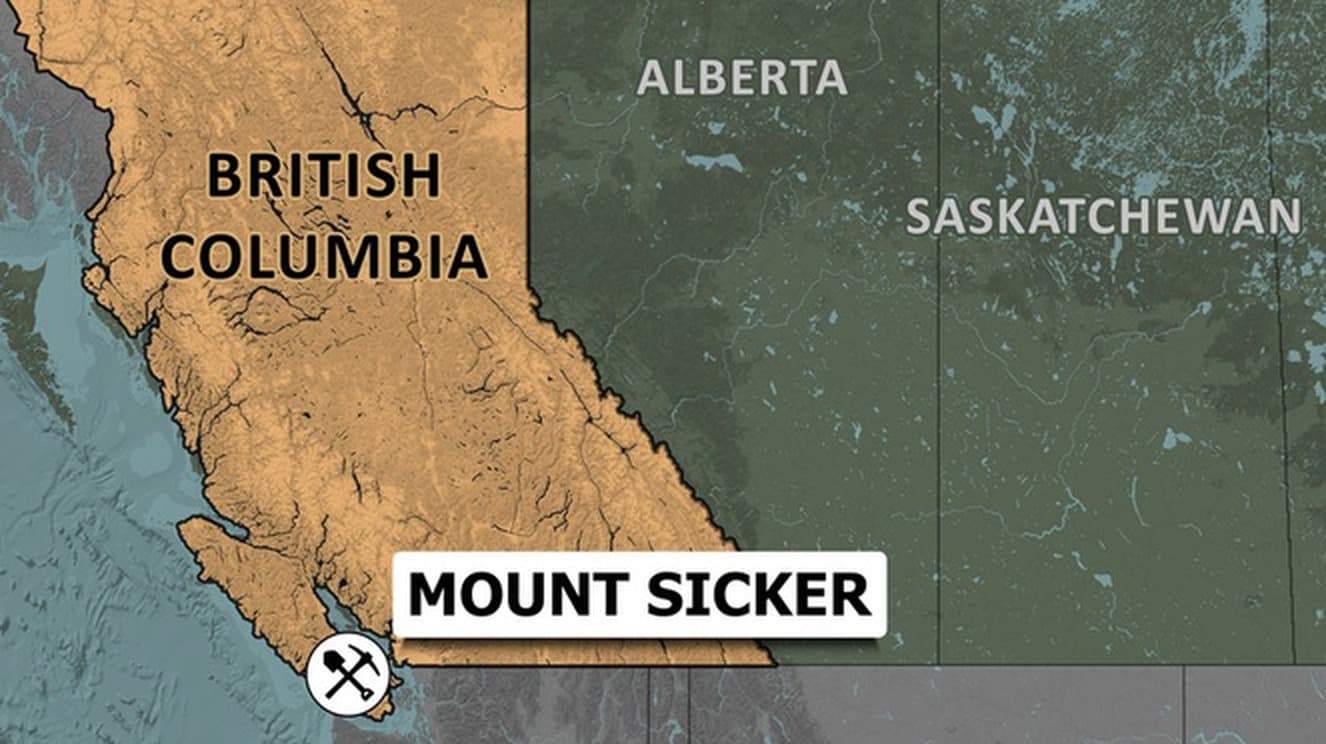
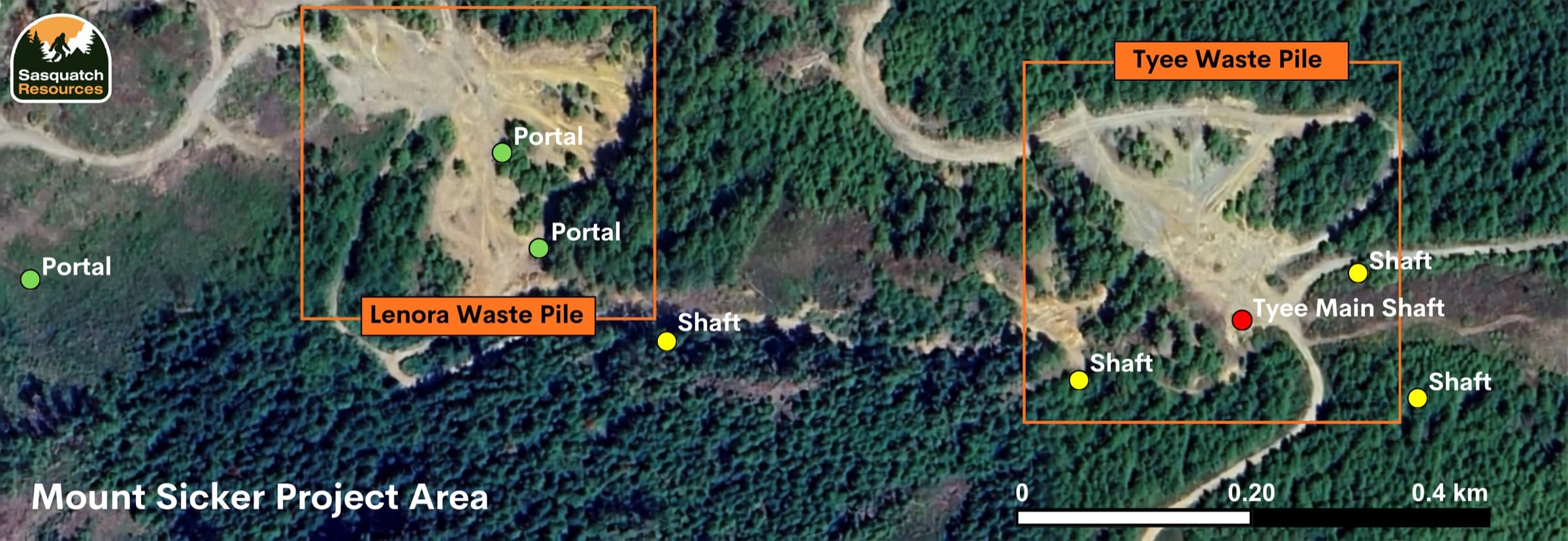
The four workings on one mountain. Map: Sasquatch Resources.
They were brilliant miners. They were also, by modern measure, brutally selective. The cutoff grade in those days ran as high as eight percent copper. Picture that: rock carrying just under eight percent's worth of copper — plus gold, plus silver, plus zinc — went over the side as waste. They took the cream and dumped the milk on the hillside, in pile after pile after pile.
For fifty years, on and off, the mountain produced. The workings ran from 1895 to 1946 — and then, the way these stories always end, the economics changed, the easy ore was gone, and everybody left.
The Price of Leaving
Here is what "leaving" actually meant on Mount Sicker.
More than 400,000 tonnes of mineralized rock stayed on the surface — rock still carrying copper, gold, silver and zinc, but also sulphur, arsenic and lead. Rain fell on it for a century. The sulphides oxidized. The runoff from parts of the site has tested as low as pH 3 — roughly the acidity of vinegar — seeping into the ground around it. The slopes stayed bare while the forest took back everything around them; walk the mountain today and you can read the old workings like a scar that never closed.
"It's Mad Max. It really is. You feel like you've walked into the wasteland and you're going to have to fend for yourself." — Pete Smith, CEO, Sasquatch Resources
And then there are the shafts. Open shafts and adits, some hundreds of feet deep, unmarked, in the bush — a hazard to hikers, an invitation to illegal dumping, a liability nobody owned. There are roughly 2,000 legacy mine sites in British Columbia alone, and estimates across Canada run to 10,000. Mount Sicker is one line in that national ledger of abandonment — except for one unusual fact.
The waste was worth money. It had always been worth money. It just needed a way to sort the poison from the treasure.
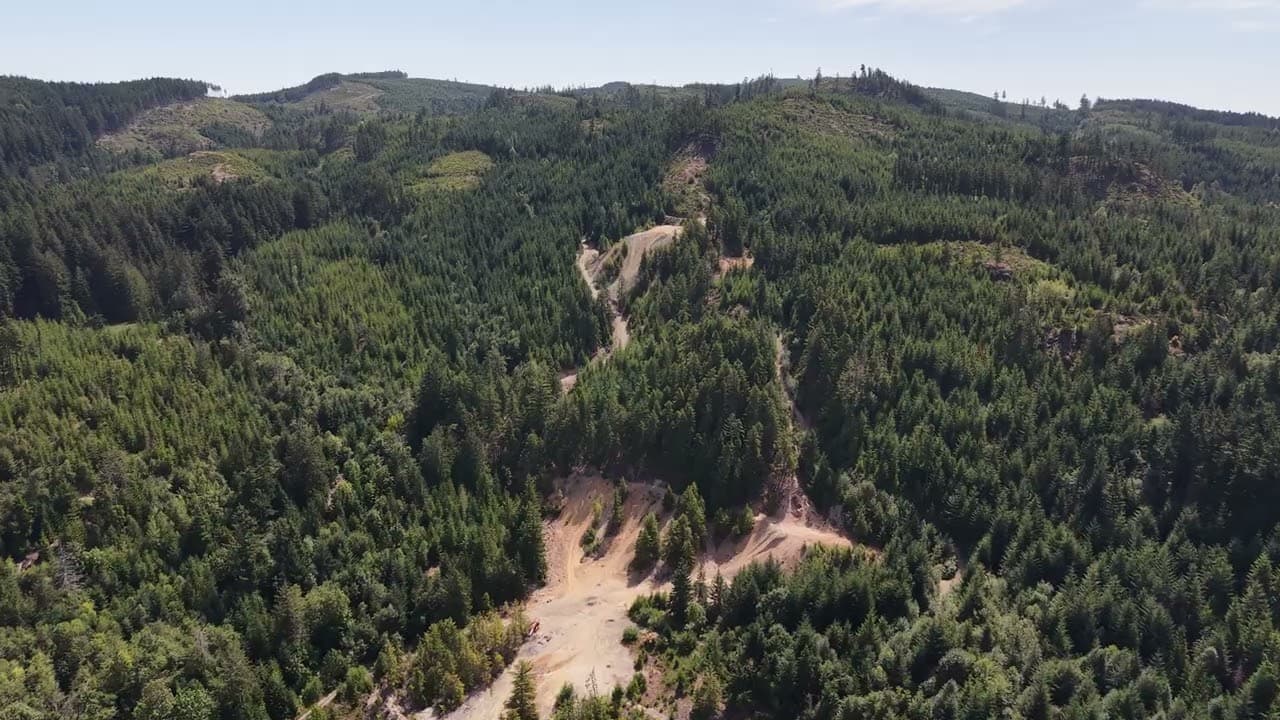
Mount Sicker from the air. Video: Sasquatch Resources.
See it from the air: Sasquatch flies its own drone over the workings — ▶ Mount Sicker Drone Flight — and walks the waste piles at ground level in Mount Sicker – Waste Rock. Both on the company's YouTube channel.
The Second Chapter
Sasquatch Resources Corp. (CSE: SASQ) found the mountain the way most second-chapter stories start: by thinking it was a mine.
The company — incorporated in September 2021, public since September 2022 — first came to Mount Sicker looking at whether the old workings could be reopened. What changed the plan was what the early mapping, water sampling and laboratory work turned up inside the waste piles themselves: sulphide-rich rock, in quantity, that was both the environmental problem and the economic opportunity occupying the exact same tonnes. The company's own formulation of the idea is the whole thesis in nine words: "First and foremost, we are a legacy mine site rehabilitation company." Remediation is the business model, not the afterthought.
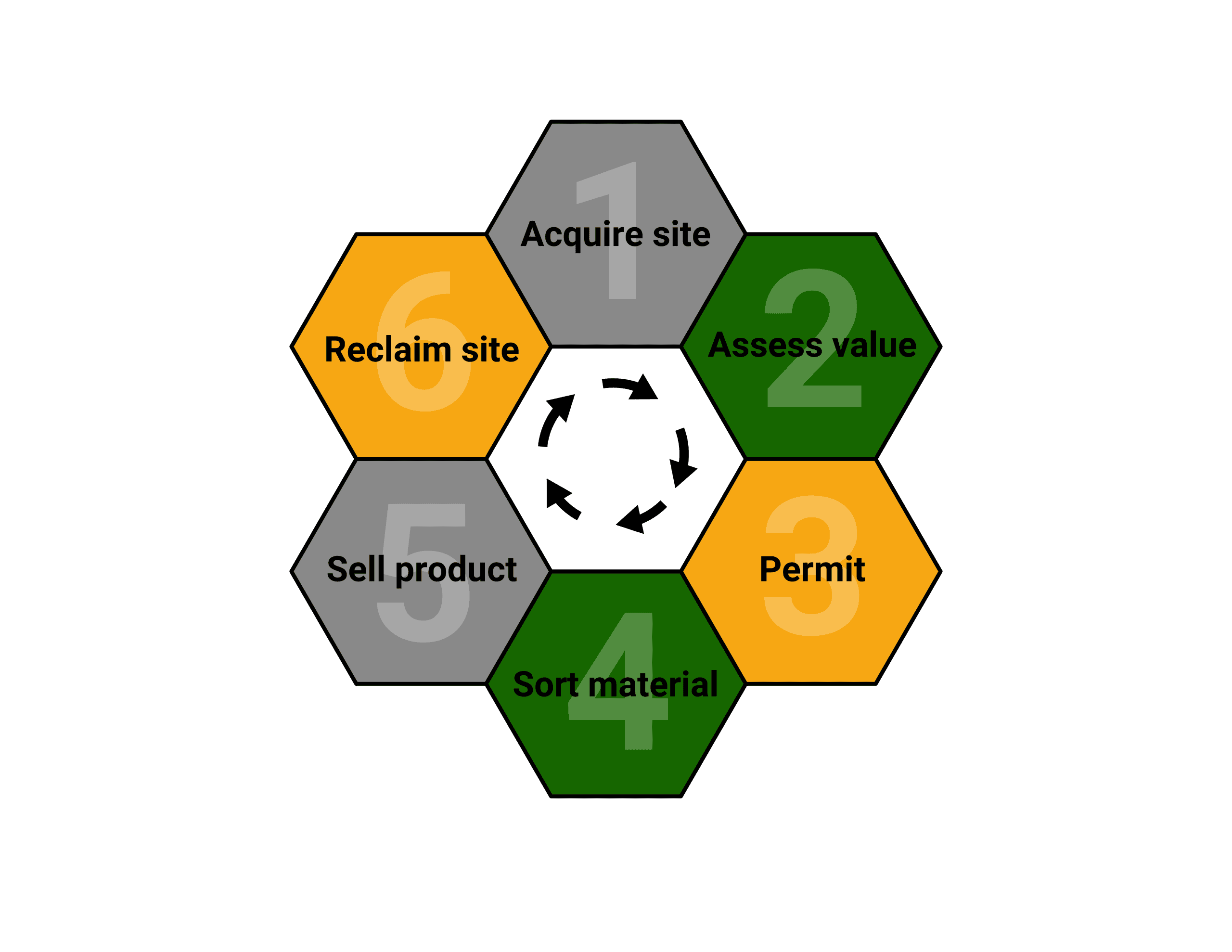
The closed-loop process. Graphic: Sasquatch Resources.
The plan is disarmingly simple, and it is not a mine. Mobile crushing and X-ray ore-sorting units work on site, in a closed loop, with no chemicals. The sulphide-rich fraction — the acid-making part — is sorted out and shipped to existing smelters as a high-grade concentrate. The cleaned rock goes back on the ground. Open shafts and adits get filled and made safe. No mill. No tailings pond. No new hole in the ground.
"Why hasn't this been done already? How on earth has that mess been allowed to exist for the last 120 years…" — Pete Smith, on what the community asks him
The numbers say the physics works. A 528-kilogram sorting test on Mount Sicker waste, run through TOMRA X-ray transmission equipment, pulled out a high-grade fraction grading 6.43 grams per tonne gold, 180 grams per tonne silver, 4.92 percent copper and 8.7 percent zinc — with the company reporting that more than 95 percent of the sulphides can be removed from the waste stream. The honest average is lower, as honest averages are: across the 97-sample surface grid program, the waste averaged 1.86 grams per tonne gold, 48.6 grams silver, 1.22 percent copper and 3.05 percent zinc. For context, the average modern copper mine on Earth works rock grading about half a percent copper. The dumps of 1905, in other words, run hotter than the mines of today.
The engineering and metallurgy now run through Andy Holloway, P.Eng — a veteran of engagements with the likes of Glencore and Ocean Partners — with Sasquatch as operator carrying permitting and reclamation. The environmental science around it — closure planning, water monitoring, metallurgy, lifecycle assessment — is being independently evaluated by Okane Consultants, Vancouver Island University and Synergy Enterprises. That is the scaffolding of people you bring in when you intend the cleanup to survive scrutiny.
Where It Stands
The technical argument is the easy part now. The hard part is a category problem: British Columbia does not have a neat regulatory box for "clean up a legacy mine and sell the dirt," so the project is moving through a permitting pathway that is relatively new territory for everyone involved.
The Notice of Work application is in with the BC Ministry of Mining and Critical Minerals, and ministry comments have been received and answered (July 2026). The gating document is Okane's detailed site closure and reclamation plan — a 400-page engineered closure plan now with the regulators — with the company working toward a permit decision in the coming months and an operational clean-up start hoped for in 2027, pending approval. Once permitted, the recovery program runs roughly one to two years per area, with broader reclamation continuing after the sorting stops.
"We could be looking at a permit in the next couple of months… But I think we're near the finish line." — Pete Smith
The money is small and lean — deliberately. In August 2026 the company closed an over-subscribed placement of $671,000, following a fully-subscribed $600,000 raise in January. CEO Pete Smith's own salary is C$60,000. His framing of the lean model: once permitted, a 10,000-tonne high-grade pile sold at port within a month of starting means "cash flow fairly quickly."
And the community argument — the one that usually kills projects like this — is going the other way. The Municipality of North Cowichan voted unanimous support. Support letters are in from the MLA and MP. Consultation with the Halalt First Nation is ongoing. For a mining project in British Columbia, unanimous is not a word you hear often.
Company update — October 13, 2026
From the company's own public record.
Sasquatch is telling the Mount Sicker story in its own words in Mount Sicker Explained, the company's public explainer series — and Part 5, published October 13, 2026, states the thesis as plainly as the company can state it. The goal, Sasquatch says, is not to reopen historic mines. It is to help address the legacy they left behind: recovering valuable metals from historic waste rock, which the company says can reduce environmental risks, improve landscapes, create local economic activity, and recover valuable resources. Their headline for it: "From liability to opportunity" — turning historic mine waste into a better future.
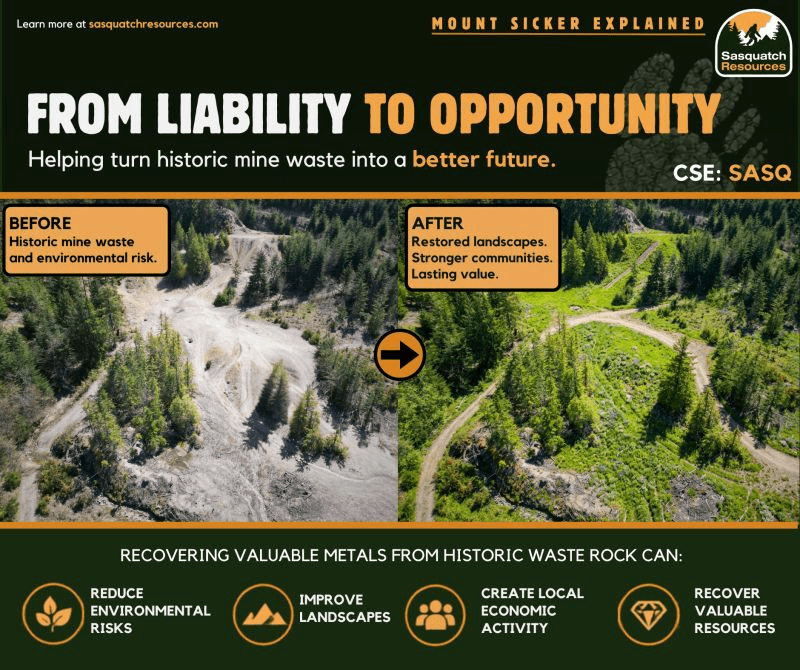
Graphic: Sasquatch Resources, from Mount Sicker Explained | Part 5. The company's own disclosure, in its words: "'After' images are renderings of potential reclamation outcomes. Not 100% accurate."
The series lives at sasquatchresources.com.
What Happens Next
Mount Sicker is the proof. The template is the prize.
Sasquatch is already building the bench: Copper Road, next door, where geophysics over mineralized logging-road material printed results in August 2026; Blue Grouse, a former producer near Lake Cowichan held under an option running toward 2027; Santana on Quadra Island, another former mine with high-sulphide piles of its own; the Alberni Claims northwest toward Port Alberni, where three target areas have already produced real numbers; Slesse, down by the border at Chilliwack.
If the model works — if you can take a century-old liability, sort out the acid, sell the metal, and hand back a mountain that grows trees again — then the addressable market is not a project. It is the roughly 2,000 legacy sites in this province, and the thousands beyond it. As Pete Smith himself put it, the work is "turning wasteland into parkland." That is why a C$6-million company with a pilot-mountain permit pending is worth a chronicle: because if he is right, the second chapter of mining in British Columbia is cleaning up the first one.
"We have a real shot, and not in 20 years, but in two years, to make a real difference to this landscape, turning wasteland into parkland… take your kids up there and say, hey, by the way, this used to look like Mad Max, and now there's trees and foliage everywhere." — Pete Smith
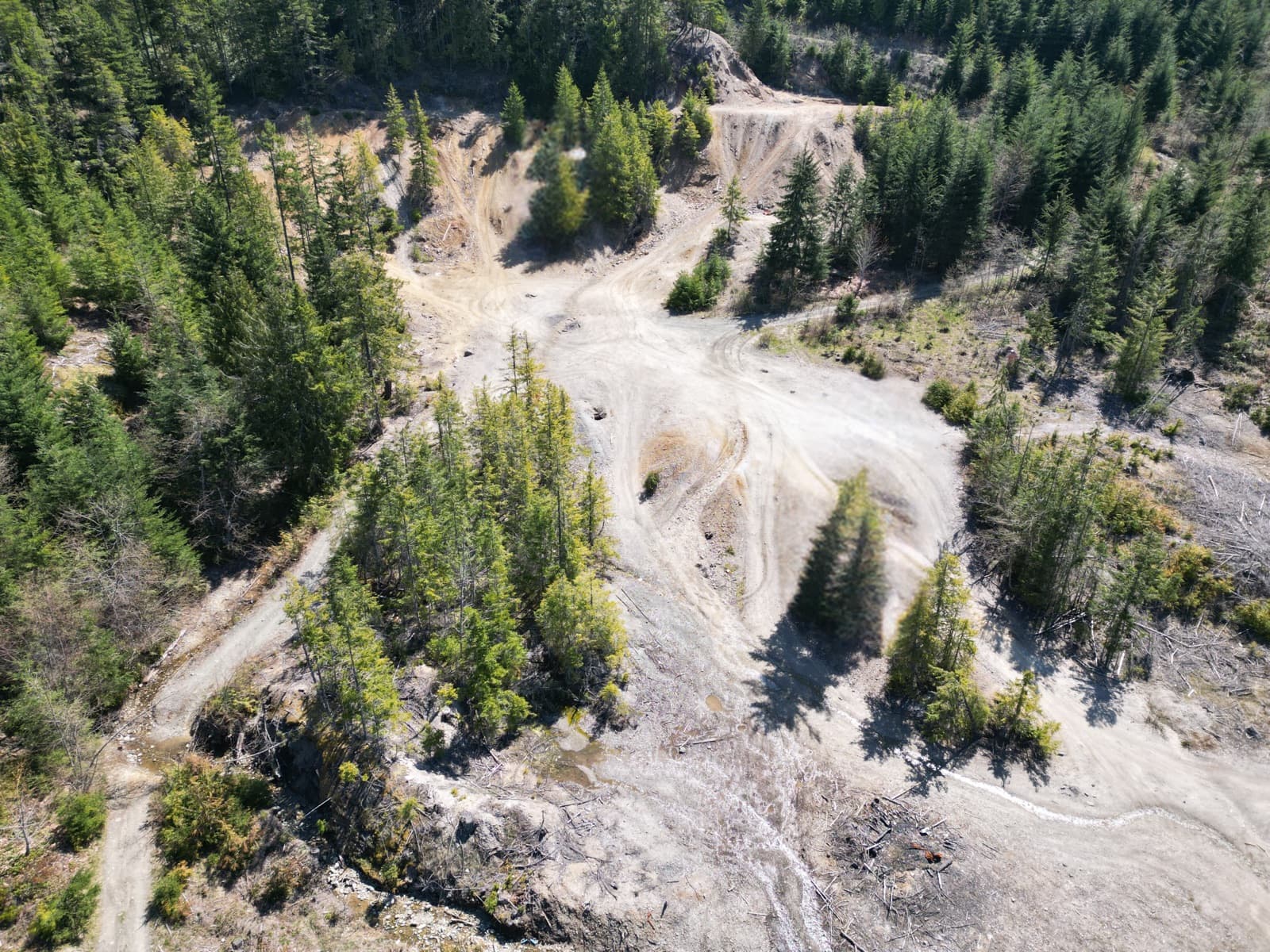
The Lenora workings today. Image: Sasquatch Resources.
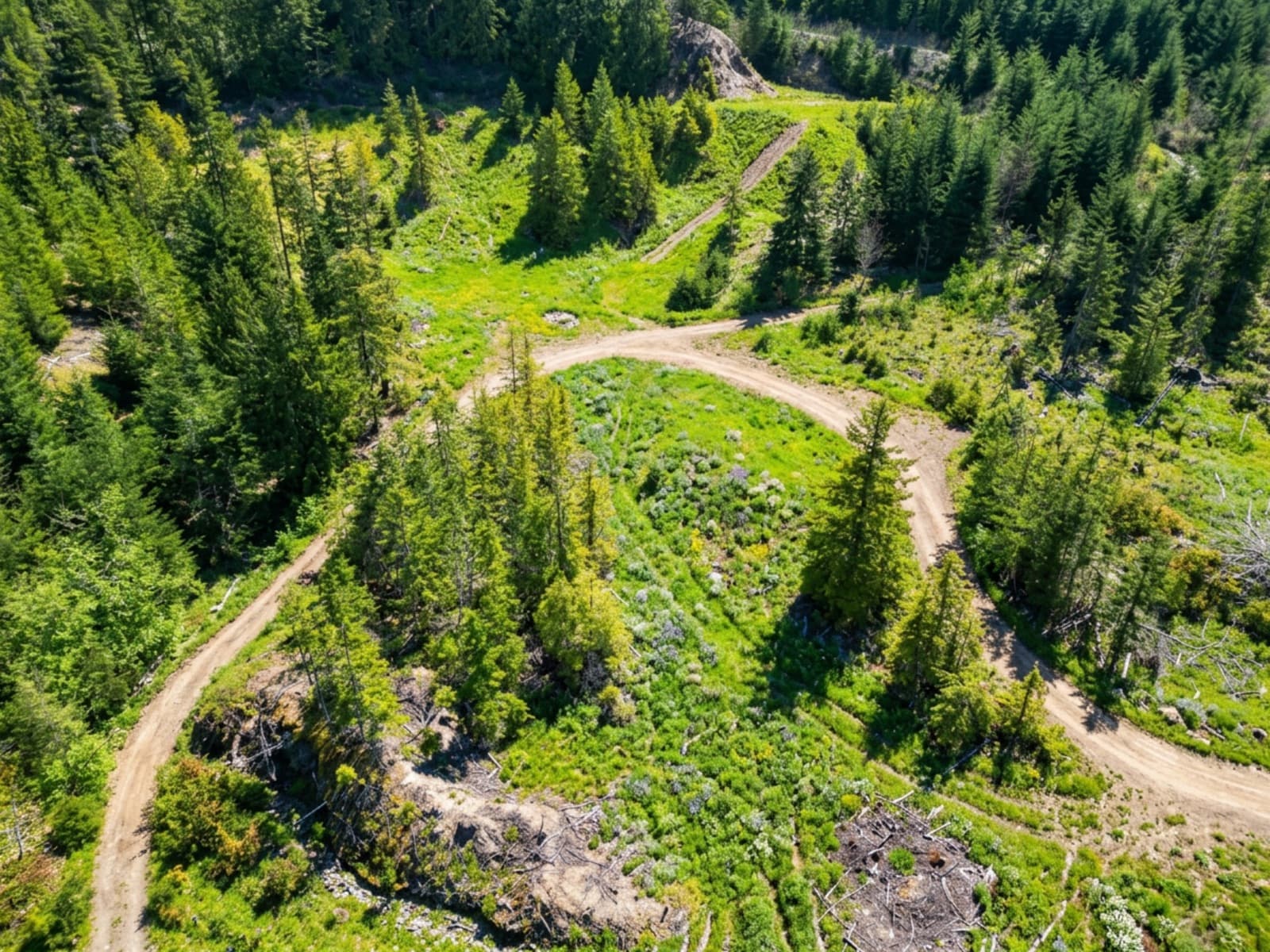
The same ground, as the closure plan leaves it. Render: Sasquatch Resources.
A hundred years from now, somebody will stand on a green Mount Sicker. The shafts will be filled. The piles will be gone. The forest will have done what forests do when you stop poisoning them. And the only sign that any of it happened will be a story somebody tells about the men who left the treasure on the surface, and the one who came back to sort it out.
The treasure, as always, was never the point. The hunt was. This time, the hunt is putting the mountain back.
---
Next in the series: Pete Smith — wrestler, lawyer, founder — in his own words.