
Treasure Hunter Chronicles. Every company in our purview has a story. This is Andrew Brodkey's.
The Hunter
Andrew Brodkey has spent more than thirty-five years in mining's front offices, including a run as Vice President of Business Development at BHP Copper — the side of the industry that decides which giant deposits get built and which ones wait. At Idaho Copper Corp. (NYSE American: COPR), where he serves as Chief Executive Officer alongside Executive Chairman Robert Scannell, a thirty-five-year Wall Street hand in natural resources, Brodkey is working the other side of that table: holding one of the giants, and making the case that its wait is over.
He is not a quiet holder. Brodkey has carried the CuMo story into the industry's rooms himself — a featured panelist on the Idaho mining panel at Better In Our Back Yard's 2026 Mining and Energy Expo in Minnesota this fall — and his company is leading the lobbying effort to have molybdenum added to the U.S. critical minerals list, arguing the national case for the metal his mountain is made of. On November 16 he hosts a public webinar to walk investors through the project's new economics himself. Whatever else CuMo is, it is not a deposit whose owner is waiting to be discovered.
The Ground
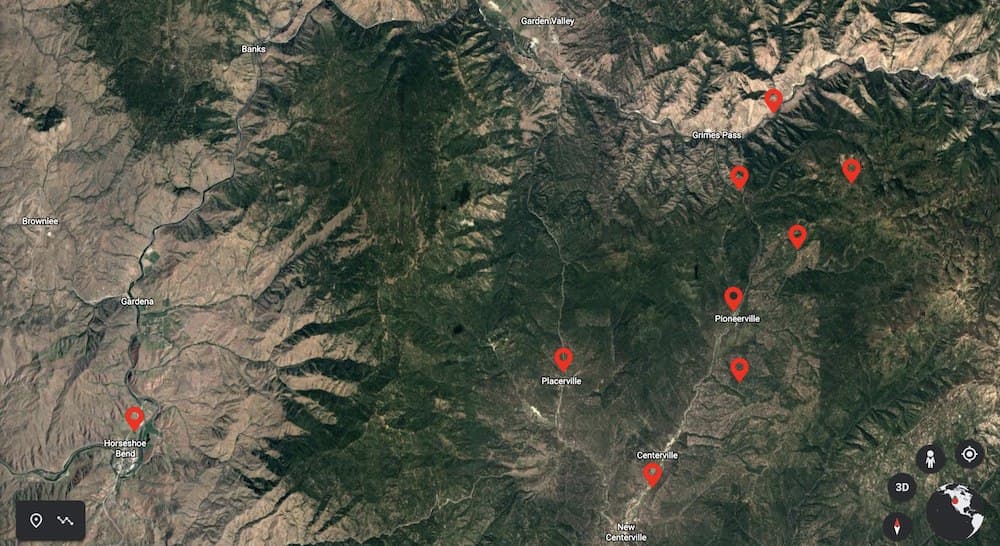
The CuMo project sits in the headwaters of Grimes Creek in the Boise Basin, roughly thirty-six miles northeast of Boise — a historic lode gold camp that recorded some 2.8 million ounces of production in its day, and country that has been mined and logged for over a century. The property covers about 2,640 acres: 126 federal unpatented lode claims and six patented claims. For a project of its scale, the setting is unusually civilized — road access, rail nearby, electric power and natural gas at hand, water for operations, and the skilled workforce of the Boise metro at the bottom of the hill.
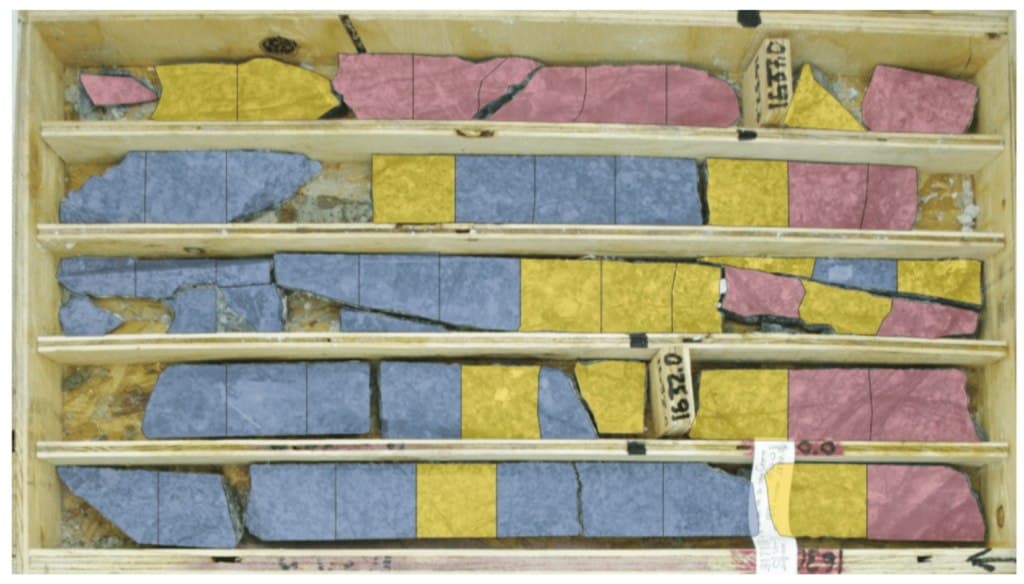
And it is big ground with room left in it: the company notes only about sixty percent of the system has been drilled. What has been drilled describes a two-storey deposit — an upper half that runs richer in copper and silver, and a lower half rich in molybdenum — with silver, rhenium and tungsten carried through the system. The 2020 preliminary economic assessment framed the scale at the lowest cut-off grade: on the order of four billion pounds of copper and 1.6 billion pounds of molybdenum in measured and indicated resources, which the company describes as one of the largest undeveloped copper deposits in the western hemisphere and likely the largest undeveloped molybdenum deposit in the world.
The Long Sleep
Here is the part of the story that should make every treasure hunter sit up: CuMo was found in 1963. AMAX Exploration identified the molybdenite mineralization that year — in a gold camp, where nobody had been looking for molybdenum at all. AMAX sampled it in 1964 and dropped the property. The ground then passed through a parade of serious names — Curwood Mining, Midwest Oil (later Amoco), AMAX a second time, and Climax Molybdenum, which drilled between 1969 and 1982 and built a block model of the system by 1983. Then the molybdenum price did what it did, and the mountain went quiet. There was no meaningful exploration after 1984.
The ground was restaked in 1998 and eventually drilled again in the Mosquito Consolidated and American CuMo years — deep holes that confirmed the system's size, including hole 53-09 in 2009, which cut 509 metres grading 0.19% copper and 0.91% MoS₂ through the copper zone. The deposit was never in doubt. What was missing, for sixty years, was an economic moment and an owner willing to re-think the engineering. The first arrived with the critical-minerals era. The second is Brodkey.
The Rework
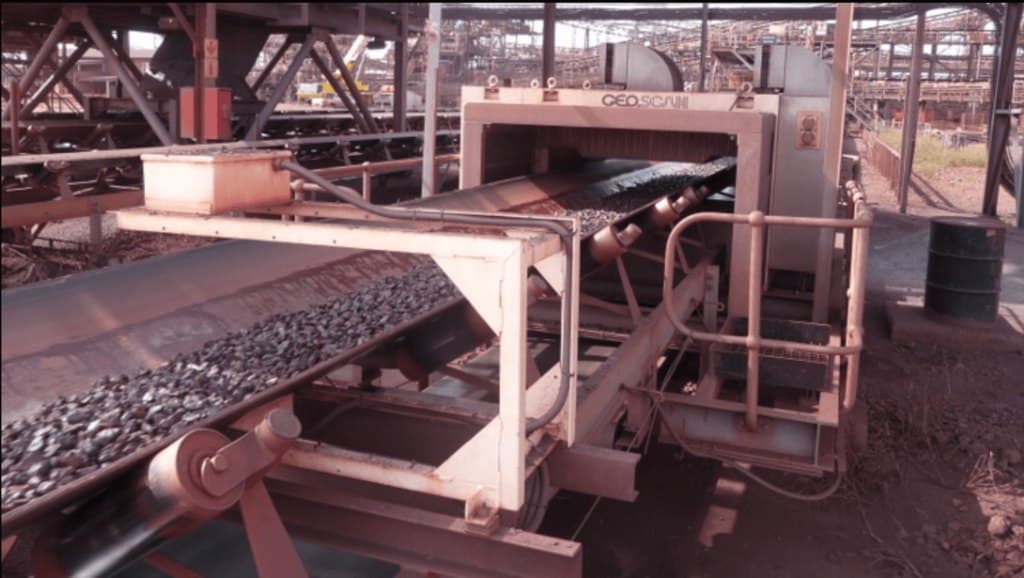
On October 14, 2026, Idaho Copper published an updated PEA for CuMo, prepared under Barr Engineering, that supersedes the 2020 study — and the headline is not the orebody. It is the redesign. "This is a very different project from the one that was described in 2020," Brodkey said at the release. Three moves do the work: a smaller first-phase plant, so the capital mountain is climbed in stages; XRF sensor-based ore sorting ahead of the mill — test work in 2024, including MineSense scanning, proved CuMo ore sorts well, so waste is rejected before it costs money to grind; and a re-sequenced mine plan that reaches the higher-grade ore sooner.
The numbers the redesign produces: an after-tax net present value of US$1.88 billion at an 8% discount, an 18.5% internal rate of return, and payback 5.9 years from the start of production, against initial capital of about US$1.17 billion. The mine life runs 46 years. Over the first twenty-one, the plan averages 41.6 million pounds of copper, 30.5 million pounds of molybdenum and 1.36 million ounces of silver a year; across the full life it pays out 1.748 billion pounds of copper and 906 million pounds of molybdenum. And because the molybdenum credits more than cover the cost of making copper, the study prints a C1 cash cost for copper of negative US$4.30 a pound — the copper effectively arrives paid for. The base case assumes US$5.00 copper, US$25 molybdenum and US$50 silver; at the spot prices of October 12, the company's own case rises to a US$6.24 billion after-tax NPV and a 38.4% IRR.
What Happens Next
The paper is only half the turn. In 2025 the U.S. Forest Service, Boise National Forest, approved Idaho Copper's Plan of Operations to commence exploration drilling — the permit gate that stops so many western projects never opened for CuMo; it is open. The drilling is aimed at upgrading the resource, and the bulk of the prefeasibility study is slated for 2027, with completion targeted for 2028, alongside pilot-scale test work to prove the ore-sorting assumptions at commercial scale.
Now the honest ledger, because a Chronicle keeps one. A PEA is the earliest, softest study in the business: this one is preliminary by its own terms, leans in part on inferred resources, and estimates no mineral reserves — CuMo has none yet, and the company has made no decision to build the mine. The US$1.17 billion of initial capital is money that has to be raised, not money in hand, and the next hard gate — the prefeasibility study — is targeted for 2028, which makes this a story measured in years, not quarters. What is true today is narrower and still considerable: a drilled, giant, multi-metal system on American ground, thirty-six miles from a state capital, with its drilling approval in hand, a re-engineered plan that pays back in under six years on paper, and a CEO out personally making the case — for his mountain, and for molybdenum itself.
Sixty years ago AMAX found this deposit and walked away because the world wasn't ready for it. The argument Andrew Brodkey is now making, in panel rooms and webinars and a brand-new set of economics, is that the world has finally caught up with the mountain. The drills get the next word.