
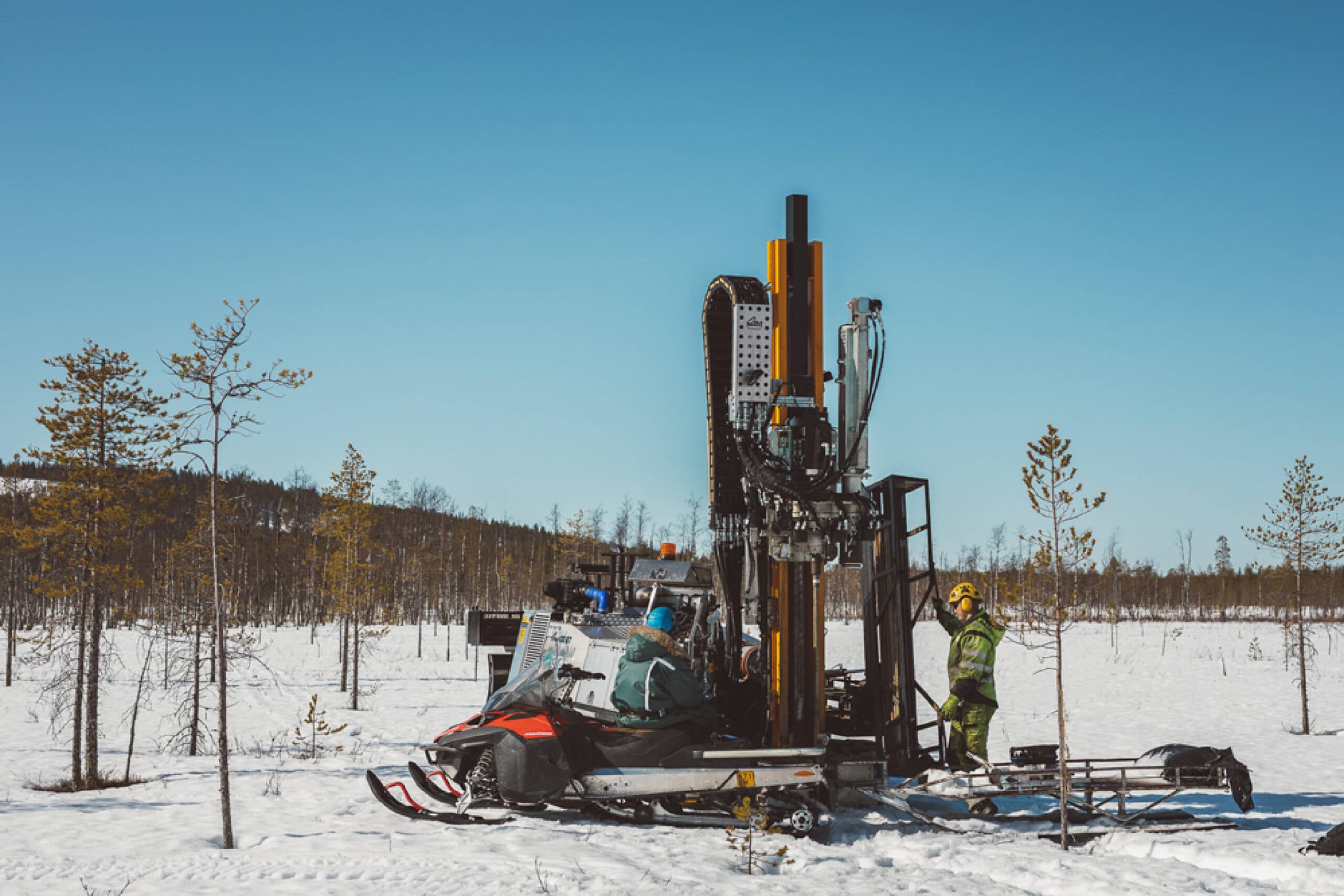
Treasure Hunter Chronicles. Every company in our purview has a story. This is Mustajärvi's.
- 124 g/t gold — the single richest metre drilled at the East Zone in 2026, inside 2.0 metres averaging 63.19 g/t
- 21.0 metres at 4.13 g/t gold — the September 2026 discovery hole at Lammas, a brand-new fourth zone roughly a kilometre east of everything drilled before
- 16.6 metres at 5.83 g/t gold — the follow-up step-out hole, 200 metres away, that says Lammas is not a one-hole story
- 30,314 metres drilled at Mustajärvi to date — and the rigs are still turning
- 7.8 km² of exploration permits at Mustajärvi, 100%-held, beside a paved highway in Finnish Lapland
- 27.48 g/t gold over 1.75 metres — the first high-grade intercept at Sarvi, the sister project that shares an 8-kilometre border with the ground hosting Rupert Resources' Ikkari deposit
- US$2.94 million — what Agnico Eagle has spent so far exploring FireFox's Kolho property under its earn-in
- Early 2027 — when the company is working to deliver Mustajärvi's first-ever mineral resource estimate
- Since 2017 — how long this small team has been quietly assembling ground in the belt
The Belt Nobody Watched
Every gold rush has a geography problem. The famous belts — the Abitibi in Canada, the Yilgarn in Australia — were found early, drilled hard, and picked over for a century. The gold that built the modern industry came out of rock everybody already knew about.
Northern Finland never got that rush. The Central Lapland Greenstone Belt is, by the company's own framing, an "Abitibi-sized" greenstone belt — the same family of ancient, gold-bearing rock — sitting above the Arctic's doorstep in a country with strong mining law, a long mining tradition, and top-ten rankings in the Fraser Institute's global surveys of mining jurisdictions. What it has not had, historically, is attention. Finland, as FireFox puts it in release after release, "remains underexplored for gold."
The belt is not theoretical. Europe's largest gold mine — Agnico Eagle's Kittilä mine — operates in the same Kittilä Suite of volcanic rocks that runs through FireFox's Sarvi project, roughly 35 kilometres away. Next door to Sarvi, Rupert Resources found Ikkari, a multi-million-ounce discovery that turned heads around the world. The rocks deliver. They have simply been waiting for somebody to look at them properly — through a blanket of glacial till that hides the bedrock almost everywhere, which is why finding gold here is a geophysicist's game as much as a geologist's.
FireFox Gold Corp. (TSX.V: FFOX; OTCQB: FFOXF) started looking in 2017.
Fifty Metres Down
The first people to drill Mustajärvi were not FireFox. Decades ago, Outokumpu — the Finnish mining house — put shallow holes into the ground along the highway between Kittilä and Sodankylä, roughly 18 kilometres east of Kittilä. They only ever tested the top fifty metres of bedrock. What they found in that skin of rock should have started a stampede: 2.7 metres at 14.6 grams per tonne gold, 12.0 metres at 2.7 grams, a metre at 18.8 grams. Then, the way these stories so often go, the work stopped, the files aged, and the highway traffic drove past a gold discovery for a generation.
FireFox made the initial discovery at Mustajärvi in 2018 and has been pulling the thread ever since. The mineralization is classic orogenic gold — the same deposit family as the Abitibi's great mines — hosted in albitized metasediments and volcaniclastic rocks along the Mustajärvi Shear Zone, beside the crustal-scale Venejoki Shear Zone. The gold rides with pyrite in quartz and quartz-carbonate-tourmaline veins, and in silica-pyrite replacement of the sedimentary host rock. The alteration system runs for kilometres.
The company and its predecessors delineated three separate lodes of gold — the Central, East and Northeast Zones — along more than two kilometres of strike, all of it shallow, much of it starting near surface. The company's presentation highlights individual intervals like 13.05 metres averaging 15.04 grams per tonne. And the grades keep refusing to be polite. In September 2026, FireFox reported a downdip extension of the East Zone: hole 26MJ021 cut 2.0 metres averaging 63.19 grams per tonne gold, including a single metre at 124 grams — a metre of rock carrying roughly four ounces of gold per tonne — with a second hole, 26MJ022, returning 6.0 metres at 4.38 grams, including a metre at 23.5.
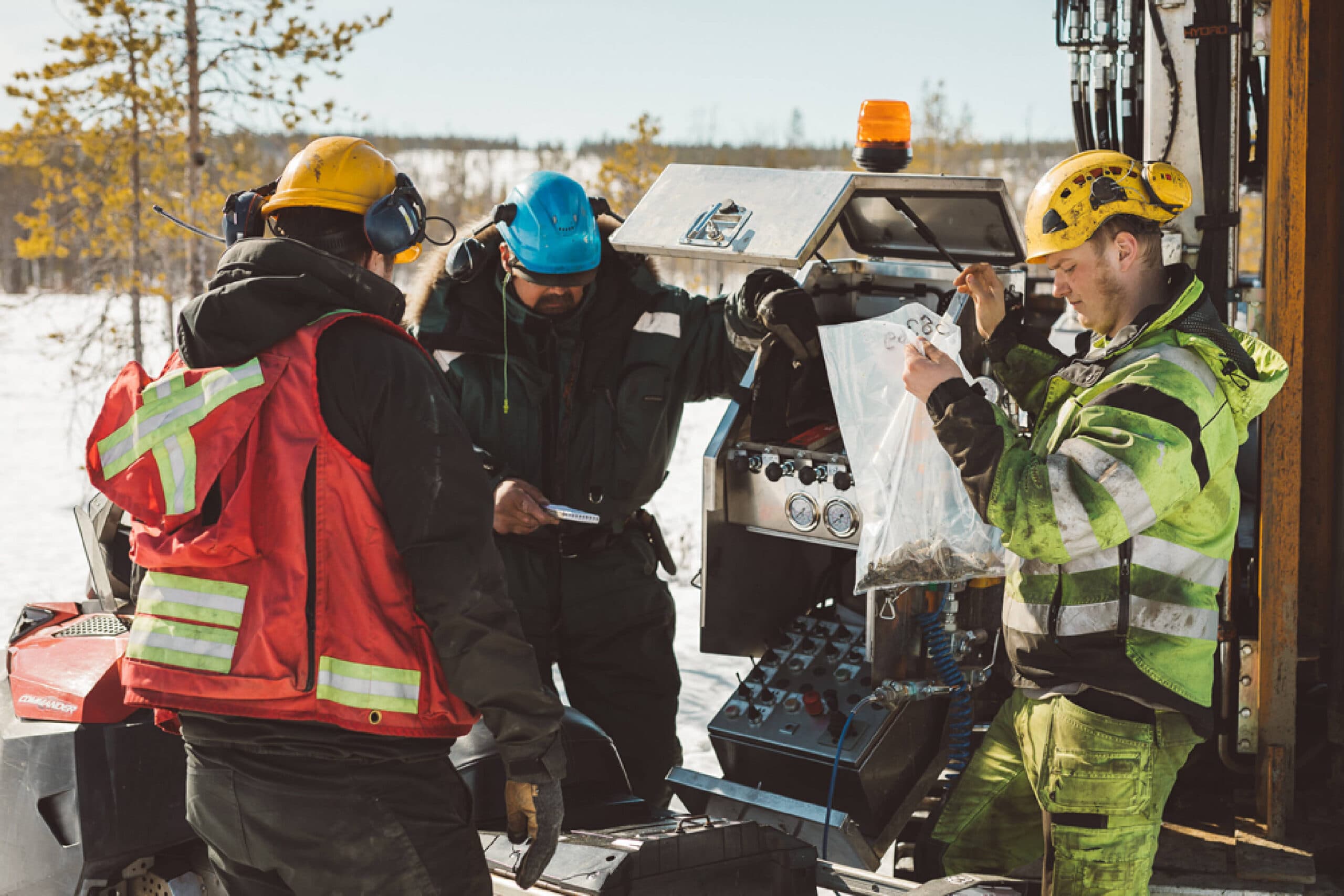
The method matters here, because the till hides everything. FireFox's team — geologists working out of Sodankylä, where the company keeps its core facility — hunts with ground magnetics, fixed-loop electromagnetics that light up the sulphide-rich zones, and base-of-till sampling that sniffs gold through the glacial cover. In early 2026 the company reported a base-of-till sample assaying over 100 grams per tonne gold, with the bismuth-and-tellurium fingerprint of the known zones, in an undrilled area near a structural intersection two kilometres southwest of any previous drilling. The system, in other words, is bigger than the drilling.
The Fourth Zone
In September 2026, the story jumped a kilometre sideways.
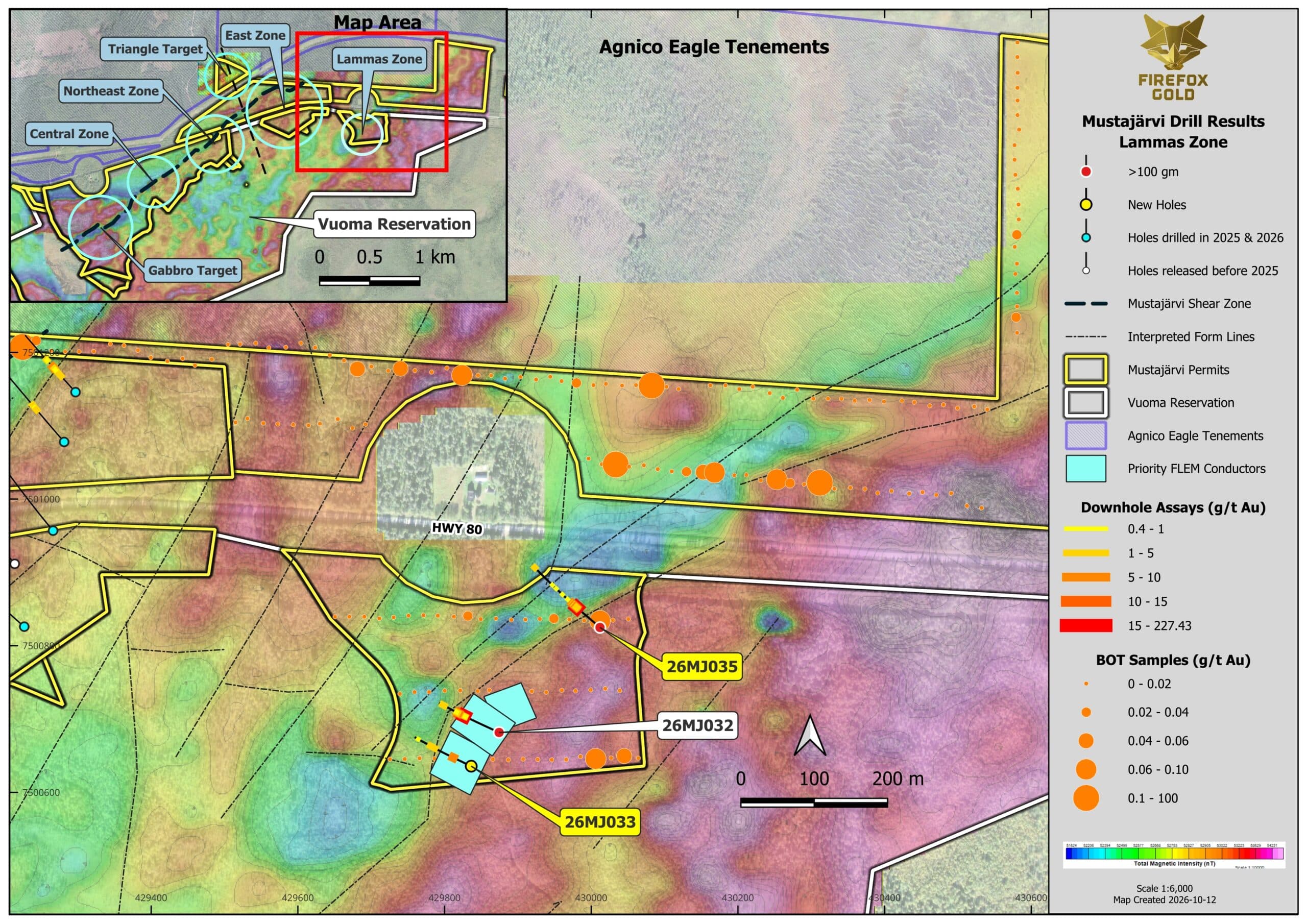
Lammas — the name means "sheep" in Finnish, which tells you something about the terrain — was a target built the FireFox way: a northeast-striking structure visible in the magnetics, gold anomalies in the till above it, and an electromagnetic conductor matching the signature of the known high-grade zones. It sits nearly a kilometre east of the Mustajärvi Shear Zone, on a parallel structure the drill had never touched.
The discovery hole, 26MJ032, returned 21.0 metres averaging 4.13 grams per tonne gold, including a metre at 21.6, plus a second interval of 4.2 metres at 3.41. A fourth zone of high-grade gold — found not by extending the known lodes, but by testing a new corridor across the property.
"The results from this hole indicate just how much potential for discovery and expansion remains in the Mustajärvi Shear Zone system." — Carl Löfberg, CEO, FireFox Gold
Four weeks later, the step-outs landed. Hole 26MJ035, collared 200 metres northeast of the discovery hole, cut 16.6 metres averaging 5.83 grams per tonne gold from just 72 metres down, including a metre at 51.5 grams. A second hole confirmed the corridor continues southwest. The defined strike of the Lammas Zone stands at roughly 260 metres; the first three holes are only about 200 metres deep; and the company states plainly that the mineralization remains open in all directions. The drill has been mobilized back to Lammas for up to eight more holes.
"These step-out holes at the new Lammas discovery are significant because we can now demonstrate an analogous mineralized shear zone with more than 200 metres of strike, which is open in all directions… our hit-rate is outstanding." — Carl Löfberg, CEO, FireFox Gold
The People
Discoveries like this are made by teams, and this one has an unusual architecture: a chairman who is a geologist, and a chief executive who is a Finn.
Patrick Highsmith, the company's Chairman and co-founder, is a professional geologist (MSc, CPG) who has worked on more than 300 projects around the world for companies including Newmont, BHP, Rio Tinto and Fortescue. He has worked in Finland since 2005 — two decades in the belt before the belt was fashionable. He most recently served as CEO of Timberline Resources, sold to McEwen Mining in August 2024, and he serves as FireFox's Qualified Person under NI 43-101: the man whose name stands behind the technical disclosure is the same man chairing the board.
Carl Löfberg, CEO & Director and also a co-founder, is the Finland side of the house. An MSc in Industrial Economics, a founding member of FinnAust Mining, and Managing Director since 2006 of Magnus Minerals — the Finnish prospect generator whose ground deals seeded much of FireFox's portfolio — Löfberg runs a Finland-based CEO-and-technical-team structure the company points to with pride in every release. The releases are datelined Sodankylä, not Vancouver. The core is logged in Sodankylä. The exploration manager, Mikko Nenonen, and the geophysics (through Magnus's Markku Montonen) are Finnish. The company's corporate home is a Vancouver listing; its centre of gravity is a small town in Lapland.
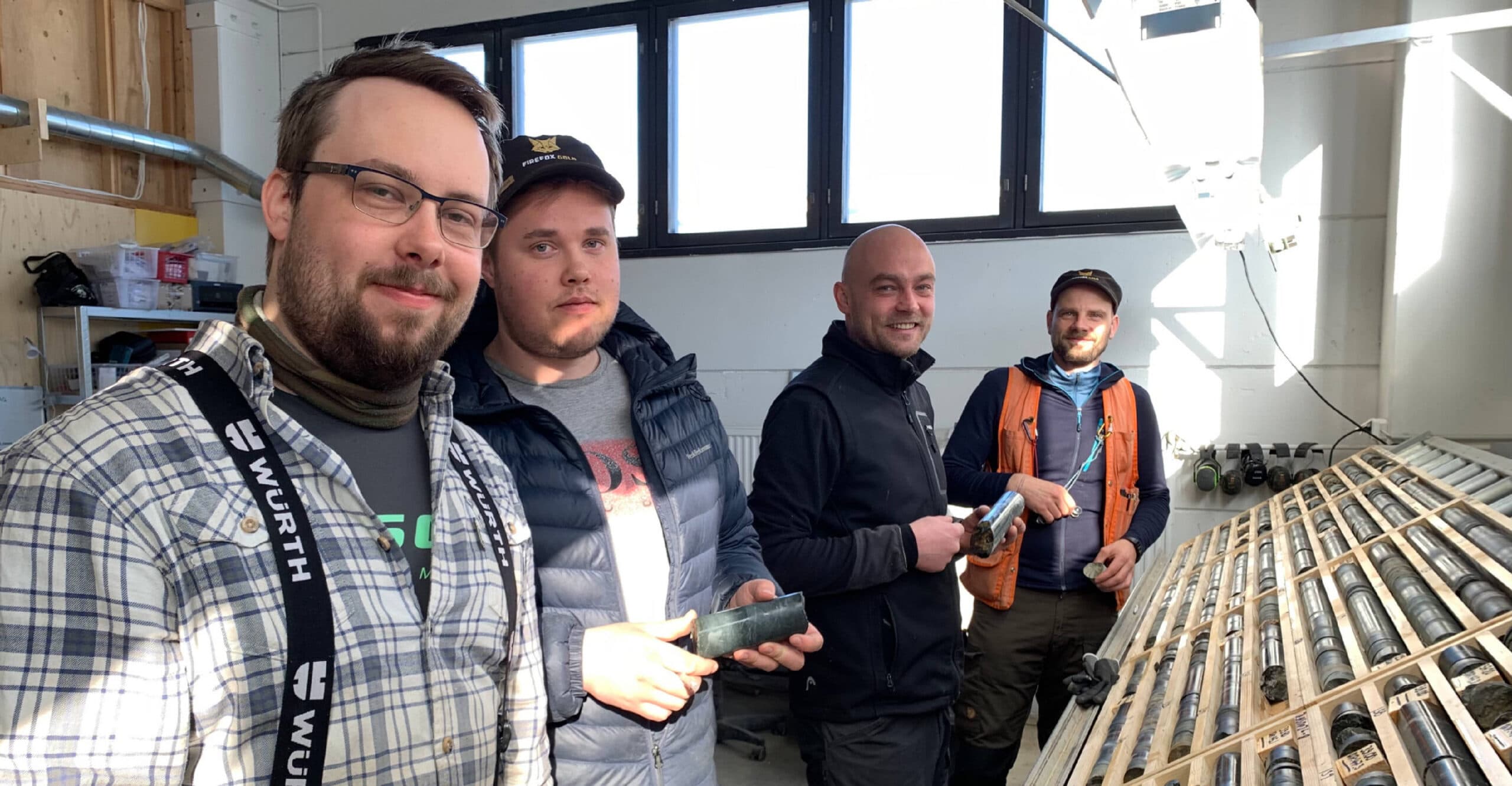
That pairing — North American capital-markets geology on one side, Finnish ground knowledge on the other — is the machine that assembled the portfolio.
More Than One Fire
Mustajärvi is the flagship, but the land position is the strategy. Working through Magnus Minerals earn-ins completed in 2021 and 2022, FireFox holds a commanding spread of the belt: roughly 46,000 hectares of the Seuru properties alone, plus the Riikonkoski, Jeesiö and Ylöjärvi projects acquired at 100% in 2021.
Sarvi is the second fire. The project covers 26 square kilometres of permitted ground in the Kittilä Suite — including the Porkonen Formation, the same rock package that hosts the Kittilä mine — and shares an eight-kilometre southern boundary with the Rupert Resources ground hosting Ikkari. The Geological Survey of Finland sniffed gold here in 2009, hitting narrow intervals in two reconnaissance holes. In January 2026, FireFox's own drill made it real: hole 25SA003 cut 1.75 metres averaging 27.48 grams per tonne gold, including 0.8 metres at 53.5 grams, in a sulphide-rich breccia — the first high-grade gold interval reported from Sarvi, nearly two kilometres from any previous drilling.
"Sarvi now joins Mustajärvi and Jeesiö as FireFox projects having samples from channel sampling or drilling with more than 10 g/t gold." — Carl Löfberg, CEO, FireFox Gold
Jeesiö, the third project with high-grade gold in hand, is a large land position on a major district-scale structure, where a northwest-trending fault in the southern part of the property is associated with high-grade gold in rock chips, and the Katajavaara and Saittavaara prospects anchor the target pipeline. Beyond those three sit Nunara, Naula and Manto — early-stage projects on district structures that the company describes as joint-venture candidates.
And then there is Kolho, where FireFox's ground game bought the strongest validation a junior can get: the world's biggest gold miners paying to explore its land. Under an earn-in agreement announced in December 2023, a subsidiary of Agnico Eagle can earn a 51% interest in the 120-plus-square-kilometre Kolho property by spending US$5 million on exploration, with a right to a further 24% for another US$7.5 million. As of the company's April 2026 update, Agnico had spent approximately US$2.94 million at Kolho and is operating the program. Agnico also sits on FireFox's share register as what the company's presentation calls a 19.9% fully diluted cornerstone shareholder. The major is, in effect, paying rent on the belt thesis while FireFox drills its own flagship a few kilometres away.
Where It Stands
Honesty is the house rule in this series, so here is the ledger, straight.
There is no mineral resource at Mustajärvi yet. Not a small one, not an inferred one — none. Everything above is drill intercepts: real, assayed, quality-controlled, and reported under NI 43-101 discipline with Highsmith as Qualified Person — but intercepts are not ounces in a bank. The company is in the middle of the work that converts one into the other: a drill program of more than 10,000 metres that began in 2025, continuous drilling through the current season, infill and step-out holes closing the gaps in the East and Northeast Zones, and the Lammas follow-up underway. Total drilling on the project now stands at 30,314 metres.
The milestone the whole program points at is the company's first mineral resource estimate for Mustajärvi, which FireFox says it is working toward for early 2027. Four zones of shallow, high-grade, orogenic gold along more than two kilometres of one shear system, with a parallel corridor a kilometre east already carrying 21-metre and 16.6-metre high-grade intercepts — that is the inventory the resource will be built from. What it will add up to, nobody honestly knows yet. That is rather the point of drilling it.
What Happens Next
The near-term calendar writes itself: up to eight more holes at Lammas to chase the new corridor along strike and down dip; continued infill at East and Northeast; the first resource estimate in early 2027; follow-up work at Sarvi on the strength of the 27.48-gram intercept; and Agnico's drills turning at Kolho on the major's dime.
But the larger story is the belt itself. The Central Lapland Greenstone Belt gave the world Kittilä, Europe's largest gold mine. It gave the world Ikkari. It is now giving drill results like 124 grams per tonne in a metre of core and new zones found a kilometre from old ones by a team that has been assembling this ground, patiently, since 2017 — before the rush, in the years when Lapland gold was a hard story to sell. FireFox's own boilerplate says the delineation at Mustajärvi is "paving the way for the discovery of Finland's next major gold deposit." For once, the boilerplate and the drill core are telling the same story.
A hundred metres of till-covered forest can hide a fortune for a century — it hid one from Outokumpu's successors for a generation after the first holes said the gold was there. What changed was not the rock. What changed was that somebody finally went back, with better instruments and more patience, and looked again.
The treasure, as always, was never the point. The hunt was. This time, the hunt is at the top of the world, in the cold and the dark and the long northern light — and it is just getting started.
Next in the series: the FireFox story in the company's own words — the chairman and the CEO, on the record.