
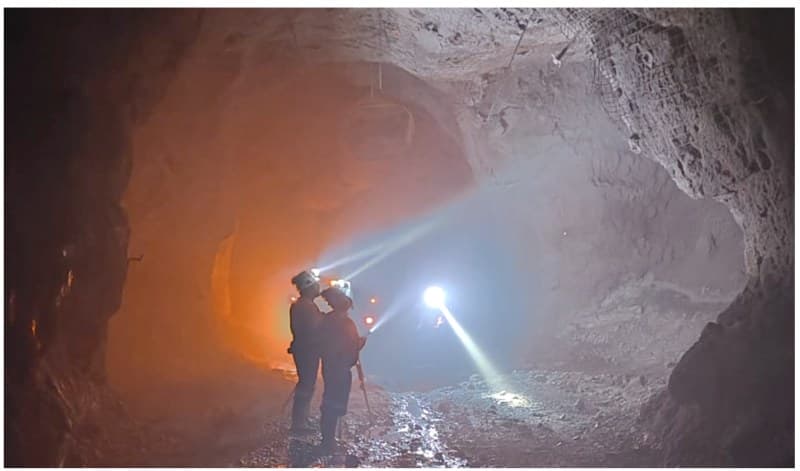
Treasure Hunter Chronicles. Every company in our purview has a story. This is the Silver Valley's.
- 240 million ounces — the silver the Galena Complex ground has produced across its history, with more than 20 million pounds of antimony alongside
- 891 grams per tonne — the average grade the Crescent Mine produced at between 1917 and 1981 (26 ounces per ton, in the old language)
- 87.9 million ounces — Galena's measured and indicated silver resource after the March 2026 update, its grade up 21% to about 501 grams per tonne
- 561,000 pounds — the antimony Galena produced in 2025, from what the company calls the nation's largest antimony mine
- 800,458 ounces — record consolidated silver production in the third quarter of 2026, with record sales of 860,850 ounces
- Nine miles — the distance between the Galena Complex and the Crescent Mine, now under one roof
- 51 / 49 — the antimony processing joint venture split: Americas 51%, United States Antimony 49%
- 3.2 to 3.6 million ounces — full-year 2026 silver production guidance, at all-in sustaining costs of $30–35 an ounce
- December 2024 — when one owner took 100% of Galena for the first time in the modern era
The Valley That Silver Built
There is a valley in the Idaho panhandle where the mountains are hollow.
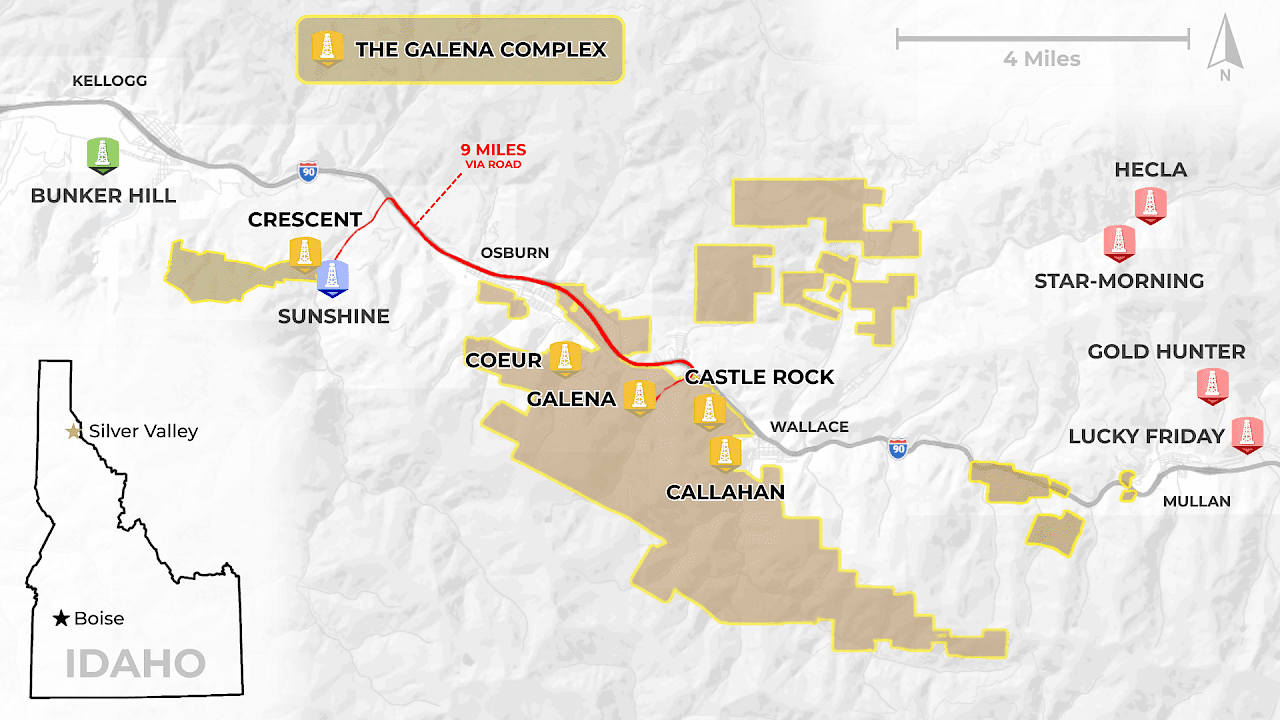
The Coeur d'Alene mining district — the Silver Valley — has been dug, drilled, timbered and blasted since the 1880s, and it ranks, in the company's own filings, among the preeminent silver, lead and zinc producing areas in the world. The names on the map read like a roll call of American mining: Bunker Hill. Sunshine. Lucky Friday. Generations of miners raised families in the towns strung along the river — Wallace, Kellogg, Osburn — and the wealth that came out of these hills helped build the century.
The Galena ground sits in the eastern part of the district, and it has been in production for more than fifty years. The company counts the take so far at over 240 million ounces of silver, plus lead, copper, and over 20 million pounds of antimony, from a property of nearly 9,000 hectares with three active shafts and more than 55 miles of underground workings. This is not a deposit with a history problem. It is a history with a deposit still attached.
But history has a way of scattering ownership. For years the Galena Complex ran as a joint venture — 60% Americas Gold and Silver, 40% an affiliate of Eric Sprott, the legendary mining financier — two masters for one mine, at the exact moment the mine needed a single, committed rebuild.
One Hundred Percent
In December 2024, Americas closed the acquisition of the remaining 40% of Galena from Sprott's affiliate and unitized the complex under a single owner for the first time in the modern era. The consideration tells you how both sides saw the ground: Sprott's side took roughly 170 million Americas shares and US$10 million in cash, plus monthly silver deliveries of 18,500 ounces for 36 months to begin in 2026 — and Eric Sprott became the company's largest shareholder, holding about 14% on the company's own description. He did not sell out of the Silver Valley. He converted a mine interest into a cornerstone shareholding, and stayed.
The deal came with a new operator. Paul Andre Huet — a career underground miner with more than 35 years in the business, fresh from running Karora Resources — was appointed Chairman and Chief Executive Officer on closing, with a mandate stated plainly in the announcement: optimize the underground mine. The arrangement has the feel of a reunion: Sprott had been a cornerstone investor in Karora during Huet's turnaround there.
And in May 2026, the last piece of the purchase price was rewritten. Americas and Sprott Mining agreed to terminate the remaining silver delivery obligation — 592,000 ounces still to deliver — in exchange for shares, extinguishing more than $45 million in future obligations, in the company's accounting. The seller kept choosing stock over silver. Read into that what miners have always read into it.
The Rebuild
Consolidation bought the right to spend money underground, and the Recapitalization Plan is where the story turns physical.
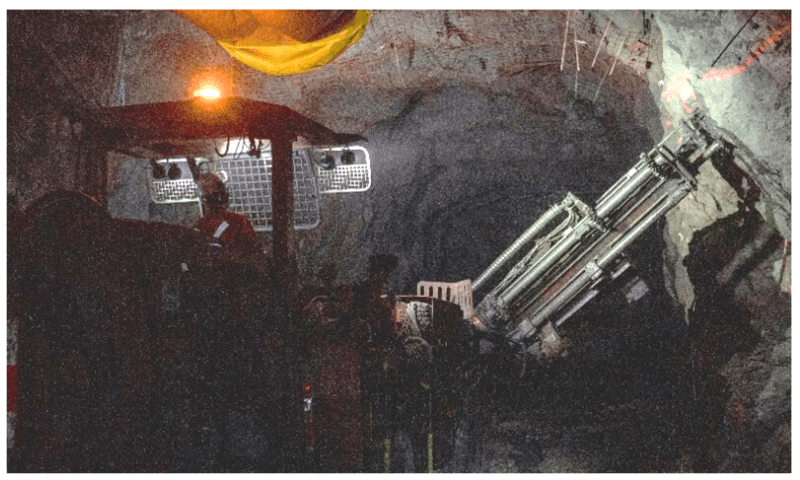
Start with the throat of the mine: the hoist. Phase 1 of the No. 3 shaft upgrade, completed ahead of schedule in September 2025, doubled skipping capacity from 40 to 80 tons per hour; the company has targeted roughly 105 tons per hour when Phase II lands. In the fourth quarter of 2025 the crews used a planned ten-day shutdown to install a new 2,250-horsepower motor at the Coeur shaft. More than ten new underground vehicles — trucks, muckers, long-hole drills — have been commissioned. And long-hole stoping, the bulk method that mines more rock with fewer men in harm's way, was reintroduced in the second quarter of 2025 with, the company reports, 60% lower costs per ton than the underhand cut-and-fill it replaced, at similar dilution.
Then there is the rock itself, which keeps making the engineers' case for them. In April 2025 the drill cut the 034 Vein: 3.4 metres at 983 grams per tonne silver. That August, the 149 Vein extension returned intercepts up to 24,913 grams per tonne silver with 16.9% copper over 0.21 metres — a number so rich it reads like a misprint, and it is the company's own reported figure. In March 2026, Americas announced a fresh set of vein discoveries at Galena — including the new 520 Vein inside the idle Coeur Mine — alongside the largest drill campaign in its history. The March resource update moved Galena's measured and indicated silver resource up 19% to 87.9 million ounces, with the grade up 21% to about 501 grams per tonne. Mines this old are not supposed to keep finding new veins. Galena did not get the memo.

Nine Miles Away
Galena was not the only sleeping giant in the valley.
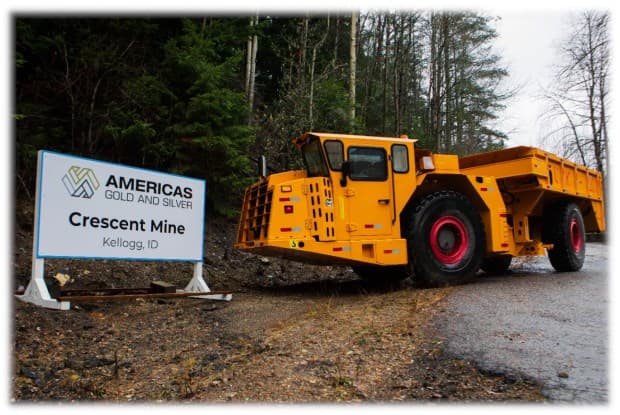
Nine miles from the Galena Complex, about four miles southeast of Kellogg, sits the Crescent Silver Mine. Between 1917 and 1981, Crescent produced over 25 million ounces of silver at an average grade of 26 ounces per ton — 891 grams per tonne — from the same silver-copper-antimony tetrahedrite mineralization that feeds Galena. Then it went quiet for more than four decades, through owner after owner, while the valley moved on.
What Crescent never lost was its paperwork and its grade. It is fully permitted, sits on privately owned land — ten acres of surface rights and mineral rights over 64 patented claims — and it carries a historical mineral resource, estimated by Tetra Tech in 2015, of 3.8 million ounces of silver in the measured and indicated categories at about 655 grams per tonne, plus 19.1 million ounces inferred at about 665. Americas is careful, and this Chronicle will be too: that is a historical estimate, not a current resource, and the company says so itself. But it is the basis for the company's description of Crescent as hosting the world's third-highest-grade silver mineral resource — and it is why, in December 2025, Americas bought the mine outright for US$65 million: US$20 million in cash and about 11.1 million shares.
The pace after closing is the tell. Within weeks, the company had run grid power down the mountain to all three adits — Hooper, BC4 and Countess — replacing diesel generators and cutting power costs from roughly 55 cents a kilowatt-hour to as little as 7. Existing underground equipment was put back to work and the fleet rebuilt to eleven pieces, including two new 20-ton trucks. The target, stated at acquisition and repeated since: a production restart, feeding the spare capacity of the Galena and Coeur mills, with the company aiming for Crescent to add 1.4 to 1.6 million ounces of annual silver production. An old mine does not restart on sentiment. It restarts on power, equipment, permits and grade — and Crescent, uniquely among the valley's sleepers, has all four.
The Antimony Turn
Galena's silver does not travel alone. It rides in tetrahedrite, an ore that also carries copper — and antimony, a brittle, silvery metal most people have never thought about, which hardens lead alloys, goes into flame retardants and munitions, and sits on the United States' critical minerals list. For most of Galena's life, antimony in the concentrate was a nuisance: smelters charged for it as a penalty element. The mine was, without anyone much noticing, America's antimony mine — 561,000 pounds of it produced in 2025, alongside 797,000 pounds of copper, at a remarkably steady ratio of about 0.7 pounds of antimony for every pound of copper. The company now describes itself, plainly, as the only current antimony producer in the United States, and Galena as the nation's largest antimony mine.
Three moves turned the nuisance into the strategy. First, in September 2025, the company announced a metallurgical breakthrough: better than 99% extraction of antimony from Galena's silver-antimony-copper concentrate in test work. Second, a renegotiated offtake — with Ocean Partners and Teck, as the company has described it — flipped antimony from penalty to payable starting January 1, 2026: the metal the mine was once charged for is now metal it is paid for. Third, and biggest: on February 10, 2026, Americas signed a definitive joint venture with United States Antimony Corporation — 51% Americas, 49% US Antimony — to build and operate an antimony processing facility at the Galena Complex, on a permitted site Americas contributes, processing Galena's antimony feed on market terms. US Antimony, which describes itself as the only fully integrated antimony company in the world outside China and Russia, brings the processing expertise and serves as the venture's managing member. The stated goal is a fully integrated American chain, mine to finished antimony, on Idaho ground.
That last phrase is the subtext of the whole enterprise, so it may as well be said out loud: the world's antimony supply runs overwhelmingly through China and Russia, and the United States has spent years discovering what that dependence costs. Galena's answer has been sitting in the Silver Valley the whole time, riding up the shaft inside the silver ore.
The Other Engine
Two thousand miles south, the company runs a second engine that lately has been outpulling the first.
The Cosalá Operations, in Sinaloa, Mexico — 67 mining concessions over about 19,385 hectares near the town of Cosalá — pair the San Rafael mine, a silver-zinc-lead producer in commercial production since 2017, with EC120, a higher-grade silver-copper mine built from the El Cajón and Zone 120 ground. Everything runs through the Los Braceros process plant. EC120 reached commercial production on January 1, 2026 — and in 2025, while still in its development phase, it carried Cosalá to the best year in its history: a record 1.19 million ounces of silver, capped by a record fourth quarter of 463,000 ounces.
In the third quarter of 2026, Cosalá produced 415,879 ounces of silver — up 23% on the quarter before — actually outproducing Galena, as mining pushed deeper into EC120's high-grade core. The Mexican operation is not the supporting act in this story anymore. It is half the company, and on current form, the steadier half.
The People
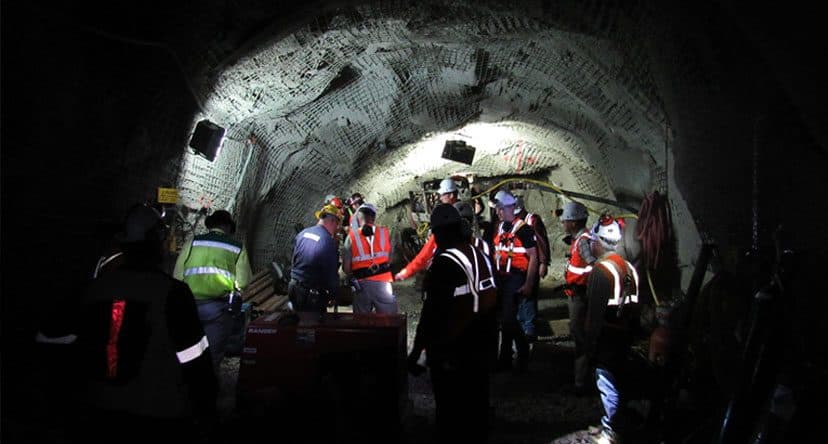
Companies that run old mines back to life are usually built around one operator, and Americas is no exception.
Paul Andre Huet, Chairman and CEO, is a mining engineer by training — Haileybury School of Mines, later the Stanford executive program — with more than 35 years spent, in the company's biography's phrase, at all levels of engineering and operations. His pattern is consistent: take an underground mining company the market has given up on, fix the mines, and sell the result. At Klondex Mines, from 2012 to 2018, he built a single-asset producer into a multi-mine company that Hecla Mining acquired for more than C$600 million. At Karora Resources, Chairman and CEO from 2018 to 2024, he ran the same play until Karora combined with Westgold Resources in a transaction valuing Karora at over A$1.3 billion. Galena is the third act of the same career: an unloved underground asset, an owner willing to consolidate it, and — in Eric Sprott, who backed Huet at Karora and took stock rather than silver on the way out of his Galena stake — a cornerstone shareholder who has seen the movie and bought another ticket.
Where It Stands
Honesty is the house rule in this series, so here is the ledger, straight.
This is a producing company, not a promise — and its most recent quarter was the best in its history. In the third quarter of 2026, Americas produced a record 800,458 ounces of silver and sold a record 860,850 ounces: 384,579 ounces produced at Galena, 415,879 at Cosalá, plus 964,551 pounds of lead, 918,456 pounds of copper and 101,011 pounds of antimony. The company closed September with about US$63 million in cash and US$113 million in total liquidity, figures it reported as preliminary. Full-year 2025 production was 2.65 million ounces, up 52% on 2024.
"I am very proud to announce that we achieved a new company record of consolidated silver production of 800,458 ounces." — Paul Andre Huet, Chairman and CEO, October 19, 2026
Now the other side of the ledger. Galena's record quarter followed a second quarter disrupted by the very upgrade program meant to expand it — the company's own words describe "temporary production interruptions" at the complex during that quarter — and production through September totals 2.3 million ounces against full-year guidance of 3.2 to 3.6 million ounces at $30–35 all-in sustaining costs, guidance the company reaffirmed on October 19. Do the arithmetic and the conclusion writes itself: the fourth quarter has to be the biggest of the year, by a distance, for the guidance to land. Crescent's restart, targeted for mid-2026 when the mine was bought, has not yet appeared as a separate line in the company's production tables — the third-quarter report splits production between Galena and Cosalá — so the restart's timing and first tonnage remain the open questions of the Idaho story. Crescent's impressive grades, likewise, rest on a 2015 historical estimate that the company itself does not treat as current; converting them into a modern resource is work still in front of it. And the antimony plant exists, today, as a signed joint venture and a permitted site — a real agreement with a real partner, and also, yet, a construction project rather than a facility. The company says it is fully funded to execute; the execution itself is the story of the next several quarters.
What Happens Next
The calendar is crowded. Third-quarter financial results and the management call land November 13, 2026. The fourth quarter will either deliver the step-change the reaffirmed guidance requires or it will not. Crescent's first ore through the Galena and Coeur mills, the conversion of its historical resource into a current one, and a construction start at the antimony plant are the milestones that turn this from a consolidation story into a production story. Underneath it all, the drill keeps turning at Galena — new veins in old mines have a way of rewriting plans.
Step back, though, and the shape of the thing is already visible. In the space of fourteen months, one company took full ownership of a 240-million-ounce silver complex, bought the highest-grade sleeper in the valley nine miles away, posted the best production quarter in its history, and signed itself into the middle of America's antimony problem — with the financier who knows the ground best holding its stock instead of its silver. The Silver Valley has been written off before, usually by people who had never been underground in it. The men and women who work these mines never wrote it off at all. They just kept the workings pumped, the hoists turning, and the faith — waiting for owners who believed the valley's best ore was the story, not the history.
The treasure, as always, was never the point. The valley was. And the valley is roaring back.
Next in the series: the Americas story in the company's own words — the chairman and CEO, on the record.