
Treasure Hunter Chronicles. Every company in our purview has a story. This is American Atomics'.
The Prospector Who Changed a Valley
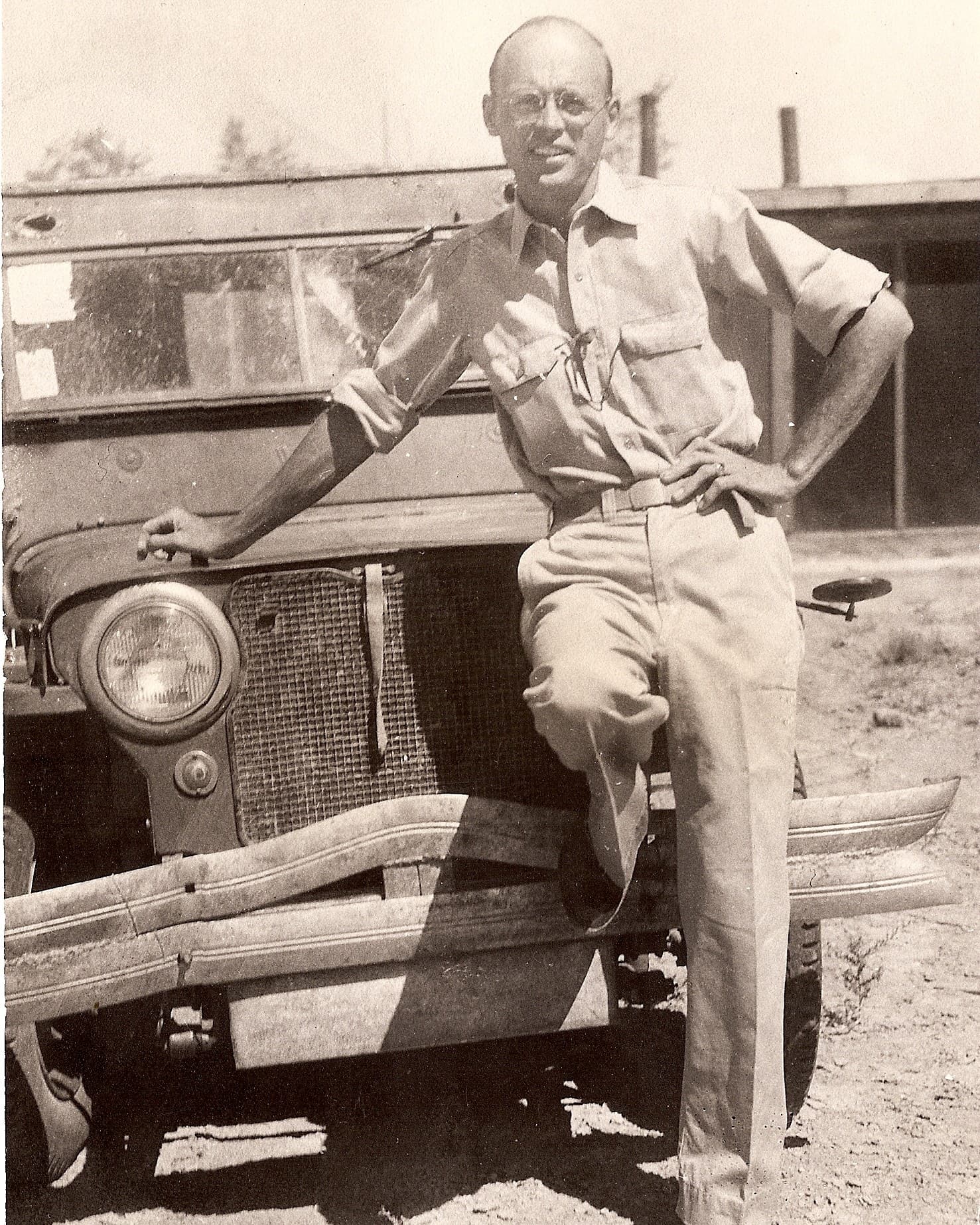
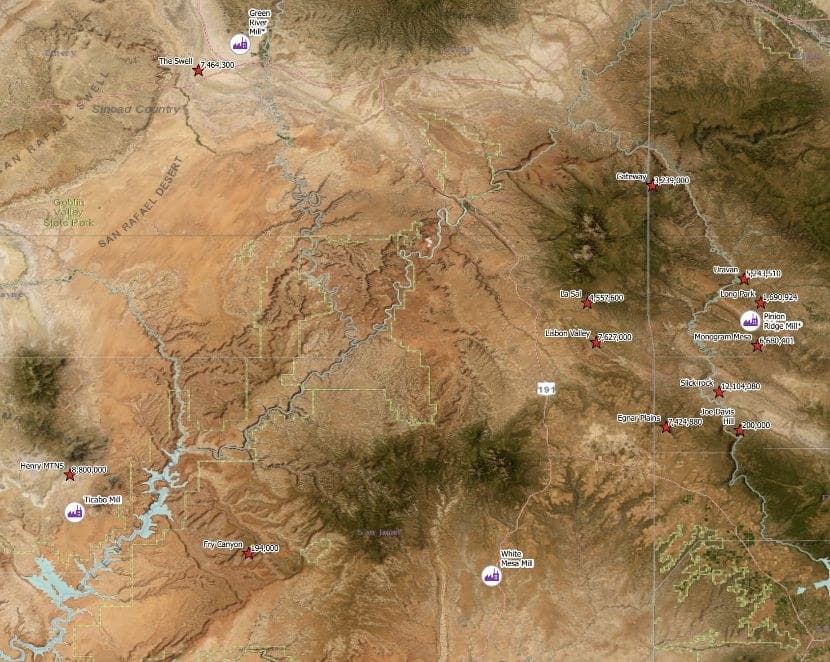
In 1952, a geologist named Charlie Steen did the thing every prospector dreams about and almost none of them ever do: he found the deposit. Steen's Mi Vida discovery in Utah's Lisbon Valley, in San Juan County, touched off the great American uranium boom — and the valley's west flank went on to produce roughly 78 million pounds of U3O8 at grades averaging about 0.37%, the kind of numbers that built an industry.
But a valley has two sides. The Lisbon Valley anticline — the great fold of rock that trapped Steen's uranium — runs the length of the valley. The west flank got the drills, the mines, and the glory. The east flank, where the same host rock dives roughly 600 metres deeper, mostly got left alone. Not because anyone proved it empty. Because nobody ever really looked.
American Atomics Inc. (CSE: NUKE) is looking.
- The company: American Atomics Inc. (CSE: NUKE) — "From Rock to Reactor," building a vertically integrated American uranium fuel chain: exploration and extraction, conversion, and HALEU enrichment
- The people: Conor Lynch, Founder · David Mitchell, CEO & Director · Terry Lynch, Chairman
- The flagship: Big Indian Project, Lisbon Valley, San Juan County, Utah — 217 contiguous claims on the anticline's east flank, with an option to earn up to 80%, and a published NI 43-101 technical report
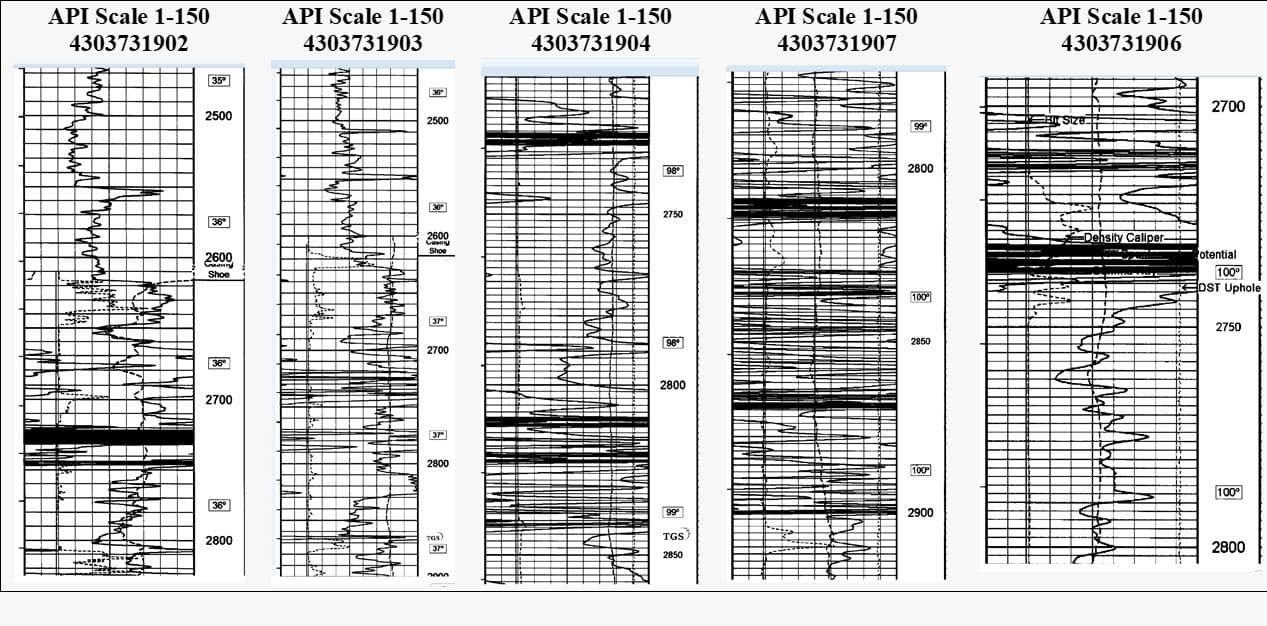
- The clue: 28 of 51 historic oil and gas wells on the east flank showed strong gamma spikes at depth — 10 to 12 of them ran off the top of the probe's scale
- The second front: Blue Street Complex, Paradox Valley — three past-producing mines, one closing in on full production permitting
- The bottleneck play: a uranium mill solution, in negotiation with Disa Technologies
The Mirror
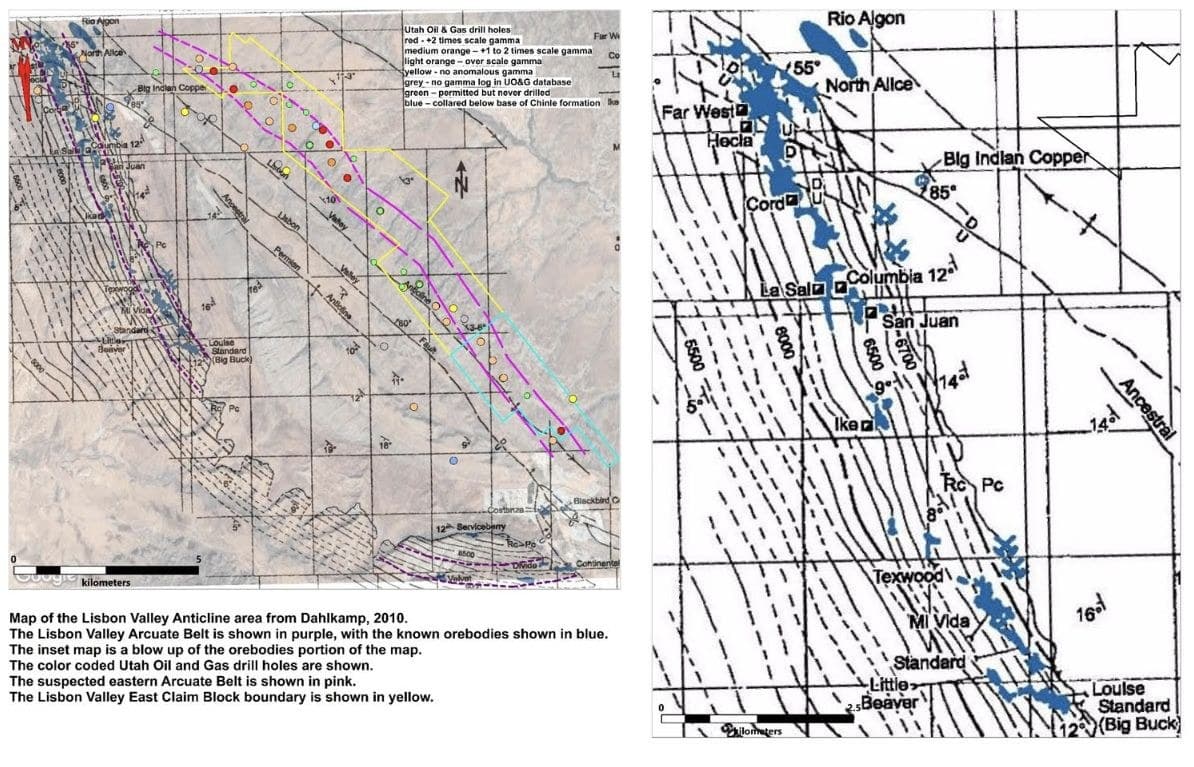
Here is the idea at the heart of the Big Indian Project, and it is the kind of idea treasure hunting runs on: if the west flank of the fold held a uranium system that produced 78 million pounds, the east flank — the same rocks, folded the same way, just deeper — may hold its mirror.
That is a hypothesis, not a resource — American Atomics is careful about the difference, and so are we. But the hypothesis comes with evidence, from an unlikely archive: the old oil and gas wells drilled through the valley over the decades. Their logs passed through the Chinle host rock at depth — and in 28 of 51 holes, the gamma readings spiked hard. In 10 to 12, the spikes ran past the top of what the probe could measure. The oil men weren't looking for uranium, so nobody followed up. The spikes just sat in the logs, waiting.
The east flank stayed untested for a simple reason: at roughly 600 metres deeper than the west, the target was expensive to reach with conventional drilling, most of it through barren rock. American Atomics' plan attacks that economics directly — horizontal multilateral drilling paired with uranium-calibrated gamma probes, steering the hole toward the mineralization instead of hoping to intersect it. The aim: lift the share of drill metres in mineralized rock from the typical 1–3% to the 20–30% range. If the mirror is there, that is how you prove it without spending a fortune missing it.
The Second Front
Lisbon Valley is the flagship, but it is not the whole story. In the Paradox Valley, American Atomics holds the Blue Street Complex — three past-producing uranium mines, one of which is roughly four and a half months from being fully permitted to produce again. What stands between that mine and production is not the permit. It's a mill. Blue Street also holds a small piece of magic: it hosts andersonite, a uranium mineral that fluoresces under blacklight — the rock itself glows.
The Mill Problem
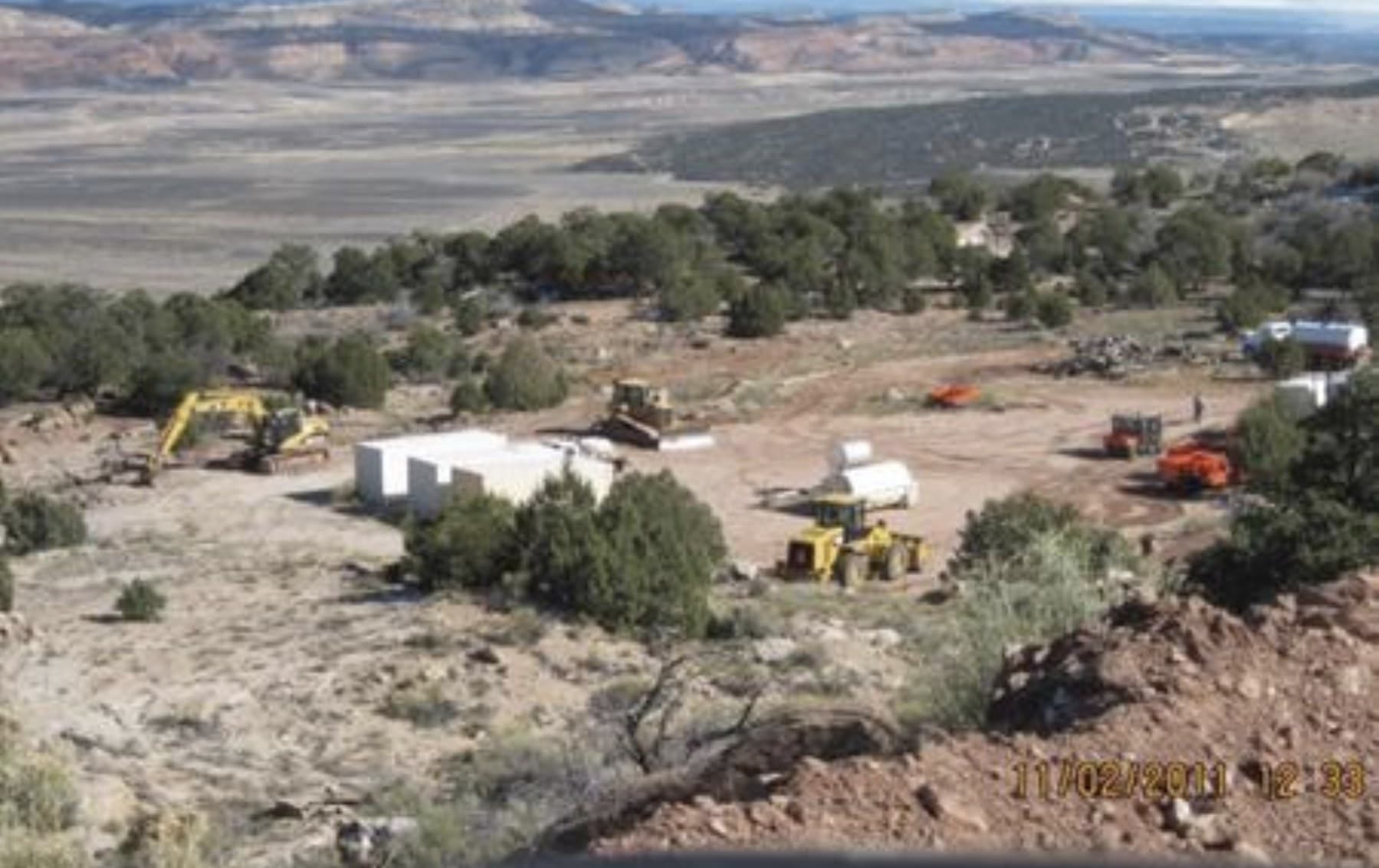
Here is the quiet crisis of American uranium: the country that invented the atomic age currently has exactly one operating hard-rock uranium mill. It belongs to Energy Fuels, and it does not toll-mill for anyone else. You can discover uranium, permit uranium, even mine uranium — and still have nowhere in America to process it.
American Atomics is negotiating a way around that wall with Disa Technologies. Disa's pre-concentration technology can cut the weight and volume of ore by 75–80% while retaining 88–90% of the metal — shrinking the milling problem before it reaches a mill. The negotiation contemplates a first commercial demonstration: reclaiming an old tailings pile on American Atomics' own land under a special Nuclear Regulatory Commission licence, turning a legacy liability into the proof of concept. Disa plans to announce a mill site in eastern Utah within roughly six weeks.
None of that is closed yet — it is a negotiation, and we report it as one. But watch the shape of it: a uranium company working on the whole chain from rock to reactor, in a country relearning why that chain matters.
The Shot We're Calling
Charlie Steen's story is the most American mining story there is: a broke prospector, a hunch about a valley, and a discovery that helped power a superpower. Seventy-odd years later, the other half of his valley is still untested, the clues are sitting in old well logs, and a small company — founder Conor Lynch, chairman Terry Lynch, CEO David Mitchell — is getting ready to drill the mirror.
We're calling the shot now, before the drills turn: this is a story worth following to the end, whichever way the rock decides. American Atomics will be featured in Mining Our Future's Hunting Hidden Treasures coverage of the Utah tour — and when the cameras get to Lisbon Valley, you'll see the ground Charlie Steen made famous, and the flank he never touched.
The treasure was never the point. The hunt was. In Lisbon Valley, the hunt is back on.