
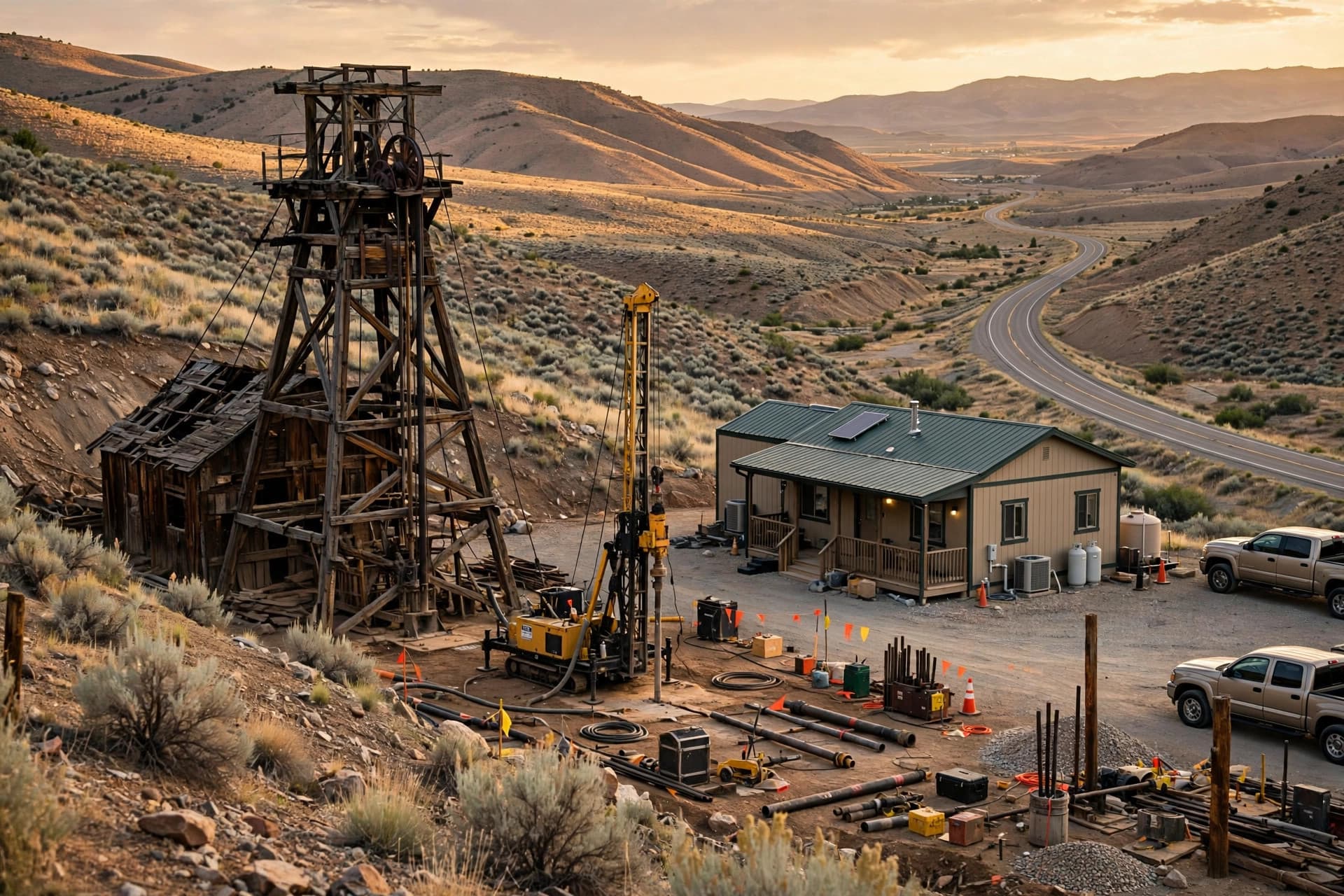
Mercur produced gold for Barrick a generation ago. Revival Gold's November 2 update is about the unglamorous middle of bringing it back: models, leach columns, trade-off studies and baseline reports, all pointed at three deliverables in the same quarter.
- The target date: an updated Mineral Resource Estimate (MRE) and Preliminary Feasibility Study (PFS), and the potential filing of a Notice of Intention (NOI) to revise Mercur's Large Mine Operating (LMO) permit, are targeted by the end of Q1 2027.
- Drilling behind it: 24 kilometres of resource delineation drilling completed over the past 18 months, undertaken to convert Inferred resources to Measured and Indicated, since the 2025 MRE and Preliminary Economic Assessment.
- Resource models: an updated South Mercur model is nearing completion; a draft Main Mercur model is expected later this month. RESPEC is the resource consultant.
- Metallurgy: 18 column leach tests completed by Kappes Cassiday & Associates on 11 composites from 2025 core, with leach cycles of 89 to 125 days; 11 more columns on four additional composites are to commence shortly, with results expected in Q1 2027. Complete results from the first program are expected later this month.
- Layout decisions made: the heap leach facility moves to Main Mercur — more favourable geotechnics and shorter ore haulage than the PEA's West Mercur site, in two phases — and the preferred crusher location is near the south-western limit of the Rover Pit. A smaller 6.1-metre (20-foot) bench height beat the PEA's 7.6 metres in WSP's trade-off study.
- Permitting groundwork: environmental baseline field studies and draft reports are largely complete across air, aquatic, cultural, raptors, geochemistry, hydrogeology, soils and wildlife. Stantec is drafting the NOI; submission of the draft to the Utah Division of Oil, Gas & Mining is expected in Q1 2027, with LMO revision approval expected within approximately twelve months of NOI filing through the state-led process.
The work, in plain terms
A PFS is where a PEA's sketch becomes an engineered plan, and Mercur's inputs are visibly converging. The geometallurgical work — CS-2's analysis of cyanide and fire assays, sulphide sulphur, organic carbon and leach behaviour, feeding a block-scale model — matters because the column results carried a warning inside the progress: cement-agglomerated columns leached better than un-agglomerated ones, and composites with elevated sulphide and carbonaceous material recovered less than their cyanide-to-fire-assay ratios predicted. The next 11 columns exist specifically to test agglomeration, crush size and those harder materials.
On the ground, the site team is firming up under General Manager Tim Barnett — Everett Brill appointed Manager, Exploration earlier this year and Teisha Black Manager, Permitting & Environmental Affairs last month — with upgraded road access from Utah Highway 73, a refurbished site office, a Rocky Mountain Power assessment of the existing 43.8 kV line and substation, and a successful pumping test on the highest-yielding existing water well.
President and CEO Hugh Agro: "Geological modeling, mineral resource modeling, metallurgical testing, engineering trade-off studies, and mine permitting preparations are all progressing as planned" toward the Q1 2027 targets.
The honesty box
Nothing in this release is a new resource, a study result, or a permit. The MRE and PFS are targets for the end of Q1 2027, not delivered documents, and the NOI is a potential filing — its submission would start, not grant, the LMO revision, which the company itself expects to take roughly twelve months after filing. The project's current economics still rest on the May 2, 2025 PEA, which is preliminary in nature and includes Inferred resources too speculative to be categorised as reserves. Mercur's description as Utah's largest primary gold development project is the company's, sourced to S&P Global and Fuse Advisors on resources and forecast life-of-mine production. Column leach results to date are interim — tailings assays are still in progress.
What to watch
Complete results from the first 18 column tests later this month; the draft Main Mercur resource model, also expected this month; the 11 additional columns and their Q1 2027 results; and whether the MRE, PFS and draft NOI all land inside the Q1 2027 window the company has now set in public.